How to Read the Signs of Wind Damage on Your Trees: A Lancaster Homeowner’s Guide
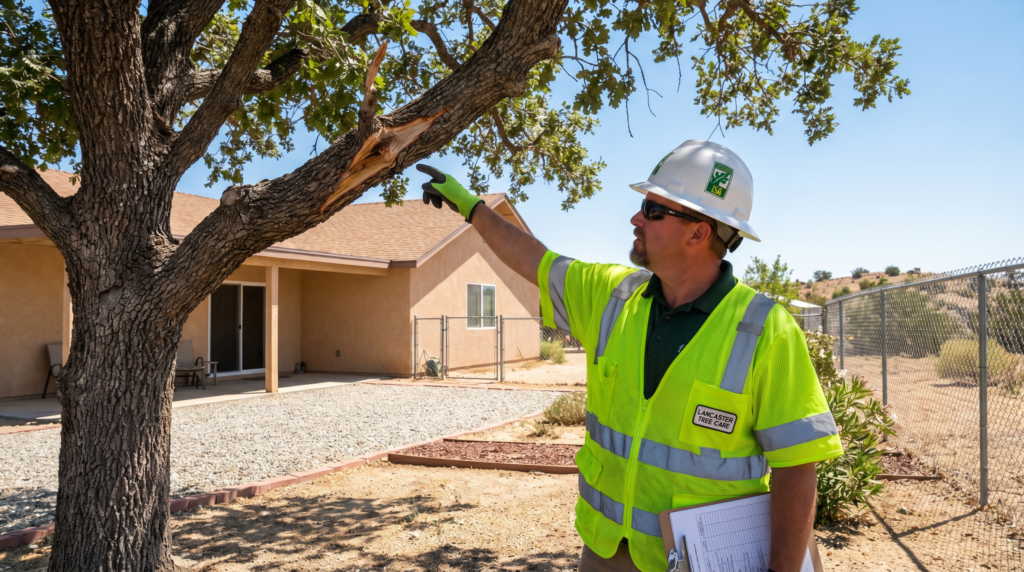
Introduction Wind damage trees in Lancaster CA are a serious concern for homeowners, especially during high-wind seasons in the Antelope Valley.The Antelope Valley is known for its persistent and sometimes fierce winds. When gusts exceed 35 mph, as they frequently do during seasonal transitions in Lancaster, the trees on your property are put to the test. While some damage is obvious—a massive branch lying across your driveway—much of the structural damage caused by high winds is subtle. If left unaddressed, these hidden fractures can lead to catastrophic failure weeks or months after the storm has passed. Tip Top Arborists has been responding to wind damage calls across the Antelope Valley for decades. Our ISA-certified arborists know exactly what to look for when a tree has been stressed by high winds. This guide will help you identify the early warning signs of wind damage so you can act before a compromised tree becomes a safety hazard. The Hidden Impact of Wind on Trees Trees are naturally engineered to sway and flex in the wind. However, when wind speeds exceed a tree’s structural limits, or when the wind comes from an unusual direction, the mechanical stress can cause wood fibers to tear. This is particularly common in Lancaster, where the combination of dry high desert conditions and sudden wind events can push trees beyond their breaking point. The danger of wind damage is that it does not always result in an immediate break. A branch may crack internally but remain attached, waiting for the next gust of wind or heavy rain to bring it down. Identifying these compromised areas requires a careful, methodical inspection. How to Inspect Wind Damage Trees in Lancaster CA (Step-by-Step Guide) Inspecting wind damage trees in Lancaster CA early can prevent accidents.Professional arborists can assess wind damage trees in Lancaster CA safely. After a significant wind event in Lancaster, wait until the weather has calmed completely. Then, walk your property and conduct a visual inspection of your trees from a safe distance. Do not stand directly under a tree that you suspect may be damaged. Inspect the Ground and Root Zone The inspection begins at the base of the tree. Look for any signs of soil lifting or cracking on the windward side of the trunk. This indicates that the root system has been compromised and the tree is beginning to uproot. If you see exposed roots that were previously buried, or if the tree has developed a noticeable lean, it is a critical hazard. Keep away from the area and call a professional arborist immediately. Examine the Trunk for Cracks Move your eyes up the main trunk. Look for fresh, vertical cracks in the bark. These stress fractures occur when the tree bends too far, tearing the internal wood fibers. Even small cracks can be a sign of significant structural failure. Pay special attention to areas where the trunk splits into two or more main branches, known as co-dominant stems. If you see a crack forming in the union between these stems, the tree is at high risk of splitting apart. Scan the Canopy for Hangers Look up into the canopy for “hangers” or “widow-makers.” These are branches that have snapped but remain suspended in the tree, caught on other branches. They are incredibly dangerous because they can fall at any moment, even on a calm day. Do not attempt to dislodge a hanging branch yourself. Look for Twisted or Splintered Branches Some branches may not break off entirely but will twist or splinter under wind torsion. Look for areas where the bark is torn away, revealing the lighter wood underneath. These branches have lost their structural integrity and will eventually die and fall. They need to be pruned cleanly back to the trunk or a healthy lateral branch to prevent decay from entering the tree. Check the Leaves and Small Twigs While less dangerous than structural damage, wind-whipped trees often suffer from “windburn.” The leaves may appear scorched, torn, or shredded. While the tree will typically recover from this cosmetic damage, a massive loss of foliage can stress the tree and make it more susceptible to pests and disease in the harsh Lancaster climate. Frequently Asked Questions Q: How quickly does a wind-damaged tree need to be addressed? A: If the tree is leaning, has soil lifting at the base, or has large hanging branches over a structure or walkway, it is an emergency and should be addressed immediately. For minor splintering or torn bark, you can schedule a standard pruning visit within a few weeks. Q: Can a tree recover from a cracked trunk? A: It depends on the severity and location of the crack. Minor surface cracks may heal, but deep structural cracks often compromise the tree permanently. An ISA-certified arborist must evaluate the crack to determine the safest course of action. Q: Will my homeowner’s insurance cover the cost of removing a wind-damaged tree? A: Insurance typically only covers tree removal if the tree has fallen and damaged a covered structure, such as your house or fence. Preventative removal of a damaged tree that has not yet fallen is usually the homeowner’s responsibility. Q: What is the best way to prevent wind damage to my trees? A: The most effective prevention is regular, professional pruning. Crown thinning reduces wind resistance, and removing deadwood eliminates the branches most likely to snap. Tip Top Arborists recommends a structural pruning visit every two to three years for mature trees in Lancaster. INTERNAL LINKS Homeowners looking for professional tree trimming can visithttps://tiptoparborists.com/tree-trimming-palmdale-ca/ for full service details.If you’re located in the area, explore local services here:https://tiptoparborists.com/palmdale/ Need expert advice? Request a free estimate today:https://tiptoparborists.com/contact-us/ EXTERNAL LINKS International Society of Arboriculturehttps://www.isa-arbor.com/ Tree Care Industry Associationhttps://www.tcia.org/ USDA Forest Servicehttps://www.fs.usda.gov/ When to Call a Certified Arborist If your inspection reveals any of the following, you need professional intervention: A new or worsening lean. Soil lifting at the base of the tree. Cracks in the main trunk or major branch unions.
Arborist Report in Lancaster CA: When You Need One and What It Covers
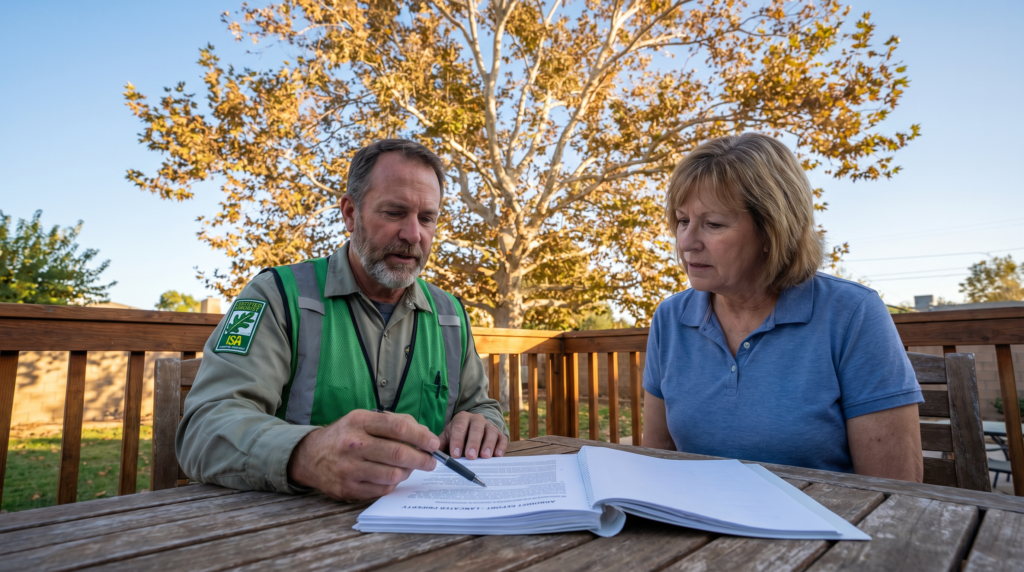
Introduction If you own property in Lancaster, CA, you already know that maintaining your trees is a year-round job. But sometimes, simply knowing your tree needs help is not enough. Whether you are filing an insurance claim after a windstorm, applying for a building permit, or dealing with a protected species like a Joshua tree, you need official documentation. That is where an arborist report comes in. An arborist report in Lancaster CA is not just a casual estimate or a quick quote. It is a formal, legal document prepared by an ISA-certified arborist that details the exact condition, risks, and recommended actions for a specific tree. Tip Top Arborists has been providing comprehensive arborist reports for homeowners, commercial property managers, and municipalities across the Antelope Valley for decades. In this guide, we will explain exactly what an arborist report covers and when you are required to have one. What Is an Arborist Report in Lancaster CA? An arborist report in Lancaster CA is a detailed technical document based on a comprehensive on-site inspection. Unlike a free estimate—which simply outlines the cost to perform a requested service—an arborist report provides a scientific assessment of the tree’s health and structural integrity. While the specific contents vary based on the purpose of the report, a standard arborist report from Tip Top Arborists typically includes: Tree Identification: The exact species, age, size (diameter at breast height), and location of the tree on the property. Health Assessment: A detailed evaluation of the tree’s vitality, including signs of disease, pest infestation, or environmental stress (such as drought or poor soil conditions). Structural Evaluation: An analysis of the tree’s physical integrity. This includes noting co-dominant stems, decay, root lifting, or previous improper pruning (like topping). Risk Assessment: A formal calculation of the likelihood of the tree (or its branches) failing and the potential consequences if it does (e.g., hitting a house or power line). Recommended Action Plan: The arborist’s professional, science-based recommendation, which may include specific pruning techniques, disease treatment, or complete removal. Photographs and Diagrams: Visual evidence supporting the arborist’s findings. 4 Situations Where You Need an Arborist Report in Lancaster CA Insurance Claims After Storm Damage When a tree falls and damages your home, fence, or vehicle, your homeowner’s insurance will usually cover the repairs and the tree removal. However, the insurance adjuster will often require an arborist report to confirm the cause of the failure (e.g., windstorm vs. pre-existing rot) and to justify the cost of the cleanup. Protected Species Permitting In the Antelope Valley, removing or significantly altering certain trees requires a permit. This includes native Oak trees (protected by LA County ordinance) and Western Joshua Trees (protected by state law). To obtain a removal permit from the city or the Department of Fish and Wildlife, you must submit an arborist report proving that the tree is dead, dying, or poses an unavoidable hazard. Construction and Property Development If you are building an addition, installing a pool, or doing significant grading on your property, the city of Lancaster may require an arborist report. The report will outline how the construction will impact the root zones of existing trees and detail the protective measures required to keep those trees alive during and after the project. Neighbor Disputes If a neighbor’s tree is encroaching on your property, dropping hazardous branches, or threatening your foundation, an arborist report provides an objective, third-party assessment. This document is often necessary to resolve disputes amicably or, if necessary, in a legal setting. INTERNAL LINKS Homeowners looking for professional tree trimming can visithttps://tiptoparborists.com/tree-trimming-palmdale-ca/ for full service details.If you’re located in the area, explore local services here:https://tiptoparborists.com/palmdale/ Need expert advice? Request a free estimate today:https://tiptoparborists.com/contact-us/ EXTERNAL LINKS International Society of Arboriculturehttps://www.isa-arbor.com/ Tree Care Industry Associationhttps://www.tcia.org/ USDA Forest Servicehttps://www.fs.usda.gov/ Frequently Asked Questions Q: How much does an arborist report cost in Lancaster? A: The cost varies depending on the complexity of the report and the number of trees involved. A basic health assessment for a single tree will cost less than a comprehensive construction impact report for a multi-acre property. Call us for a specific quote based on your needs. Q: Is an arborist report the same as a free estimate? A: No. A free estimate is a quote for the cost of services (like trimming or removal). An arborist report is a paid, formal document detailing the scientific health and structural assessment of the tree, often required for legal or insurance purposes. Q: How long does it take to get an arborist report? A: After the on-site inspection is completed, a standard arborist report is typically delivered within 3 to 5 business days. Complex reports for commercial development or Fish and Wildlife permits may take longer. Q: Will an arborist report guarantee that the city approves my tree removal permit? A: While an arborist report is required for the application, the final decision rests with the city or state agency. However, a thorough, well-documented report from an ISA-certified arborist significantly increases the likelihood of approval if the tree is genuinely hazardous or declining. Why You Must Use an ISA-Certified Arborist Not anyone with a chainsaw can write an arborist report. For the document to be accepted by insurance companies, city planners, or state agencies, it must be authored by an ISA-certified arborist. The International Society of Arboriculture (ISA) certification ensures that the individual has the education, experience, and ethical standards required to provide an accurate, unbiased assessment. Tip Top Arborists employs ISA-certified professionals who understand both the science of tree care and the specific regulatory requirements of Lancaster and the Antelope Valley. If you need an arborist report for your property, do not wait until the city or your insurance company demands it. Call Tip Top Arborists at (661) 942-5501 or visit tiptoparborists.com to schedule your assessment today. Request A Quote Tell us about your tree care needs and our team will follow up with a detailed estimate and recommended solutions. Select Ad SourceFacebookGoogleInternet SearchReferralTruck SignsWebsiteYelp Submit Get In