
How to Tell If a Tree Is Dead or Just Dormant in Lancaster, CA
It’s that time of year again in Lancaster when some trees start looking… well, a little rough around the edges. The leaves are gone, the branches look brittle, and you might start wondering if this tree just called it quits or if it’s simply taking a nap.
We get it. A seemingly lifeless tree can stir up a lot of questions, especially if it’s close to your home or driveway. You don’t want to cut down a perfectly healthy (just sleepy) tree, but you also don’t want a dead one falling on your car in the middle of the night.
So, how do you tell the difference between a tree that’s truly dead and one that’s just dormant for the season?
Let’s take a stroll through your yard and figure it out.
Leaf Check 101: Are the Leaves Just Late or Gone for Good?
In winter or during a drought, many trees drop their leaves to conserve energy. That’s totally normal. But if it’s springtime and your tree still looks like a haunted movie prop, that’s when it’s time to pay closer attention.
Here’s what to look for:
-
No buds in spring? That’s not great. Healthy trees usually form little buds, even before they leaf out.
-
Brittle and dry twigs? Snap a twig. If it breaks easily and is dry all the way through, that’s a red flag.
-
No leaf activity while neighboring trees are blooming? If your other trees are greening up and one is stuck in the void, it may be more than just fashionably late.
Try the Scratch Test
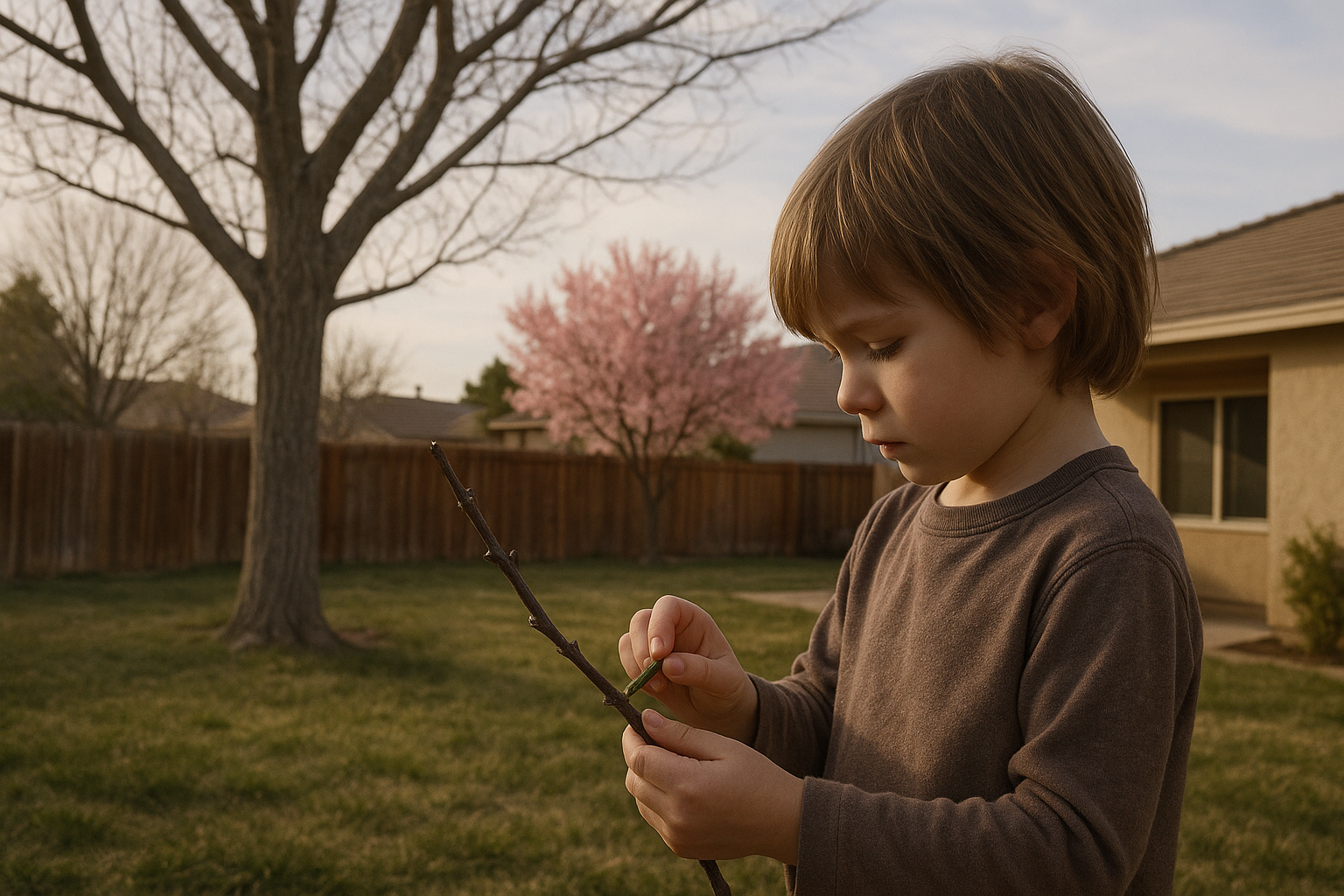
This is one of our favorite old-school tricks. It’s simple and surprisingly helpful.
-
Pick a small branch or twig.
-
Use your fingernail or a pocketknife to gently scratch off a bit of bark.
-
Check the color underneath.
-
Green and moist? That’s a good sign. It means the tree is alive.
-
Brown and dry? That part of the tree is likely dead.
Try scratching in a few different places on different limbs. If they’re all brown and dry, you may be looking at a dead tree.
Take a Good Look at the Bark and Trunk
A dormant tree still looks sturdy. A dead one? Not so much. Watch for these signs:
-
Bark falling off in large chunks with no fresh growth underneath.
-
Deep cracks or splits in the trunk. These often signal internal damage or decay.
-
Soft spots or mushrooms at the base. That’s a sign the tree could be rotting from the inside.
If your tree is showing more than one of these issues, don’t wait too long to act.
Dead or Dormant? Let’s Break It Down
If you’re not sure what’s going on, here are some quick comparisons to help you sort things out:
-
Twigs bend without snapping? It’s probably dormant.
-
Scratch test shows green? That’s another sign of life.
-
Tight bark? Good news. Dormant trees keep their bark snug against the trunk.
-
Are buds forming in spring? That’s a healthy sign.
-
No leaves by late spring? That’s a concern.
-
Fungus or a soft trunk base? Likely a sign of rot and decay.
When in doubt, compare with other trees of the same species in your neighborhood. If your neighbor’s palo verde is lush and leafy and yours looks like a Halloween prop, it might be time to investigate.
Lancaster Weather and Tree Dormancy
Our high desert climate throws trees a few curveballs — heatwaves, windstorms, and dry spells can all cause trees to leaf out later than usual. Sometimes, a tree just needs more time to bounce back.
Keep in mind that native trees and drought-tolerant species may look dead when they’re actually just playing it safe. They’ve adapted to survive long, dry seasons and may conserve energy by going dormant longer.
Still not sure what’s going on? That’s where we come in.
What If the Tree Really Is Dead?
A dead tree isn’t just sad to look at. It’s a risk — especially here in Lancaster where high winds can turn brittle limbs into flying hazards. If the whole tree is dead, it’s time to consider safe removal and possibly replacing it with a variety that’s more resilient in our local climate.
The good news? You don’t have to figure it out on your own.
Our certified arborists can inspect your tree, explain what’s happening, and recommend the best course of action. If the tree still has life in it, we’ll help with pruning, watering guidance, or even pest control. And if it’s time to say goodbye, we’ll remove it safely and help you plant something new in its place — something ready to thrive in Lancaster’s wild weather.

Schedule a Tree Health Check Today
Whether it’s junipers, maples, or magnolias, we’re here to help your landscape thrive, from the ground up.
We’re here to help, no pressure, no guesswork, no surprises.
Call Tip Top Arborists today at 661-942-5501
Or visit www.tiptoparborists.com to schedule your removal or hazard inspection.