Fire season tree clearing is one of the highest-impact things you can do to protect your home before conditions turn hot, dry, and windy. Wildfire losses are often driven by ember ignition, not a wall of flame, which is why the space right next to your home matters more than most people think. CAL FIRE’s defensible space guidance highlights that the first five feet is the most important area to keep ember-resistant. (CAL FIRE)
This guide breaks down what defensible space is, what each zone means in real life, and how to approach fire season tree clearing in a way that is both practical and defensible.
Defensible space is a managed buffer around your home designed to reduce fire intensity and give firefighters safer working room. It also reduces the chance embers ignite debris, mulch, and plants near your structure. Under California Public Resources Code 4291, many properties in fire-prone areas are required to maintain 100 feet of defensible space from structures, not beyond the property line. (FindLaw Codes)
If you only do one thing, start closest to the structure. Fire behavior and insurance outcomes often come down to what is within a few feet of the home, including under decks and along fences.
Think of the zones like rings around your home. The closer you get to the structure, the stricter and more detail-oriented the work becomes. CAL FIRE and Ready For Wildfire describe Zones 0, 1, and 2 as the framework for how to manage vegetation and combustibles around structures. (CAL FIRE)
Zone 0 is the area most homeowners underestimate, and it is the area that most often determines whether embers find something to ignite. CAL FIRE describes Zone 0 as the first five feet from your home and emphasizes keeping it clear to prevent embers from igniting materials that spread fire to the structure. (CAL FIRE)
IBHS (Insurance Institute for Business & Home Safety) similarly recommends a 0 to 5 foot noncombustible zone because embers commonly accumulate at the base of exterior walls and under attached decks. (ibhs.org)
What to do in Zone 0 for fire season tree clearing:
This zone is not about stripping your yard bare forever. It is about removing the easy ignition points that turn ember exposure into structural fire.
Zone 1 focuses on reducing fuels and interrupting continuous pathways fire uses to approach your home. CAL FIRE describes Zone 1 as “lean, clean and green,” emphasizing spacing, maintenance, and keeping vegetation healthy and controlled. (CAL FIRE)
What to do in Zone 1:
A common mistake is leaving dense clusters of shrubs because they look green. In wind-driven fires, dense vegetation can still burn intensely, and it can funnel embers toward the structure.
Zone 2 is about thinning and breaking up fuels, not clearing everything. The goal is to slow down fire spread and reduce intensity as it approaches Zone 1. CAL FIRE describes Zones 1 and 2 as covering up to 100 feet around the home, and they are part of the defensible space requirement framework. (CAL FIRE)
What to do in Zone 2:
If your property is on a slope, fire moves faster uphill and spacing needs to be more conservative. CAL FIRE’s guidance ties vegetation spacing to slope because fire behavior changes with grade. (CAL FIRE)
Fire season tree clearing is easiest when you are not rushing. Late winter through spring is a common planning window because vegetation is easier to work with before peak drying and because contractors book up as summer approaches. CAL FIRE’s defensible space guidance is designed as a year-round maintenance approach, but most homeowners benefit from getting the bulk of the work done before sustained heat arrives. (CAL FIRE)
If you wait until smoke is in the air, you are competing with emergency demand, limited availability, and tighter disposal options. Early work is usually calmer, cheaper, and safer.
During fire season tree clearing, prioritize hazards that create direct ignition pathways or high heat near the structure. Dead trees and dead limbs are high-risk because they ignite faster and burn hotter than live tissue. Trees that touch or overhang roofs can drop embers and debris directly onto ignition-prone areas, especially during wind events.
Also watch for trees with dense understory shrubs beneath them. Even if the tree canopy is healthy, ladder fuels underneath can carry fire into the crown and increase ember production.
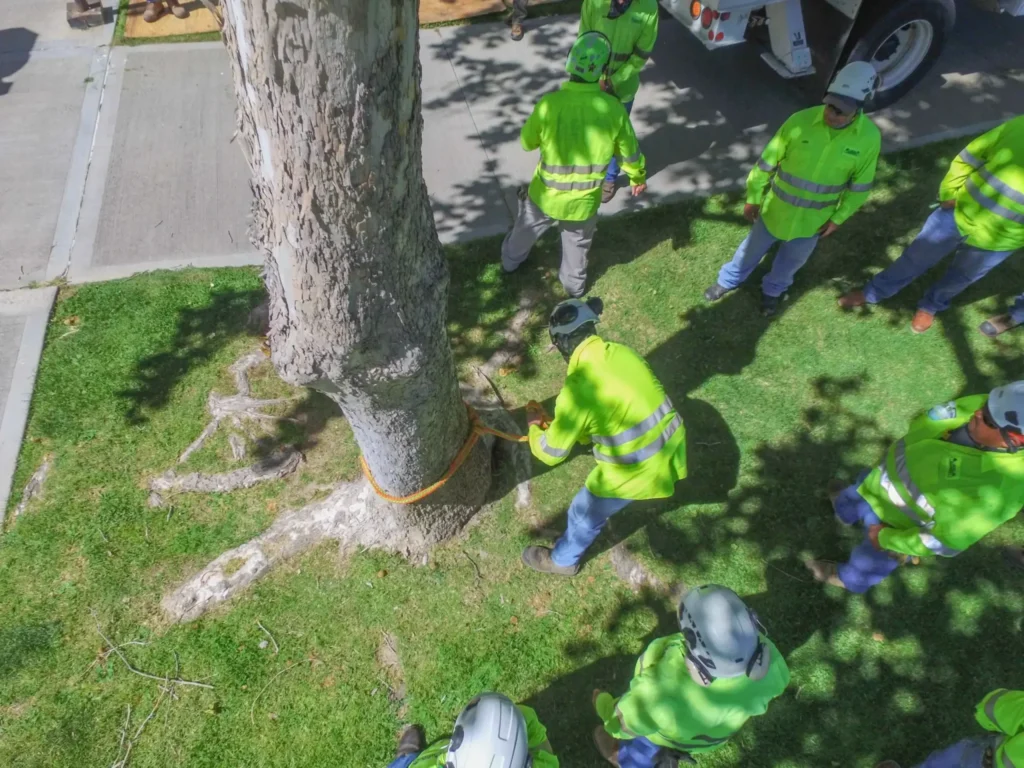
Some defensible space tasks are very DIY-friendly, such as mowing, raking, and removing small brush. The risk increases quickly when the job involves chainsaws, height, heavy limbs, power lines, or steep slopes. If a tree is dead, leaning, cracked, or close enough to hit a structure, that is usually the point where hiring a professional is worth it.
If you are hiring help, look for a crew that understands defensible space zones and can work zone-by-zone, rather than a blanket “clear everything” approach. A structured plan also makes documentation easier if an insurer or inspector asks what you did and when.
Zone | Distance | Goal | Fire season tree clearing focus |
Zone 0 | 0 to 5 ft | Ember resistance | Remove combustibles and debris nearest the home (CAL FIRE) |
Zone 1 | 0 to 30 ft | Fuel reduction | Lean, clean, and green, reduce ladder fuels (CAL FIRE) |
Zone 2 | 30 to 100 ft | Reduced fuel | Thin and space vegetation, remove dead material (FindLaw Codes) |
How far does defensible space extend in California?
PRC 4291 sets a 100-foot defensible space requirement from structures, not beyond the property line, for applicable areas. (FindLaw Codes)
Is Zone 0 really that important?
Yes. CAL FIRE emphasizes the first five feet as the most important area for ember resistance, and IBHS recommends a noncombustible 0 to 5 foot zone because embers often ignite materials right at the base of the structure. (CAL FIRE)
Do I need to remove all plants in Zone 0?
Guidance focuses on keeping the area closest to the home clear of combustible items and debris so embers have nothing to ignite. Zone 0 rulemaking has been evolving through the Board of Forestry process, so always follow the most current guidance for your jurisdiction. (bof.fire.ca.gov)
When should I schedule fire season tree clearing?
Earlier is better. Completing major work before peak heat and wind helps you avoid the seasonal rush and reduces the chance you are forced into last-minute decisions.
If you want help planning fire season tree clearing in a way that matches the zone approach, start with pruning and hazard removal near the structure, then work outward. For trees that are dead, unstable, or close to structures, professional help is often the safest path.
If you want Tip Top Arborists to assess hazard trees, pruning needs, or defensible space priorities, use the internal links above to book.
Tell us about your tree care needs and our team will follow up with a detailed estimate and recommended solutions.