
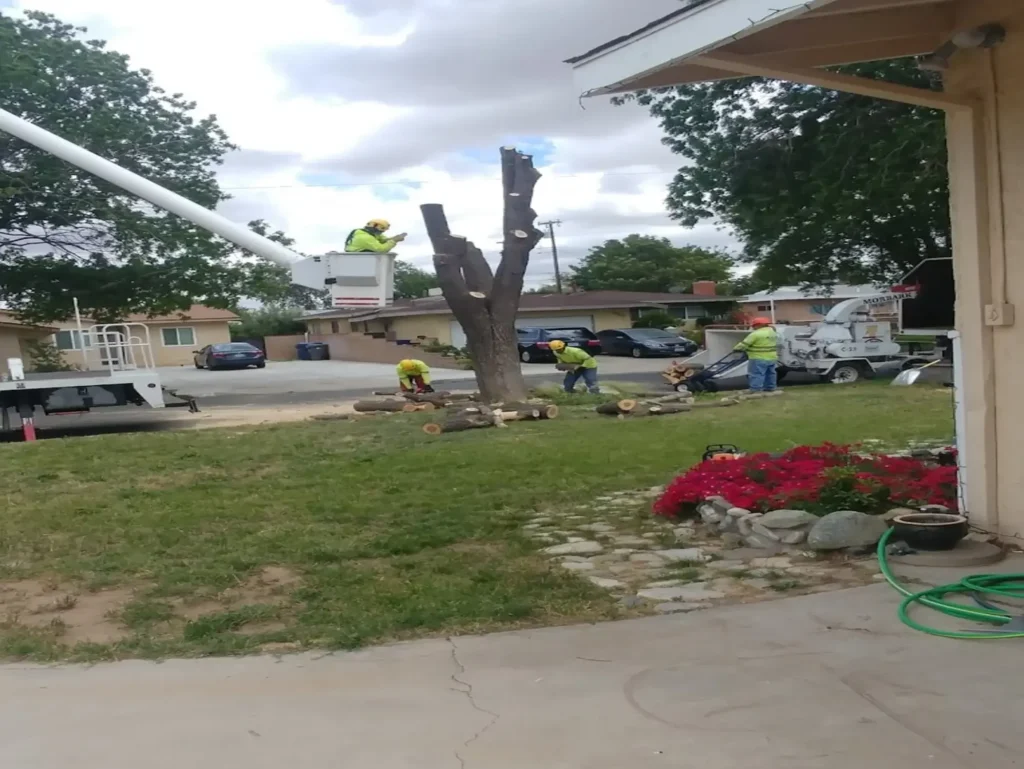
A tree just hit your house. Whether it was a storm, a sudden wind gust, or something that happened in the middle of the night, it is an instant shock. Your brain wants to jump straight to cleanup, but the first priority is safety and preventing the situation from getting worse. Emergency tree removal is part of the solution, but the order you do things in matters for your home and your insurance claim.
Use the steps below in order. If at any point you feel unsure, slow down and treat the scene like a hazard zone until professionals confirm it is safe.
Before you touch anything, make sure everyone is safe and accounted for. A fallen tree can compromise a roof or wall in ways that are not obvious at a glance, and a structure can shift after the initial impact. If you hear cracking, creaking, or see sagging, do not try to “grab a few things” and come back in. Move everyone to a safe distance and keep pets away from the area.
Even if the house looks stable, treat the impact zone like it can move. A tree can roll, settle, or shift as branches snap or weight redistributes. Your goal right now is zero injuries, not saving time.
Look for downed power lines or lines touching the tree, the ground, or your home. Assume every line is live and dangerous, and keep people well away. Southern California Edison’s safety guidance is clear: do not touch the wire or anything in contact with it, and call 911. (Energized by Edison)
If you smell gas, leave immediately and do not use switches, lighters, or anything that could spark. Call your gas utility from outside and away from the structure. If you are unsure whether you are smelling gas, err on the side of caution and stay out.
Once life safety hazards are handled, your next call should be an emergency tree removal service that handles storm and structural incidents. A tree on a house is under tension and compression, which means the wrong cut can shift the load and cause additional collapse. This is why “just cut it up” is a risky move, even if the tree looks simple.
When you call, ask directly:
If you want to verify arborist credentials, use the ISA public directory. (Trees Are Good)
Local help: https://tiptoparborists.com/emergency-tree-removal/
Before cleanup starts, take photos and video of the entire scene. Get wide shots from multiple angles, then close-ups of the impact point, broken limbs, roof damage, fence damage, and any interior damage you can safely see. This documentation matters because the scene changes fast once a crew begins cutting and rigging.
Also take photos of any contributing factors you notice, like obvious decay, a split trunk, or uprooted roots. Do not try to “investigate” by pulling bark or cutting anything, just document what you can see. If you have security camera footage, save it.
Insurance generally expects you to take reasonable steps to prevent additional damage, like protecting a roof opening from rain. The key word is reasonable. Do not climb onto a roof with a tree on it, and do not stand under suspended limbs.
If you can safely place a tarp from the ground or from a stable ladder positioned away from the danger zone, do so. Save receipts for tarps, plywood, and any temporary materials. If it is not safe, skip it and wait for professionals to stabilize the scene first.
As soon as you can, open a claim and get a claim number. Ask whether an adjuster needs to see the scene before removal begins, because some carriers want documentation before major debris is moved. If emergency tree removal must happen immediately for safety, tell the insurer that you are mitigating a hazardous condition and you have photos and video.
Coverage basics that often surprise homeowners:
If you are dealing with a neighbor’s tree, your insurer typically handles damage to your property first, and liability questions come later. Keep your communication factual and save any messages.
Emergency work costs more than scheduled work because it is urgent, higher-risk, and sometimes after-hours. These are common ranges homeowners see, but your site conditions and access can move the number up or down.
Situation | Typical cost range |
Small tree, minimal structural contact | $300 to $900 |
Medium tree, on roof or fence | $900 to $2,000 |
Large tree, heavy structural contact | $1,500 to $4,000+ |
Crane-assisted removal | $2,000 to $6,000+ |
After-hours premium | Add 25% to 50% |
If a crew recommends a crane, ask why. In tight access areas or when the tree is pinned against the structure, lifting sections out can reduce the chance of additional damage. It costs more, but it can prevent a bad situation from getting worse.
Once the immediate hazard is removed, you are not done. The next phase is making the site stable and preventing follow-up problems.
Stump and root decisions
Tree removal and stump grinding are often priced separately. If the tree was diseased or heavily infested, ask whether stump removal or specific disposal steps are recommended to reduce spread to nearby trees.
Debris and restoration
Confirm what “cleanup” includes. Some companies haul everything, some leave chips or logs, and some remove only what is required to clear the structure. Get this in writing so there is no confusion after the fact.
Assessment of remaining trees
If one tree failed, it is smart to check the others, especially those near the home, driveway, or power lines. A quick risk-based inspection can prevent the next emergency call and helps you plan maintenance in calmer conditions.
How long does emergency tree removal take?
Many residential removals take a few hours once a crew is on site, but complex structural entanglement or crane work can take most of a day. The first priority is stabilizing the situation so the tree does not shift into the structure during cutting. The timeline depends more on complexity than on tree size alone.
Do I need a permit for emergency tree removal?
Often, immediate hazards can be addressed without waiting for standard permit timing, but local rules vary. Some areas require notification after emergency work, even if they do not require pre-approval. If you are unsure, ask the tree company what applies locally and keep documentation.
Will insurance cover emergency tree removal?
If the tree damaged a covered structure, many policies cover removal, commonly with a debris removal limit such as $500 to $1,000 depending on the policy. (III) If the tree did not hit a structure, coverage is often not available, though some policies make exceptions such as blocking a driveway. (III)
How do I verify an arborist is actually certified?
Use the ISA directory to search and verify credentials. (Trees Are Good) This is a quick check that can help you avoid crews using “arborist” as marketing language without active credentials.
If you need emergency help, start here:
https://tiptoparborists.com/emergency-tree-removal/
Or book an assessment:
https://tiptoparborists.com/contact/
Tell us about your tree care needs and our team will follow up with a detailed estimate and recommended solutions.