Tree service Mojave CA is not a mild coastal climate where trees recover easily from bad cuts. The high desert is dry, windy, and harsh on wood and roots. Mojave’s long-term average annual precipitation is around 5.67 inches (historical station averages), which means most landscape trees rely on irrigation to survive. (Western Regional Climate Center)
That dryness changes how trees fail. Instead of slow rot, you often get brittle wood, fast dieback, and sudden limb drop after heat or wind. Add the area’s frequent high winds, and small defects become big problems fast.
Here is what we see over and over in high desert yards:
The takeaway is simple: desert conditions demand desert-specific pruning and risk decisions, not guesswork.
A good prune is not “make it smaller.” It is about structure, clearance, and risk reduction. In tree service Mojave CA, the most useful trims usually include deadwood removal, reducing end weight on long limbs, and correcting rubbing branches before they turn into decay pockets.
In tree service Mojave CA Late fall through late winter is often the safest general window for major pruning because trees are under less heat stress. Summer work should be limited to true hazards, especially on already stressed trees.
If your goal is wind risk reduction, ask about:
Tree service Mojave CA.Removal is usually the right call when the risk cannot be managed with pruning, bracing, or site changes. In tree service Mojave CA and Rosamond, removals often become necessary when:
A professional removal plan should include controlled sectional removal when targets are close, debris handling, and a clear stump plan.
Grinding is often quoted separately, but it matters. Stumps can attract pests, create trip hazards, and make irrigation and mowing miserable. Grinding typically takes the stump below grade so you can backfill and replant or landscape cleanly.
A tree service Mojave CA health inspection is worth it if you are seeing dieback, unusual leaf drop, cracking, or pest signs. It is also a smart pre-wind-season move if you have trees near roofs, driveways, block walls, or play areas.
A proper inspection looks at:
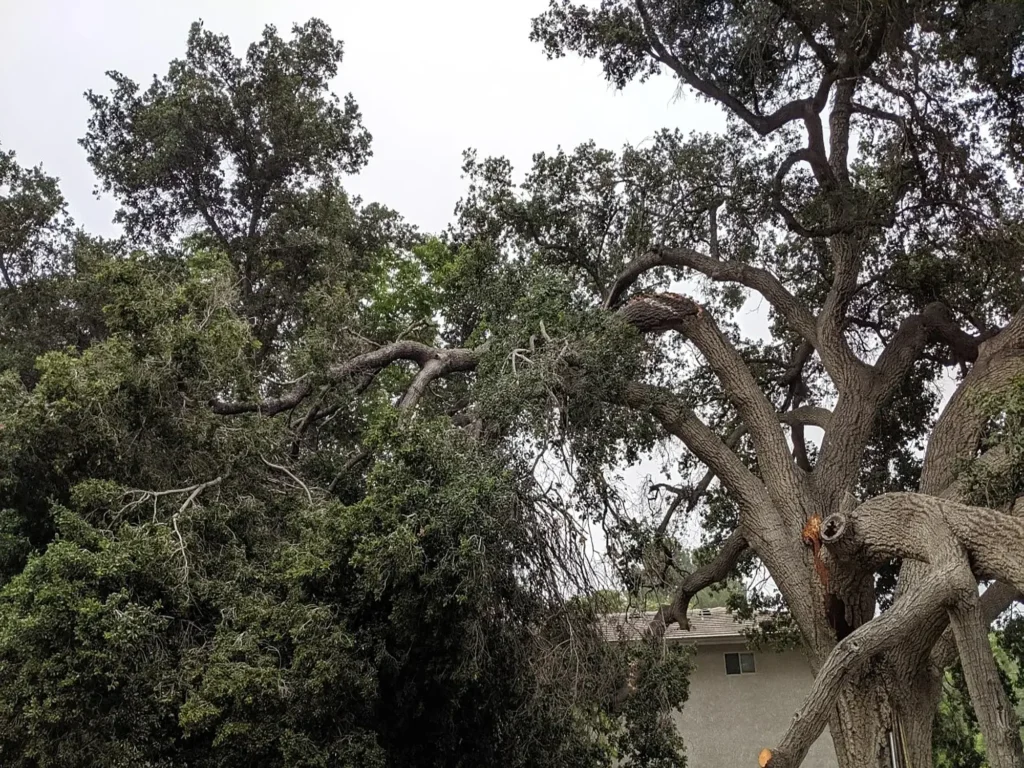
If a tree service Mojave CA is on a structure, blocking access, or hanging dangerously, that is when emergency response matters. If power lines are involved, your first call is the utility and emergency services.
Southern California Edison’s safety guidance is clear: stay far away from downed lines, call 911, and contact SCE to report the hazard.
Real pricing depends on access, targets, and hazard level, but these ranges help you sanity-check quotes:
Service | Typical range |
Small to medium tree trim | $150 to $450 |
Large tree trim | $400 to $900+ |
Small removal (under ~30 ft) | $300 to $700 |
Large removal (60 ft+) | $800 to $2,000+ |
Stump grinding (per stump) | $100 to $400 |
Emergency after-hours | add 25% to 50% |
What usually raises the price:
Always get the scope in writing: haul-away, cleanup, stump handling, and what happens if the plan changes.
Joshua trees have special rules. Under the Western Joshua Tree Conservation Act framework, permits and authorizations can apply to removal or impacts, with the California Department of Fish and Wildlife involved in the program and guidance. (California Fish and Wildlife)
If you suspect you have a Joshua tree, do not assume you can remove it because it is on private property. Start by checking the latest guidance and permit pathway.
Tree service Mojave CA.If you are clearing for fire safety, focus on defensible space and ladder fuel reduction near structures. CAL FIRE’s defensible space guidance explains the buffer and maintenance approach around buildings. (CAL FIRE)
A good tree company will talk about pruning and spacing choices that reduce ignition risk without creating new problems like sunscald and stress dieback.
California’s Contractors State License Board explains the “Check a License First” process and how to verify a contractor. Use it before any major job.
License check: https://www.cslb.ca.gov
You want:
If they cannot provide certificates, skip them. That risk can land on you.
For diagnosis, hazard calls, or anything near structures, ask if the person assessing the job is an ISA Certified Arborist. Many ISA chapters point homeowners to the official “Find an Arborist” tool for locating credentialed arborists.
Arborist search: https://www.isa-arbor.com/credentials/find-an-arborist
If a tree fails or a limb drops:
Do you really need yearly trimming in tree service Mojave CA?
Not always, but most properties do benefit from routine deadwood checks and occasional structural pruning. Wind-exposed sites and trees near targets usually need more frequent attention. The goal is consistent, light maintenance instead of big, stressful cuts.
Will insurance cover storm tree work?
Often only if the tree damages a covered structure, and it depends on your policy. Document first, then call your insurer before major cleanup when possible.
Is stump grinding worth it in the high desert?
Usually, yes. It reduces trip hazards, helps you regrade cleanly, and avoids leaving wood that attracts pests.
What is the safest pruning approach for wind resistance?
Deadwood removal and end weight reduction, plus selective thinning when appropriate. Avoid topping, and avoid extreme canopy reductions going into the hottest months.
If you want a tree service Mojave CA plan built for high desert wind, drought stress, and long-term tree safety, start with an on-site assessment and a clear written scope. Professional pruning and removal decisions help reduce storm risk and protect nearby structures.
For local booking and service information, contact our team here:
Tell us about your tree care needs and our team will follow up with a detailed estimate and recommended solutions.