This tree had been left mostly alone for about ten years.
You could see it in the canopy right away. Too full. Too stretched out. Too much weight sitting where it should not have been. Once windstorms started dropping larger limbs, the homeowner knew it was time to deal with it.
They did not want a rough cut job, though. That was important. They wanted the tree handled carefully, not stripped back for the sake of speed. Tip Top Arborists came out, looked at how the tree had filled in over time, and laid out a safer trimming approach. Todd handled the conversation directly, answered questions, and worked through the pricing with the homeowner. After the work was done, the tree felt more under control and a whole lot less concerning.
Location: Antelope Valley, CA
Service: Tree Trimming
Equipment Used / Tools: saws for detail cutting, pole pruners, climbing lines, harness gear, rigging equipment, branch lowering gear, hauling tools, and cleanup equipment
Crew: Todd and experienced Tip Top Arborists crew
Completion Time: Completed efficiently
The tree had gone a long time without proper trimming. About ten years. By that point it had filled out hard, carried too much weight, and had already started shedding larger limbs during windy weather.
That is when a tree stops feeling like a yard feature and starts feeling like a liability.
The homeowner needed the danger reduced, but they also wanted the tree treated properly. Not overcut. Not rushed. Just trimmed in a way that made sense for safety and for the tree itself.
“Amazing service! Our tree was 10 years overgrown and large limbs were breaking off in the windstorms. Todd was super nice and professional, worked with me on the price, and made sure our tree was absolutely safe and healthy. TipTop will be our go-to from now on!”
Trees that go too long without trimming can get risky in a hurry. Limbs get longer. Tips get heavier. Wind starts testing weak spots over and over until something gives.
That happens plenty in the Antelope Valley. Dry conditions, strong gusts, and long stretches of heat can make an overgrown tree feel stable… right up until a branch snaps loose.
This is the kind of job where homeowners usually need real guidance, not guesswork. What has to come off. What can stay. How much trimming is enough. Free estimates help with that too, especially when the goal is to get ahead of the next storm instead of reacting after damage is done.
Step 1: Start with the tree itself. It had gone close to a decade without proper trimming, and the warning signs were already there. Dense canopy. Extra weight. Large limbs coming down during windstorms.
Step 2: Talk through the condition of the tree and the trimming plan. Todd explained what was causing the risk, what needed attention first, and how the work would be approached.
Step 3: Discuss the pricing with the homeowner so the project could move forward with a clear understanding.
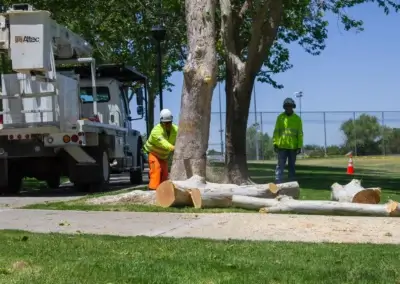
Step 4: Arrive ready for controlled trimming. Ropes, saws, rigging, safety gear, cleanup tools… everything was there before the first cut was made.
Step 5: Remove the heavy overgrowth and the limbs creating the biggest concern. The work was done methodically so the hazard could be reduced without rushing the job.
Step 6: Make careful cuts that supported the tree’s structure. The point was not just to take weight off. It was to leave the tree in better condition.
Step 7: Keep the work area organized and the property protected. Debris was managed as the job moved along, not just at the very end.
Step 8: Finish with cleanup and a final look over the tree. When the job was done, the canopy was safer, more controlled, and healthier looking overall.
Call (661) 942-5501 for a free estimate.
Yes. Have somebody look at it soon. Big limbs coming down is a warning sign, not something to wait on.
Yes. In many cases, careful trimming can improve structure and reduce risk.
Yes. You get a free estimate and a clear explanation before work begins.
The tree had been left alone for years, and it was starting to show it in all the wrong ways. After the trimming, it felt different. Lighter. More controlled. Not like something ready to drop another limb the next time the wind picked up.
A lot of that came down to how the job was handled. Todd stayed involved, explained the options in plain language, and worked with the homeowner on the pricing. That made the whole thing easier to deal with from the start.
And really, that is what people remember. Not just that the tree got trimmed. That the stress around it finally eased up.
Tip Top Arborists brings certified know-how, careful crews, and the kind of cleanup homeowners notice right away. Got a tree that feels overdue for attention? Getting eyes on it now is a whole lot easier than waiting for the next storm to make the decision for you.