Apple Valley tree care is shaped by the High Desert. Heat, wind, dry soil, wide temperature swings, and water limits all affect how trees grow and fail. A tree that would do well in a milder climate may struggle here if it is planted too shallow, watered poorly, or trimmed too aggressively.
That is why choosing the right tree service Apple Valley homeowners can trust matters. Desert tree care is not just cutting branches. It is understanding how trees respond to drought, wind, soil conditions, and property risk.Professional tree service Apple Valley companies understand how desert heat affects tree health.
Reliable tree service Apple Valley crews know how to manage drought-sensitive trees.Apple Valley landscapes often combine desert-native plants, ornamental shade trees, palms, fruit trees, and windbreak trees. Each one responds differently to heat and water. Some trees need deep watering. Many homeowners call a tree service Apple Valley expert after wind damage appears. Others decline when soil stays too wet. Many fail when roots never develop beyond a shallow irrigation zone.
An ISA certified arborist looks at the full tree system: canopy, trunk, root flare, soil, watering pattern, wind exposure, and nearby targets. That matters in a place where a stressed tree can become brittle before a homeowner realizes it is in trouble.
Tree decline in Apple Valley often starts slowly. Homeowners may notice thinning leaves, dry tips, small dead branches, or a canopy that no longer fills out in spring.Tree service Apple Valley professionals often inspect trees with thinning canopies and dry limbs.
Common problems include:
Early inspections from a tree service Apple Valley company can prevent larger safety issues.A single symptom does not always mean the tree has to come down. Several symptoms together are a reason to schedule an arborist inspection.
Pruning in the desert should be careful. Removing too much canopy can expose bark to sunburn, reduce shade, and stress the tree during hot months. At the same time, ignoring deadwood or heavy limbs can increase risk during wind events.Proper tree service Apple Valley pruning helps trees survive harsh desert summers.
Good pruning should:
A skilled tree service Apple Valley team avoids over-pruning during hot weather. Bad pruning often creates weak regrowth, decay, and future hazards.
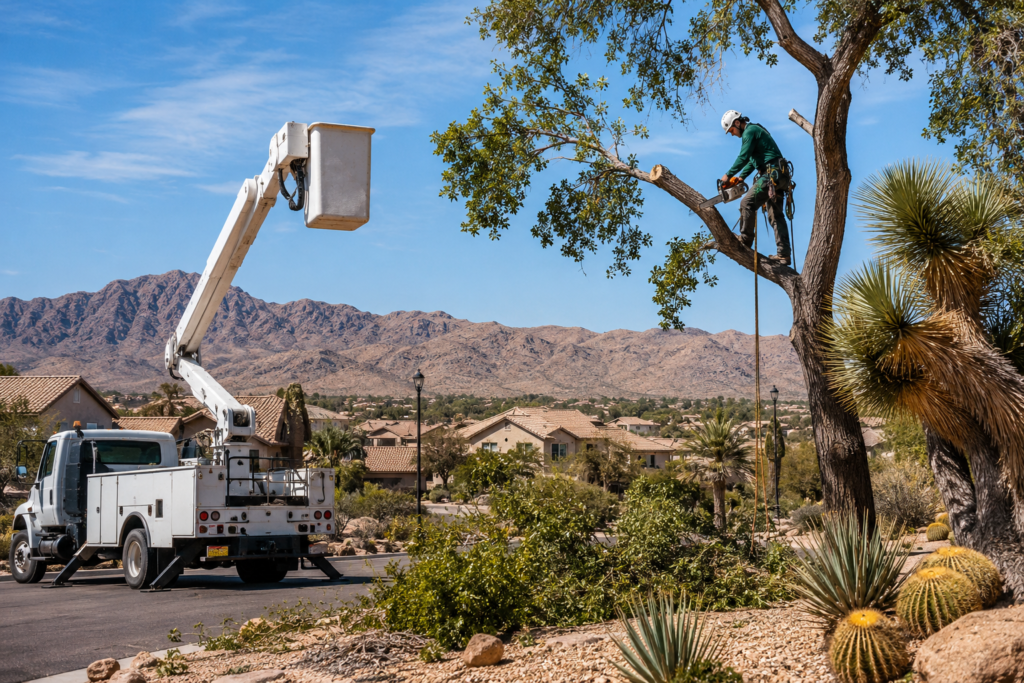
Tree removal may be necessary when a tree is dead, structurally unsafe, badly decayed, or too close to something valuable to manage safely. In Apple Valley, wind exposure can make weak trees more dangerous.Experienced tree service Apple Valley crews use safe removal methods near homes and driveways.
Removal may be needed when:
Tree service Apple Valley professionals should explain all risks before starting removal work.A good tree service should explain why removal is safer than pruning, and whether stump grinding is included.
Apple Valley homeowners should be careful with desert-native trees and plants. Western Joshua trees are protected under California law, and the California Department of Fish and Wildlife manages permits for certain work involving them.
The Town of Apple Valley also has water conservation and landscape standards that reflect the realities of desert landscaping. Before removing mature or native trees, check whether local, state, or HOA rules apply.
The cheapest bid is not always the safest bid. Tree work can damage roofs, walls, vehicles, fences, and underground utilities when it is rushed or poorly planned.Hiring the right tree service Apple Valley company reduces property damage risks.
Before hiring, ask:
A professional company should answer these questions clearly before work begins.
High-desert heat, wind, drought stress, soil conditions, and protected desert plants make tree care more complex than basic trimming.
It depends on species, age, condition, and risk. Many mature trees need periodic deadwood removal and structure checks, not heavy annual cutting.
Sometimes. Early stress may improve with better watering, mulch, soil care, and pruning. Advanced decline or structural failure may require removal.
Yes, especially for large, declining, protected, or hazardous trees. Certification helps ensure the person understands tree biology and risk.
Choose a licensed, insured company with high-desert experience, arborist knowledge, and a clear plan for pruning, removal, cleanup, and safety.
Apple Valley tree care requires desert expertise. The right plan protects shade, safety, property value, and tree health. If your tree is leaning, thinning, cracking, or dropping limbs, call a professional tree service Apple Valley team before the next wind event makes the decision for you.
Tell us about your tree care needs and our team will follow up with a detailed estimate and recommended solutions.