
The Climber’s Guide to Rope Selection: 5 Ropes Every Pro Should Know
Article Tip Top Arborists The Rigging Zone The Climber’s Guide to Rope Selection: 5 Ropes Every Pro Should Know Climbing Rope: Listen up, climbers. After fifteen years of hauling myself up everything from 200-foot redwoods to storm-damaged oaks in Lancaster’s windiest neighborhoods, I’ve learned that your rope isn’t just gear – it’s your lifeline, your partner, and sometimes your best friend when you’re 80 feet up dealing with a widow-maker. But here’s the thing that drives me nuts: I still see climbers treating rope selection like they’re picking out a garden hose. “Rope is rope,” they say. Well, let me tell you something – that attitude will get you hurt, cost you money, or worse, cost you your reputation when that perfect limb removal turns into a property damage nightmare because you used the wrong line for the job. So let’s talk about the five ropes that should be in every serious climber’s arsenal, and more importantly, when and why you’d choose each one. The Workhorse: 11.7mm Static Climbing Line This is your bread and butter, your daily driver. I’ve been running the same brand of 11.7mm static line for three years now, and it still inspects clean after thousands of climbs. The diameter gives you the perfect balance – thick enough to grip comfortably during long pruning sessions, but not so chunky that it weighs you down or fights you on redirect. Here’s what most guys don’t realize: that extra 0.2mm over an 11.5mm line makes a real difference when you’re working 8-hour days. Your hands stay fresher, your grip stays confident, and you’re not fighting rope burn through your gloves by lunch. I use this line for probably 70% of my climbs – routine pruning, dead wooding, basic removals where I’m not dealing with massive pieces. It handles body-weight loads all day long without stretching out, and the low-stretch characteristics mean your positioning stays predictable. Pro Hack: Mark your static line every 10 feet with colored tape. When you’re setting up complex rigging, you can call down exact measurements to your ground crew without having to estimate. “Send me 30 feet of line” hits different when you know it’s exactly 30 feet. The Smooth Operator: 11mm Dynamic Climbing Line Now, this is where things get interesting, and where I see a lot of climbers make mistakes. Dynamic rope has stretch built into it – usually 8-12% under working loads. Some guys avoid it because they think stretch equals unpredictable. Those guys are missing out. Dynamic rope shines in two specific situations: when you’re doing a lot of aggressive pruning where you might shock-load the line, and when you’re working in cold weather. That built-in stretch acts like a shock absorber for both you and your anchor points. I learned this lesson the hard way during a December storm cleanup. I was using my regular static line in 25-degree weather, and the rope felt like climbing a steel cable. Every movement jarred my joints, and by the end of the day, I felt like I’d been hit by a truck. Switched to dynamic the next day, and it was like climbing on a completely different planet. The downside? That stretch can work against you during precision cuts. If you’re trying to position yourself exactly 18 inches from a delicate branch, that stretch can throw off your spacing. Know when to use it. The Heavy Hitter: 13mm Rigging Line When the job calls for moving serious weight, this is your go-to. I’m talking about pieces over 500 pounds, complex rigging scenarios, or any time you’re dealing with forces that would make your regular climbing line nervous. The thing about 13mm rigging line is that it’s not just about strength – though the working load limit is substantially higher. It’s about heat dissipation and wear resistance. When you’re lowering a 800-pound oak limb and that rope is running hot through your friction device, that extra diameter spreads the heat across more surface area. I’ve seen guys try to save money by using their climbing line for rigging work. It’s a false economy. You’ll burn through $300 worth of climbing rope trying to save $150 on proper rigging line. What Went Wrong: Last spring, I watched a crew try to lower sections of a massive cottonwood using 11mm line. The rope didn’t break, but it got so hot during the lower that it glazed the sheath. That rope went from trustworthy to trash in one job. The kicker? They had proper rigging line on the truck but didn’t want to “waste time” switching over. The Precision Tool: 10mm Throwline-Compatible Climbing Line This is a newer addition to my kit, and honestly, it’s changed how I approach certain jobs. When you’re dealing with complex canopy work where you need to set multiple points quickly, having a climbing line that doubles as heavy-duty throwline is a game-changer. The 10mm diameter means it’s light enough to throw accurately with a throw bag, but strong enough to climb on once it’s set. I use this primarily for storm damage cleanups where I need to get multiple lines set quickly in compromised trees. The learning curve is real, though. The smaller diameter means your standard friction devices might not grab quite the same way. I had to adjust my technique and, in some cases, add extra wraps to get the same control I’m used to with thicker lines. The Specialist: Hollow-Braid Rigging Line This one’s for the gear heads and the guys who do a lot of technical rigging. Hollow-braid construction lets you splice eyes directly into the rope without any hardware. The result is a connection that’s stronger than the rope itself and creates no stress concentrations. I primarily use hollow-braid for permanent installations – like cabling systems or complex rigging setups that need to stay in place for extended periods. The splice work takes practice, but once you get it down, you can create custom-length slings and rigging configurations that would be impossible
Sprout’s Amazing Discovery: The Secret Life of Tree Roots
Sprout’s Amazing Discovery: The Secret Life of Tree Roots By: Tom Baal Eight-year-old Sprout loved spending Saturday mornings in his backyard in Lancaster, watching the wind dance through the leaves of the old sycamore tree. But today was different. Today, he noticed something that made him stop mid-step and scratch his head. “Mom!” he called out, pointing at the base of the tree. “Why is there a big bump in the ground here?” His mom walked over, her gardening gloves still dirty from planting tomatoes. She smiled when she saw what had caught Sprout’s attention. The recent spring rains had washed away some soil, exposing thick, woody roots that twisted and curved like nature’s own sculpture. “Those are roots, honey,” she explained, kneeling down beside him. “They’re like the tree’s underground arms, reaching out to find water and food.” Sprout’s eyes grew wide. He’d always known trees had roots – everyone knew that – but he’d never really thought about what they looked like or what they did all day down there in the dark. “Can we dig them up and see more?” he asked eagerly. “Well, we can’t dig up this tree’s roots because that would hurt it,” his mom said gently. “But I have an idea. Remember that small oak tree we planted last year? It’s still in its pot. We could carefully remove some soil and take a peek.” Ten minutes later, Sprout was crouched over the potted oak tree, carefully brushing away soil with an old paintbrush. What he discovered made him gasp with delight. The roots weren’t just a few thick branches – they were an entire underground city! Tiny white roots, no thicker than thread, spread out in every direction. Some roots were brown and sturdy, while others were so fine they looked like hair. “Look at all of them!” Sprout whispered, as if speaking too loudly might disturb the root network. “They’re everywhere!” His mom nodded, clearly enjoying his excitement. “Trees are amazing, aren’t they? Those thick roots you see are like the tree’s main highways – they provide structure and carry water and nutrients up to the trunk and leaves. The tiny white ones are like little explorers, always searching for water and minerals in the soil.” Sprout leaned closer, his nose almost touching the soil. “Do they ever stop growing?” “Not really,” his mom chuckled. “As long as the tree is alive and healthy, its roots keep growing and exploring. In fact, a tree’s root system is usually much wider than its canopy. See our sycamore tree?” She pointed to the towering tree that shaded half their backyard. “Its roots probably spread out as far as its branches reach, maybe even farther.” This revelation blew Sprout’s mind. He looked at their sycamore tree with new respect. All this time, he’d been thinking of it as just the part he could see – the trunk, branches, and leaves. But really, there was an entire hidden half of the tree living right beneath his feet! “Mom, do you think the roots from our tree touch the roots from Mrs. Garcia’s tree next door?” Sprout asked, his imagination running wild. “They very well might,” she replied. “Trees are much more connected than most people realize.” That afternoon, Sprout couldn’t stop thinking about the secret underground world in his own backyard. He grabbed his notebook and colored pencils and started drawing what he imagined it looked like down there. He drew roots reaching toward each other like hands trying to shake. He drew earthworms wiggling between the roots, and he even drew tiny root cities with root mayors and root schools. When his dad came home from work, Sprout was bursting with excitement to share his discovery. “Dad, did you know that trees have invisible underground arms that are probably touching every tree in our whole neighborhood?” he announced before his dad had even taken off his work boots. His dad smiled, the kind of smile parents get when their kids discover something wonderful. “Show me what you learned, buddy.” Sprout led his dad to the potted oak tree, which they’d carefully replanted after their root investigation. Then he showed his detailed drawings and explained everything he’d learned about tree root systems, using scientific words like “nutrients” and “structure” that made him feel very grown-up and important. “You know what this means?” his dad said, ruffling Sprout’s hair. “Every time we water our trees or add good soil around them, we’re helping feed not just our trees, but we’re contributing to the health of trees all around our neighborhood.” That night, as Sprout brushed his teeth before bed, he looked out his bathroom window at the sycamore tree silhouetted against the Lancaster sunset. He couldn’t see the roots, but now he knew they were there – a vast, living network spreading out under his feet, connecting his tree to the world in ways he’d never imagined. Sprout Needs Your Help Hey there, young tree explorers! Sprout is so excited about his root discovery that he wants to share the adventure with you. This weekend, ask a grown-up to help you find a small potted plant or tree at home. Very gently, you can brush away a tiny bit of soil from the top to see if you can spot any roots. Remember to be super gentle – roots are delicate! After you look, make sure to put the soil back. Then, grab some paper and draw what you think the underground root world looks like. Are there root highways? Root neighborhoods? Root playgrounds? Let your imagination run wild and create your own underground tree city! Remember: Every big tree starts with a little helper. Did You Know? How deep do tree roots grow? Most tree roots grow in the top 18-24 inches of soil where they can find the most oxygen, water, and nutrients. Very few roots grow deeper than 6 feet, even on huge trees! Do tree roots really connect to other trees?
Dreaming Trees: How Artists and Poets Found Muse Among Branches
Dreaming Trees: How Artists and Poets Found Muse Among Branches It begins with the rustle of leaves. Not loud, not hurried – just the kind of sound that hushes everything else. A breeze moves through the branches like breath, and the whole world seems to slow. For centuries, trees have not only shaded the earth but shaded thoughts too, pulling dreamers into their stillness, coaxing artists and poets into quiet reverie. There is something about a tree that asks nothing and gives everything simply by existing. By growing. By staying. Painters have followed the twist of branches like lines on a page, finding rhythm in their chaos. Van Gogh, for instance, was captivated by cypress trees in the Provençal landscape. He didn’t treat them as scenery, but as subjects full of feeling. In his paintings, they rise and wriggle like flames – alive, unsettled, bursting with energy. To Van Gogh, trees were not just part of the backdrop; they were emotion made visible. He often wrote about them in his letters more than he painted them. “They speak to me,” he once said. Not literally, of course, but in the way trees communicate – through leaning, swaying, and the slow spiraling of limbs toward light. In their posture, in their patience, he saw something worth listening to. Poets, too, have long turned to trees when words grew distant. William Wordsworth may have wandered lonely as a cloud, but more often, he wandered through woods. Leaves underfoot, lichen on stone, birdsong overhead – these were not distractions, but invitations. He called nature “the anchor of my purest thoughts.” To write clearly, he needed to listen first. Not to the noise of people or politics, but to the quieter sounds of the natural world. That habit hasn’t disappeared with time. Many modern poets still admit their best lines arrive not at desks, but on walks under trees, where the branches arch like cathedral ceilings and silence feels generous instead of empty. A tree invites pause. It doesn’t rush. It doesn’t scroll or buzz. It simply stands, and in doing so, it models a slower kind of noticing. Georgia O’Keeffe once said she could spend hours just watching the shape of a single branch. Her tree paintings aren’t romanticized or idealized. They are direct, spare, and reverent. She painted the skeleton of trees with as much intimacy as her famous flowers, not for their beauty alone, but for their sheer presence. To her, a bare tree wasn’t empty – it was honest. And that honesty gave it power. Some artists spend days under the same tree, sketching from different angles, waiting for the light to shift. Others return to a single grove over years, watching how it changes and how it stays the same. They speak of something shifting in them, too – a kind of returning. A remembering. In those quiet sessions, creativity doesn’t come like a lightning bolt. It comes like sap. Slow. Steady. Alive. Even those who never roamed wild forests found ways to bring trees into their art. Emily Dickinson, often confined to her home, filled her poems with beeches, birches, and imagined woodlands. For her, trees were more than symbols. They were companions. Witnesses. Keepers of things unsaid. In her verses, trees held secrets and meanings that society wasn’t yet ready to hear. They stood silently in the margins of her life – much like she did – yet carried tremendous weight. Trees, for Dickinson, weren’t just decorative. They were essential. There’s something beautifully stubborn about trees. They continue growing even after losing limbs. They bend without breaking. They endure seasons, droughts, storms. In their scars, they store memory. In their rings, they keep time. Artists, often bruised or bewildered by the world, look to trees as proof that survival can still be beautiful. That growing older doesn’t mean fading. That brokenness isn’t the end of the story. In Japanese haiku, the cherry blossom represents more than springtime. It holds within its bloom the ache of impermanence – beauty and sorrow in the same breath. The poet Bashō wrote often about trees, especially in the fleeting moments when blossoms fell like snow. His verses, so short yet heavy with emotion, showed how trees could capture the whole of life in just a few lines. In haiku, trees are not just part of the setting. They are the story. They mark beginnings, endings, and everything in between. They are clocks and calendars. They are ancestors. Leonardo da Vinci didn’t paint trees just because they were pretty. He studied them. He observed how branches split and curved, how the flow of sap resembled the flow of blood. To him, a tree was a map of the body, of nature, of the universe. That idea – that trees reflect us – has echoed through centuries of art. We see ourselves in trees. Their roots mirror our past. Their leaves, our thoughts. Their reach, our hopes. This belief shows up everywhere, if you look closely. In Gustav Klimt’s swirling Tree of Life, golden spirals twist like tangled dreams. In Joni Mitchell’s lyrics, when she laments, “They paved paradise,” the absence of trees becomes a kind of grief. In Maya Angelou’s voice, trees are not passive – they speak. “A tree called life began to talk to me,” she wrote, inviting us to hear what we too often ignore. Even today, artists and writers continue to dream under trees. In children’s books, trees become magical guardians. In galleries, installations feature fallen branches or sculptures made from driftwood. Some creatives use leaves as paintbrushes. Others carve verses into stumps or let moss grow over their canvases. Trees remain relevant not just because they are beautiful, but because they are generous. They offer space. They offer perspective. And most importantly, they offer stillness. Walk into any forest, and you’ll feel it. That hush. That breathless quiet where even your own footsteps feel loud. It’s not your imagination – or maybe it is, but
Do Trees Add Value to Your Property?
Some homeowners avoid planting trees because they don’t want to deal with time-consuming projects like leaf raking, fertilizing, and more. However, they miss out on the opportunity to increase their home’s value. This begs the question: Do trees add value to your property? Discover the answer below from Tip Top Arborists, a trusted provider of tree services in Bear Valley Springs, CA. Trees Enhance Curb Appeal, Which Attracts Buyers Say two homes have the exact same style but have vastly different landscapes. One has beautiful, vibrant trees strategically placed around the yard, while the other is completely bare. Which home do you think would draw your attention first? All it takes is one stunning tree canopy to improve curb appeal and make your home more desirable. If you plan on selling, your robust landscape could cause buyers to offer more than they would on a house without as much visual appeal. Your Home Can Become More Energy Efficient Thanks to Planted Trees How do trees add value to your property? Believe it or not, they can make your home more energy efficient. One of the biggest environmental benefits of planting trees is that they help keep your home cool. With several structures towering over your home, the leaves will block the sun from hitting your roof. This ultimately keeps your indoor temperature lower so you can use your air conditioner less during the sweltering summer months. If you want an abundance of shade, trees will certainly come in handy. The boost in property value and energy efficiency is another excellent perk. Use Tree Aesthetics To Increase Privacy One thing many buyers value when looking for homes is privacy. Would you want a backyard where your neighbors can see your every move or one that is a bit more private? Consider planting trees around the area to create a more secluded space. Work with a certified arborist to find the right species for your property. Popular varieties to plant include: Maples Oaks Elms Hickories Experts will help you choose a tree that will thrive in your climate and even recommend spots in your yard where it will grow tall. Maintain Excellent Tree Health To Raise Your Property Value Keeping well-maintained trees on your property can significantly increase the value of your home. However, if you aren’t careful, you may find your home’s worth depreciating. Consider how a dead tree impacts curb appeal, energy efficiency, and privacy. Without any lush leaves, the structure won’t shade your home or shield your yard from nosy neighbors. Your curb appeal will also suffer until you remove the eyesore. Failing to care for your vegetation can have this adverse effect. Prioritize the best tree care practices to avoid an unwanted decline in property value. Contact Tip Top Arborists for Tree Maintenance Services Not only do trees add value to your property, but they also make for beautiful landscapes full of shady spots. Discover the advantages of backyard trees and tend to them properly with the help of Tip Top Arborists. Call (661) 942-5501 to schedule a service today!
Four Signs a Tree Needs To Be Removed in Leona Valley, CA
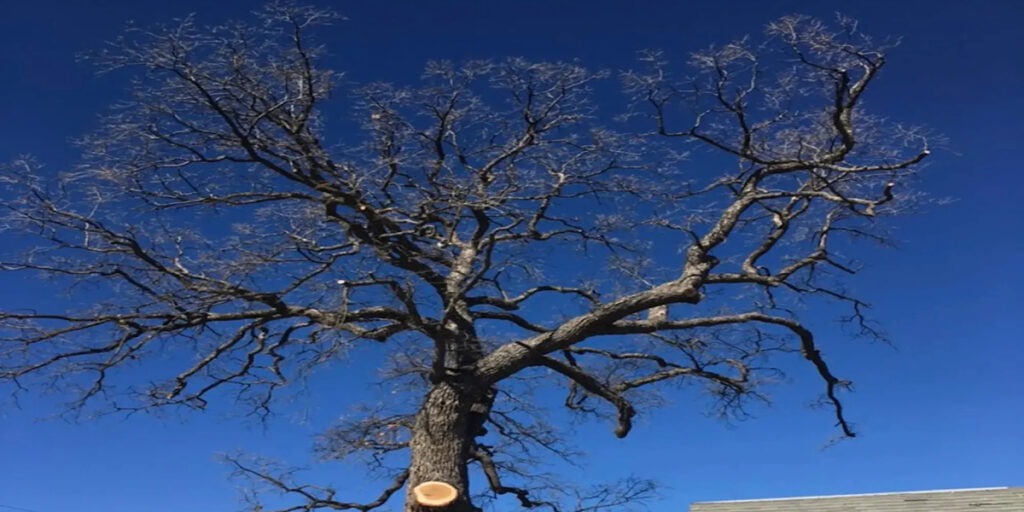
If your tree is nearing the end of its life or poses a significant hazard to your property, removing it now can save you a lot of headaches and expense if it were to fall over. But how do you know when it’s time to remove a tree? Often, tree services in Leona Valley, CA, prefer not to remove trees unnecessarily. Trees present a wide range of environmental benefits, and removing them without cause can be harmful. But these are a few signs a tree needs to be removed. 1. The Tree Is Significantly Leaning in One Direction Trees should ideally grow straight up and down. But a tree might begin leaning in one direction if it regularly endures strong winds, cannot reach adequate sunlight with its original growth pattern, or no longer has the root integrity it needs to stand tall. A leaning tree is at serious risk of falling. If your home, car, or any other structures are in the path of the tree, an arborist may recommend removing it to mitigate this hazard. Often, once a tree has begun leaning, it is too late to implement any measures that would reverse this directional change. 2. The Tree Has Serious Root Damage A tree’s roots play a significant role in its structural integrity. They keep the tree firmly anchored in the ground, helping it withstand strong winds and storms without budging. However, when roots become damaged, they can weaken the tree’s structure and pose a risk of falling. Roots may become damaged from: Extended periods of drought, which are common in Leona Valley Disturbance by a lawn mower, construction equipment, or other heavy machinery Root rot, caused by overwatering Disease or pest infestation An arborist may start by attempting to revive the roots with fertilization, aeration, and a better watering schedule. But if these efforts fail, the best course of action may be to remove the tree. 3. The Tree Has Endured Significant Storm Damage One of the most obvious signs a tree needs to be removed is serious storm damage. If your tree lost a significant amount of its canopy during a storm, started leaning to one side, or has already begun falling, schedule professional tree services promptly to remove the tree and prevent any further damage. 4. The Tree Shows Signs of Late-Stage Disease or Pest Infestation When a tree has been left to succumb to disease or pest infestation for many months, it often cannot recover, necessitating removal. Signs of late-stage tree decay and infestation include: Widespread bark damage Brown leaves making up the majority of the canopy Stunted growth Visible insects or fungal growth Let Us Assess Your Tree’s Health You don’t need to be an expert in recognizing the signs a tree needs to be removed. You just need to know where to find one. At Tip Top Arborists, we perform comprehensive dying tree inspections and removals. Call us today at 661-942-5501 to request a free estimate for service, then explore wood chip disposal ideas for after your removal.