
What Is a Web Sleeve? Tree Rigging Guide | Tip Top Arborists
Master arborist rigging with this expert guide to web sleeves. Learn safety uses, specs, and pro tips from Tip Top Arborists in Lancaster, CA.
Professional arborist services Lancaster CA
certified arborist Lancaster CA, tree service expansion, professional climbing gear, arborist equipment recommendations
Storm-Damaged Tree Removal in Lancaster | Tip Top Arborists
Emergency storm-damaged tree removal in Lancaster, CA. Learn Tip Top Arborists’ expert rigging methods for safe, 24/7 rescue and debris cleanup after high winds.
Palm Tree Rigging in Lancaster CA | Tip Top Arborists

Safely remove towering palm trees in Lancaster. Learn expert rigging techniques from Tip Top Arborists—ISA-certified pros with 45+ years of palm experience.
The Spiral Grove: Sacred Geometry in Forest Growth
The Spiral Grove: Sacred Geometry in Forest Growth Walk quietly through a grove untouched by time and you might notice what seems at first like a coincidence. A curve in the roots matching the curl of a fern. The sweep of a branch echoing the spiral in a pinecone. These patterns do not shout. They murmur. They emerge, gently, like the way moss traces the ridges of a fallen log or how leaves fall in spirals rather than straight lines. Forests are not wild in the chaotic sense. They are wild like music is wild, composed and precise yet free and unbounded. Every growth ring, every branch split, every unfurling tendril follows laws older than language. Sacred geometry, they call it. But to the trees, it is simply how they grow. The golden ratio is not a theory here. It’s the law of existence, etched into bark, embedded in leaf veins, carved by time into trunks that have seen centuries pass like seasons. Nature prefers elegance. She arranges seeds in Fibonacci spirals to maximize space and light, coaxing harmony from every stem. Trees do not guess. They respond, adapt, and align with unseen rhythms – the slow dance of sunlight, wind, and soil memory. Consider the center of the spiral. In some traditions, it is the beginning of all things. In others, it is the path inward, a journey toward the soul. When trees grow in spiral groves, their trunks bending ever so slightly, curving with gravitational pull or the turning of stars, we walk unknowingly through sacred architecture. The druids knew. Ancient peoples built stone circles that echoed the spiral growth of forests. They understood that energy moves in curves, not straight lines, and that the spiral is both a journey and a homecoming. Even decay follows these forms. Fallen branches curl as they dry. Fungus grows in rings. Tree roots spread like whirlpools, not grids. A forest is a living geometry lesson, drawn in bark instead of chalk. Its design is not linear but recursive, ever looping back to the beginning. Like breath. Like seasons. Like memory. When the wind passes through a spiral grove, the sound changes. It is softer, layered. Like a chorus singing in rounds. You feel it before you hear it – a hush that settles in your chest, telling you to listen with more than your ears. This deep, sensory immersion mirrors the Japanese practice of forest bathing (Shinrin-yoku), where simply being among trees is a healing act, inviting calm, clarity, and presence. There are places where spiral groves are said to alter time. Where people forget how long they’ve wandered or come back changed, lighter or quieter. These may be stories, or they may be truths we’ve forgotten how to measure. In the heart of a spiral grove, you can feel watched, but not in fear. It is a presence that holds rather than haunts. Trees that lean toward each other, roots tangled in elegant equations. You walk forward but feel as if you are going deeper, like descending into a thought that has no end. It is peaceful, but also slightly unsettling, the way truth often is. The geometry of the forest doesn’t need to explain itself. It simply exists, like a poem that writes itself on the skin. If you lie down and look up in such a grove, you may see branches forming circles, not randomly, but as if drawn by intention. Light filters through in patterns so regular it could be mistaken for design. But no human designed this. Or perhaps one did, long ago, when the first trees emerged from the sea and turned sunlight into sugar. The spiral is older than religion. Older than stories. It is how galaxies move and how shells are made. The forest remembers. It is built from these curves. You may step between the trees and suddenly sense a shift. Like stepping into a temple without walls. There are no straight lines in this sanctuary. Only arcs and whorls, crescents and coiled intention. Even the spaces between things feel purposeful. Ferns don’t just grow – they unroll. Leaves don’t just fall – they dance. Trees don’t just stretch – they spiral, in body and in memory. Here, time folds. You think of the snail shell your child once held to their ear. The echo inside it, like a forest whisper. You remember your grandmother’s hands tracing the swirl of a cinnamon bun, or the galaxy on a science poster in a childhood classroom. Spirals everywhere. The universe humming a tune we all forgot we knew. There is something humbling about realizing that you are walking among mathematicians with leaves. These trees are not just living things; they are equations in motion. Their growth is not haphazard – it is exact. They measure with light and reach in arcs. They split in binary and divide in thirds. They do not need rulers or reasons. They only need the sun. And perhaps you do, too. Because the longer you stay in a spiral grove, the more you remember your own shape. Not a straight line. Not an endpoint. But a path that circles and deepens, returning always with a new eye. You recall every moment where life curved unexpectedly and brought you to new clarity. Not chaos, but choreography. Not disorder, but design. When you leave a spiral grove, something comes with you. A quieting. A centering. A reminder that not everything that moves forward is progress, and not all paths are straight. There is wisdom in the curve, in the return, in the winding way. The forest does not rush. It grows in spirals, because life is not a line but a cycle. And we, like the trees, are drawn toward the center – again and again. Did You Know? The Fibonacci sequence—1, 1, 2, 3, 5, 8, etc.—is found in pinecones, sunflowers, and tree branches, helping maximize light and space. Many trees grow new branches in spiral patterns, typically separated
Power Line Tree Work Lancaster CA | Tip Top Arborists
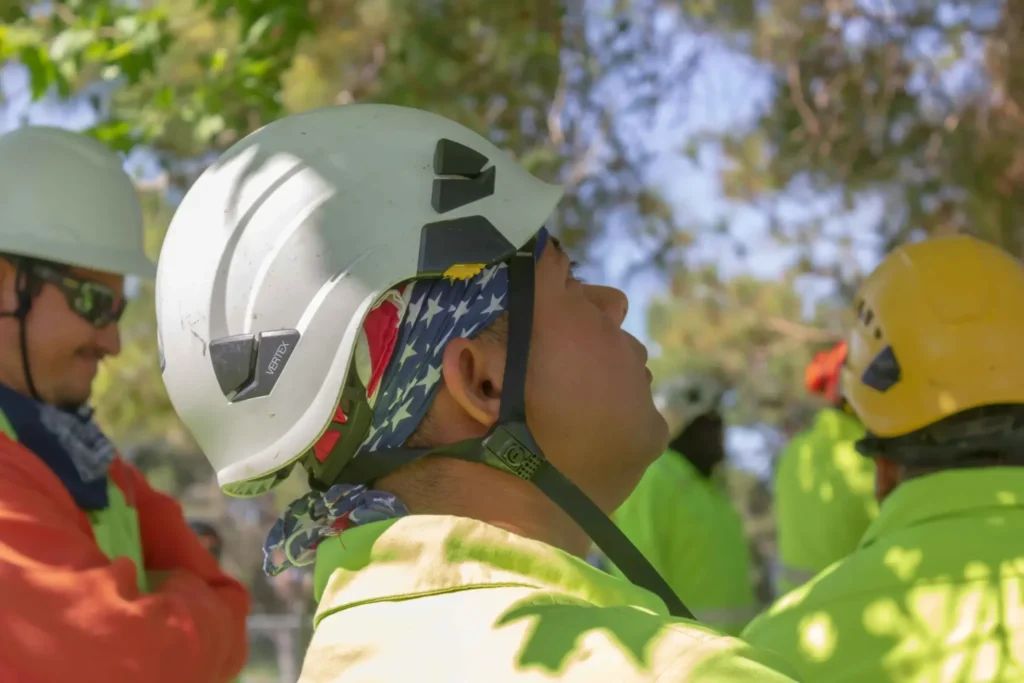
Tree trimming near power lines in Lancaster requires expert handling. Tip Top Arborists explains safety laws, certifications, and emergency response steps.
Safe Tree Rigging Tools for Tight Spaces | Tip Top Arborists
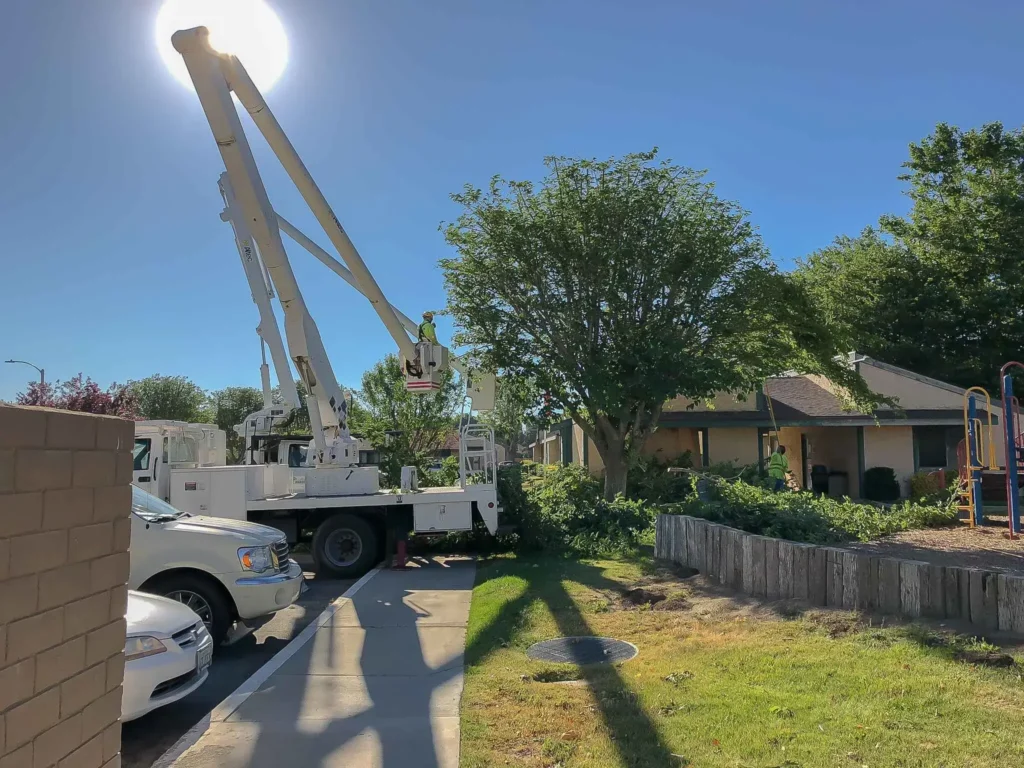
Explore essential rigging tools for tight tree work in Lancaster, CA. Tip Top Arborists share expert techniques, safety tips, and gear trusted for 45+ years.
Tree Removal Lancaster CA – Wayne Watts’ 5-Star Experience with Tip Top Arborists
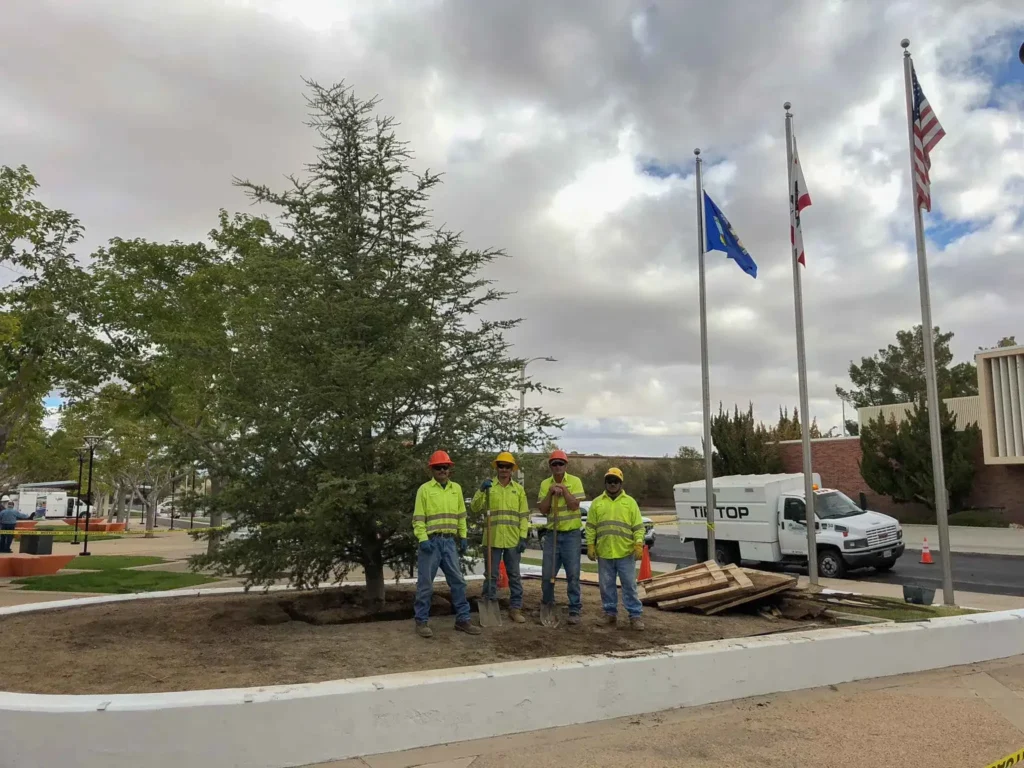
Professional tree removal Lancaster CA case study featuring Wayne Watts’ exceptional experience with Tip Top Arborists. Expert service, fair pricing, and complete satisfaction. Get your free quote today!
The Watchers: Trees That Have Stood Through Empires and Eras
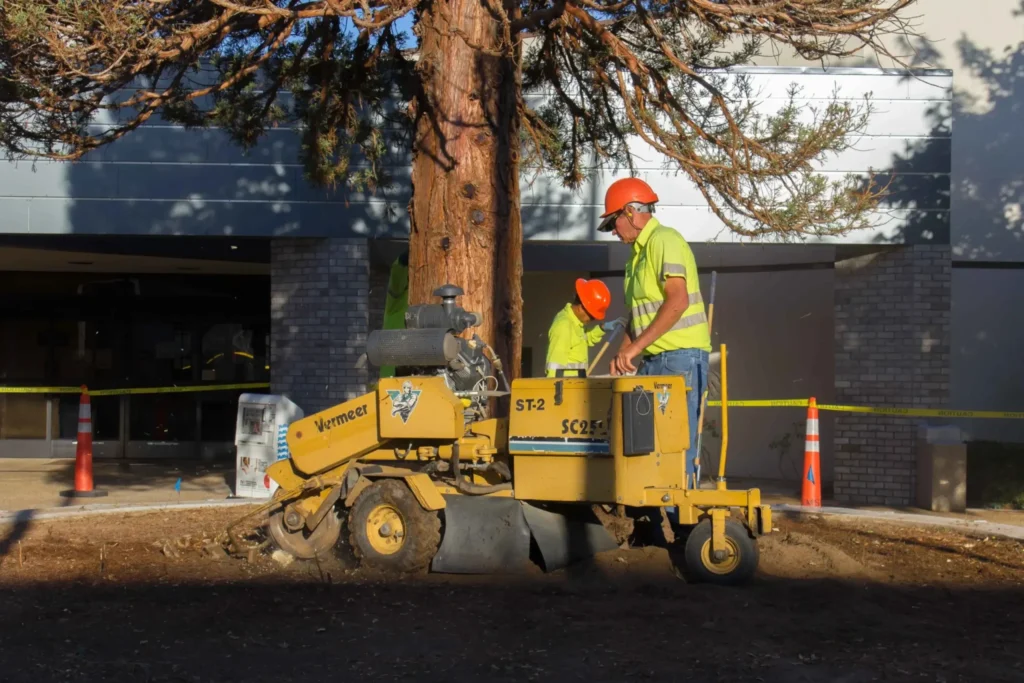
The Watchers: Trees That Have Stood Through Empires and Eras There are trees whose roots reach deeper than memory, deeper than the bones of fallen kings or the cracked marble of long-forgotten cities. They rise from the earth like quiet sentinels, wrapped in the silence of centuries, bearing witness to the world’s breathless churn. These are the watchers – ancient trees that have seen history unfold not in pages, but in the shifting winds and footprints of those who passed beneath their shade. Imagine standing beneath an olive tree in the hills of Greece, its twisted limbs grown gnarled from thousands of seasons. The same tree that shaded philosophers now leans toward the sunrise, leaves whispering names that have long since faded from stone. Or picture the great bristlecone pines in North America, whose wooden hearts are older than most civilizations, older even than writing. In their silence, they are storytellers of another kind – ones who record through rings and resin rather than ink. These trees do not speak with voices, but they speak all the same. In the hush of late afternoon, when the light drips gold down bark and branch, you might feel their gaze. Not watching like a person, but more like time itself – observing, holding, remembering. The forest is not just alive. It is aware. There are stories of yews planted beside cathedrals older than the roof above them, trees that have survived fires, floods, wars, and the slow creep of stone into soil. In Japan, the sacred camphor trees near shrines stretch toward the heavens, hollow in parts from lightning but still pulsing with green. In India, banyans grow like walking cathedrals – roots dripping from sky to earth as if time itself is trying to anchor down. We often think of history as something made by people, but the trees know better. Empires are brief flickers compared to a trunk grown patiently over 1,000 years. These arboreal witnesses do not choose sides. They watch kings crowned and dethroned. They watch cities rise in celebration and crumble into dust. Where we forget, they remember. Their bark holds the fingerprint of rain centuries old. Their roots have heard the laughter of barefoot children long buried, the hymns of monks under stars that no longer shine in the same place. There is a power in that sort of presence – a deep, grounded kind of wisdom that does not need to move to understand. Some trees were once used as meeting places, where tribes settled disputes beneath oak limbs. Others were execution sites or sacred altars, their bark stained by ritual and sorrow alike. In these ways, trees have absorbed not only the natural but the human: our emotions, our ceremonies, our mistakes. They carry our echoes. In a fast-moving world obsessed with the next thing, it is comforting, even humbling, to remember that some things still stand still. Not stuck – but steady. Not passive – but purposeful. The watchers remain not because they resist time, but because they have learned how to befriend it. Next time you walk through an old forest, listen. Let the hush stretch. Let the air settle into your lungs like soft moss. That stillness isn’t emptiness – it’s presence. It’s a long-held breath shared between tree and traveler, a silent agreement that while the world may rush, here, beneath these branches, you are standing with time itself. And perhaps, if you listen with more than your ears, you’ll feel the gentle nod of a branch older than belief, welcoming you into the quiet fold of its memory. Did You Know? The world’s oldest living tree is over 4,800 years old. A Great Basin bristlecone pine named Methuselah grows in California’s White Mountains and is older than the Pyramids of Giza. Yew trees can regenerate from the inside. Even if hollowed out, they can continue growing for centuries by rerouting nutrients through new shoots within the trunk. The Major Oak in England’s Sherwood Forest is said to have sheltered Robin Hood. Estimated at over 1,000 years old, it’s a symbol of folklore, rebellion, and woodland strength. FAQs About Talking Trees Can trees really “witness” history?While not conscious in the human sense, trees are living records of time. Their rings hold environmental data, their presence marks cultural and historical significance, and they often become woven into local myth and memory. Are there trees still standing today that were around in ancient times?Yes. Bristlecone pines, yew trees, and olive trees—some over 2,000 years old—are still alive today, making them some of the oldest living organisms on Earth. Why do people consider old trees sacred or wise?Ancient trees evoke awe through their size, age, and endurance. Many cultures view them as bridges between the physical and spiritual worlds, or as guardians of memory and continuity. Have questions about the trees in your own yard? Tip Top Arborists is here to help you care for your living legends. Let our certified arborists provide expert guidance for a lifetime of healthy trees. Contact Us Today
Fun Tree Facts for Lancaster Kids (and Grownups, Too!)
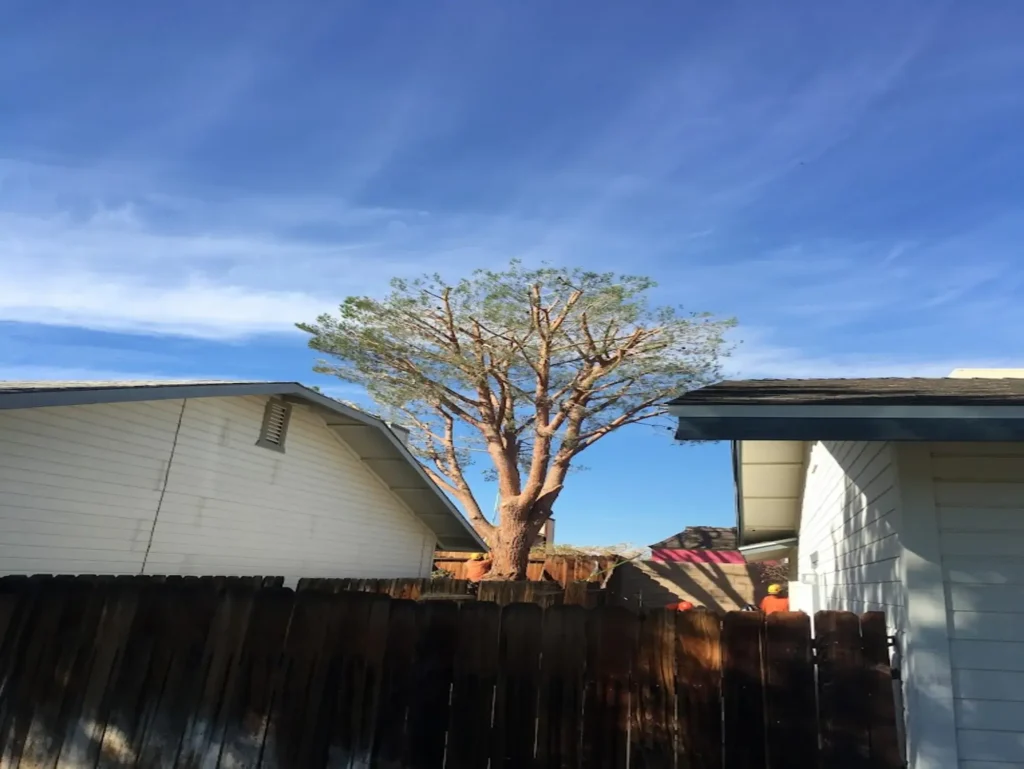
Fun Tree Facts for Lancaster Kids (and Grownups, Too!) By: Tom Baal Sprout was hanging upside down from the monkey bars (as one does) when he spotted a leaf twirling down from a big old maple. “Trees are cool,” he said, landing with a thud. “I wonder how many weird things they can do.” So he pulled out his leaf-shaped notebook (again), and this time, instead of asking questions, he started collecting fun tree facts. And because Sprout’s from Lancaster – where trees are everywhere – he wanted to make sure these facts felt local, real, and totally wow-worthy. Here’s what he discovered. Not with words (that would be wild), but through their roots, trees actually talk to each other. Underground, they pass nutrients and send signals using something called the mycorrhizal network. Sprout said it sounded like a superhero squad of soil fungus. “They’re like best friends helping each other out,” he explained. “Only with fungus.” Some trees in Lancaster are seriously old. We’re talking older-than-your-grandparents’-grandparents old. That huge sycamore by the creek? Could be over 200 years old. That’s a lot of birthdays and squirrel parties. “Imagine how many squirrels it’s seen,” Sprout whispered, wide-eyed. Leaves have tiny breathing holes. Really. They “inhale” carbon dioxide and “exhale” oxygen through little openings called stomata. Basically, tree leaves breathe through invisible nose-holes. “I told my sister our oak tree breathes through its skin,” Sprout said. “She made a face. But it’s true!” And guess what? Trees sweat. Kind of. When it’s hot, they release water vapor from their leaves. It’s called transpiration, and it helps cool the air around them. So next time you’re lounging under a tree in a Lancaster park and it feels breezy and fresh, thank the tree. Built-in air conditioning – no batteries required. Sprout also discovered that some trees smell good. Like, really good. Crush a sweet birch or sassafras leaf (gently, and with permission), and you might notice hints of mint, root beer, or even vanilla. Sprout made a whole sniff chart, and it smelled like the best nature bakery ever. Here’s a big one: one mature tree can make enough oxygen in a day for four people to breathe. That’s right. One tree, four friends, lots of fresh air. “Thanks, Barkley!” Sprout yelled up to his backyard tree. Barkley didn’t answer, but we’re pretty sure he appreciated it. Lancaster has some real tree celebrities, too. There’s a white oak near Lititz that’s been growing since the Revolutionary War. The cherry blossoms at Long’s Park? Total springtime superstars. If you ever pass one of these leafy legends, go ahead and give it a little wave. Maybe even a polite high five. Trees love good manners. Sprout has a challenge for every Lancaster kid: Pick your favorite local tree and visit it often. Give it a name. (Sprout likes “Captain Leafy.”) Learn what kind it is – maybe it’s a maple, or a sycamore, or even a magical-sounding sassafras. Draw a little sign or picture about it. Tell your friends something cool you learned. Trees don’t mind fans. Did you know that just being around trees can help you feel less stressed? It’s true. Your brain likes green. Also, Pennsylvania’s state tree is the eastern hemlock. And those rings inside a tree’s trunk? They can tell how old it is and even what kind of weather it lived through. Talk about a wooden time capsule. Sprout’s final thought? Trees aren’t just standing around. They’re busy doing important stuff – cleaning the air, cooling the ground, giving animals homes, and making life better. And all they really need is sunshine, rain, and maybe a little appreciation. So next time you pass a tree in Lancaster, try this: Wave hello. Say thank you. And if you’re feeling brave (or just really like bark), give it a gentle hug. Sprout’s Tree Challenge: Become a Leaf Detective! Hey explorers, it’s Sprout again! Did you know trees in Lancaster are like quiet superheroes? They clean the air, cool the parks, throw the best squirrel parties, and even talk to each other underground (seriously – fungus friends and everything!). Now it’s your turn to be a Leaf Detective: Find your favorite local tree – at the park, your school, or even your own yard. Give it a name! Sprout’s top picks? Barky McShade and Captain Leafy. Check out its leaves. Are they pointy, smooth, round, or squiggly? Draw them in your nature notebook! Take a sniff! Does the bark or leaf have a smell? Some trees smell like root beer or mint. (Nature’s weird. Nature’s awesome.) Visit often and say hello – you’ll notice new things each time. If you’re feeling extra curious, ask a grown-up to help you look up what kind of tree it is. You’ll be amazed at how much trees have to say without even saying a word. Did You Know? The white oak near Lititz may be older than America itself. Whoa. Sassafras leaves come in three shapes on the same tree – like nature couldn’t decide. Trees can help lower your stress just by being nearby. Your brain loves green! The eastern hemlock is Pennsylvania’s state tree. One tree can make enough oxygen in a day for four people. That’s some serious lung power. Tip Top Arborists Since 1976, Tip Top Arborists has been Southern California’s trusted partner in professional tree care. Based in Lancaster, CA, and surrounding areas – delivering expert tree trimming, removal, and maintenance services with safety, science, and integrity at the core. We’re not your average “guys with chainsaws.” We’re ISA Certified Arborists with deep industry knowledge, modern equipment, and a commitment to customer care that’s been passed down for nearly five decades. From storm damage cleanup to long-term tree health management, our team helps property owners protect their investment – and enhance their curb appeal – year-round. Experienced We have been in the industry for over 45 years. Choosing us means choosing proven experience and expertise. Insured Your safety