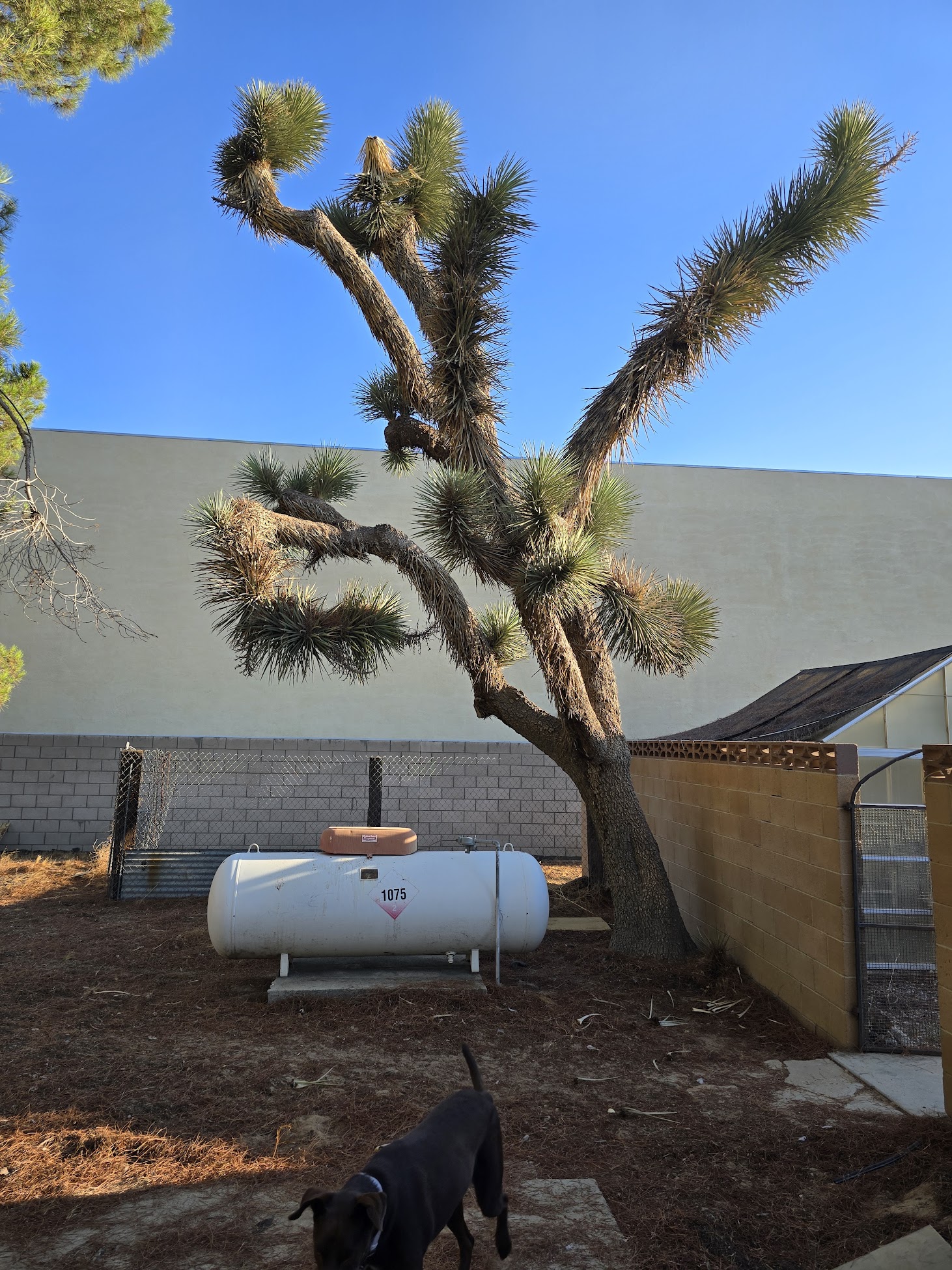
Connie had a hazardous Joshua tree that needed to come out. The catch was the permit. It had to be done the right way, with the right approvals, and with a crew that would protect the property while they worked.
Tom Ball handled the permit side and worked with Fish and Game to get it secured. Once that permit came through, the crew showed up ready. Connie noticed two things right away. They protected her property, and they protected each other. Professional, safety-minded, and controlled from start to finish.
Location: Antelope Valley, CA
Service: Tree Removal
Equipment Used / Tools: Safety gear, saws and pole tools, rigging and lowering lines for control, plus rakes, tarps, and haul-off equipment for cleanup
Crew: Tom Ball (Permit Coordination) and experienced Tip Top Arborists crew
Completion Time: Completed efficiently once the permit came through
A hazardous Joshua tree removal is not a “just show up and cut” job, especially when a Fish and Game permit is required. The homeowner needed the permit handled correctly, then a careful removal that kept the property protected and the crew safe.
“Tom Ball worked with Fish and Game to secure a permit to remove a hazardous joshua tree. Once the permit came through, the crew was very professional in protecting my property and each other.”
Tip Top Arborists has served Southern California communities since 1976. When a job has special requirements, the process matters as much as the cutting. Clear steps. Clear timing. Safe execution once approvals are in place.
Crews are trained to work with a controlled setup and a property-first mindset. Cleanup is handled so the site is left in good condition after the work.
Step 1: Confirm the situation and what was required for removal. Hazard tree, permit needed, and no shortcuts.
Step 2: Tom Ball worked with Fish and Game to secure the permit so the job could move forward properly.
Step 3: Once approved, the crew scheduled the removal and arrived prepared.
Step 4: Work zone stayed controlled, with attention on protecting Connie’s property during the removal.
Step 5: Safety habits stayed front and center. Connie specifically noted the crew protected each other while working.
Step 6: Debris was managed and cleanup finished the job so the area was left in good shape.
Call (661) 942-5501 for a free estimate.
Yes. Some jobs need approvals first. Tom Ball coordinated with Fish and Game on this one.
Absolutely. Controlled work zone. Careful piece handling. Cleanup handled at the end.
We do. Assessment first, then timing based on the permit. Once it’s approved, the crew schedules and executes.
The permit was secured, the hazardous Joshua tree was removed, and the job stayed professional and safety-minded. Connie highlighted the two things that matter most on a job like this. Her property was protected, and the crew protected each other while they worked.
Tip Top Arborists can help handle permit-driven removals, protect your property during the work, and leave the site clean when it’s finished.