The Rigging Zone- Template
Article Tip Top Arborists The Rigging Zone COURAGE AMID CHAOS: FIGHTING FLAMES TO PROTECT LIVES AND LAND COMMUNITIES COME TOGETHER IN WILDFIRE RELIEF EFFORTS SUPPORT FOR EVACUEES AND FIREFIGHTERS Lorem ipsum dolor sit amet, consectetur adipiscing elit. In finibus nec ipsum id posuere. Morbi finibus posuere vestibulum. Nullam pulvinar arcu dolor, at dictum leo pharetra eu. Morbi tristique ipsum non condimentum interdum. In ullamcorper magna a cursus consequat. Nullam in sollicitudin nunc. Phasellus et ex tortor. Ut tincidunt mi elit. Lorem ipsum dolor sit amet, consectetur adipiscing elit. In finibus nec ipsum id posuere. Morbi finibus posuere vestibulum. Nullam pulvinar arcu dolor, at dictum leo pharetra eu. Morbi tristique ipsum non condimentum interdum. Ttle Tip FREQUENTLY ASKED QUESTIONS How can I help wildfire victims? You can donate to local relief organizations, volunteer at evacuation centers, or contribute supplies like clothing, food, and hygiene items to designated collection points. What should I do if a wildfire approaches my area? Follow evacuation orders immediately, create defensible space around your home, have an emergency kit ready, and stay informed through official channels and emergency alerts. How can I stay informed about fire conditions? Monitor local news, sign up for emergency alerts, follow official social media accounts, and check fire department websites for real-time updates on conditions and evacuations. What items should be in my emergency evacuation kit? Include water, non-perishable food, medications, important documents, flashlight, battery radio, first aid supplies, cash, and protective clothing. Climb Higher. Cut Smarter. Trust Tip Top At Tip Top, we don’t just work in trees — we live for them. This is a crew built for climbers, cutters, and canopy junkies who take pride in precision, thrive on challenge, and never back down from a tough takedown. We’re fearless in the field, sharp with our gear, and dead serious about safety, skill, and getting the job done right. If you know your knots, love your rig, and believe tree work is more than a job — it’s a craft — you’ll fit right in. Subscribe To Our Newsletter Find Out More Book A Service https://tiptoparborists.com Skilled. Precise. Vital
Sprouts Template
Blog Title Goes Here By: Tom Baal Lorem ipsum dolor sit amet, consectetur adipiscing elit. Duis pharetra varius quam sit amet vulputate. Quisque mauris augue, molestie tincidunt condimentum vitae, gravida a libero. Aenean sit amet felis dolor, in sagittis nisi. Sed ac orci quis tortor imperdiet venenatis. Duis elementum auctor accumsan. Aliquam in felis sit amet augue. Sprout Needs Your Help Hey there, nature explorer! Sprout just spotted something wild outside—and he needs your help. Can you go outside and find the biggest leaf in your yard? Or maybe draw your favorite tree and give it a name? Little actions make a big difference when you care about trees. Remember: Every big tree starts with a little helper. Did You Know? What is an arborist? An arborist is a professional who specializes in the care and maintenance of trees. Why should I hire a certified arborist? Certified arborists have the knowledge and experience to provide safe, effective tree care. How do I know if my tree needs attention? Look for signs like dead branches, cracks in the trunk, or unusual leaf loss. Tip Top Arborists Since 1976, Tip Top Arborists has been Southern California’s trusted partner in professional tree care. Based in Lancaster, CA, and surrounding areas—delivering expert tree trimming, removal, and maintenance services with safety, science, and integrity at the core. We’re not your average “guys with chainsaws.” We’re ISA Certified Arborists with deep industry knowledge, modern equipment, and a commitment to customer care that’s been passed down for nearly five decades. From storm damage cleanup to long-term tree health management, our team helps property owners protect their investment—and enhance their curb appeal—year-round. Experienced We have been in the industry for over 45 years. Choosing us means choosing proven experience and expertise. Insured Your safety is our highest priority. We are bonded and insured to protect you, your property, and our team. Licensed Our contractor’s license #821770 is current and active with the CSLB. Hiring us means hiring licensed tree experts. Recycling We are as committed to the environment as we are to our clients. We recycle 100% of all wood and green waste. Hey Mom and Dad! Ready To Get Some Tree Work Done? Address: 44107 Yucca Ave Lancaster Ca. 93534 Phone: Toll-Free: (877) 380-0023 (California only), Local Tel: (661) 418-2690 (Antelope Valley), Local Tel: (661) 244-6964 (Santa Clarita Valley), Local Tel: (760) 330-5405 (Victor Valley) Business Hours: Monday to Friday from 7am to 4pm Why Your Neighbors Trust Tip Top Arborists
Lancaster Tree Dr- Template
Tip Top Arborists Inside Our Eco-Friendly Office Makeover! SUBSCRIBE TO OUR MONTHLY NEWSLETTER Greener Workspaces, Happier Teams Lorem ipsum dolor sit amet, consectetur adipiscing elit. Suspendisse viverra congue lacus sed rutrum neque dictum ut. Nulla tristique scelerisque neque et consequat. Vivamus facilisis enim quis nisl pretium, venenatis mollis mauris vestibue. Proin pulvinar tortor non sapien ullamcorper volutpat. Recent Updates: Green Lighting Setup Green Lighting Lorem ipsum dolor sit amet, consectetur adipiscing elit. Praesent aliquet ultrices nisi in condimentum. Read more → Green Lighting Setup Eco-Friendly Lorem ipsum dolor sit amet, consectetur adipiscing elit. Praesent aliquet ultrices nisi in condimentum. Read more → Green Lighting Setup Waste Reduction Lorem ipsum dolor sit amet, consectetur adipiscing elit. Praesent aliquet ultrices nisi in condimentum. Read more → Frequently Asked Questions Q: How does the eco-friendly makeover benefit employees? A: Our eco-friendly office improvements include better air quality through increased plants, natural lighting that reduces eye strain, and ergonomic furniture made from sustainable materials. These changes have resulted in improved employee wellness and productivity. Q: What sustainable materials were used in the renovation? A: We used reclaimed wood for desks, bamboo flooring, recycled steel for structural elements, and low-VOC paints. All furniture is made from certified sustainable sources, and we prioritized local suppliers to reduce transportation emissions. Q: How much energy does the new office save? A: Our LED lighting system and smart climate controls have reduced energy consumption by 40%. Solar panels on the roof generate 60% of our daily energy needs, and our smart building management system optimizes usage throughout the day. Q: Can other companies replicate this eco-friendly approach? A: Absolutely! We’ve documented our entire process and are happy to share our sustainability roadmap. Many of our solutions can be implemented gradually, allowing companies to make eco-friendly improvements within their budget and timeline. Ready to Go Green? Our certified arborists make it easy to handle trimming, removals, health checks, and more — safely, affordably, and on your schedule. Book An Arborists Consult Today www.tiptoparborists.com
Alt Blog Post Template
Lancaster, CA’s #1 Tree Service! Tip Top Arborists Tree Library Growing Tree Knowledge EXPERIENCE THE Magic of Summer with Our Exclusive Tours! Imagine walking through a forest where every tree is connected to every other tree through an invisible underground network more complex than the human internet. Where mother trees send nutrients to their struggling children, where trees warn their neighbors about insect attacks, and where forest communities make collective decisions about resource sharing. This isn’t science fiction. It’s happening right now beneath your feet in forests around the world—and the discoveries about how trees communicate are revolutionizing our understanding of plant intelligence and forest ecosystems. Welcome to the “wood wide web,” where trees have been networking for millions of years before humans ever dreamed of computers. The Discovery That Changed Everything Dr. Suzanne Simard was a young forest ecologist in British Columbia when she first suspected that trees might be more connected than anyone realized. Traditional forestry taught that trees competed ruthlessly for resources—sunlight, water, nutrients—in a botanical version of “survival of the fittest.” But Simard noticed something odd in her research plots. When she removed all the deciduous trees from an area, the remaining conifers didn’t thrive as expected. Instead, they struggled and grew poorly. When she left mixed forests intact, both species seemed healthier and more resilient. Her groundbreaking experiments in the 1990s revealed the truth: trees of different species were actually helping each other through underground fungal networks that connected their root systems. Paper birch trees were sharing carbon with Douglas fir seedlings growing in their shade. In return, the firs shared different nutrients with the birches. “We had it all wrong,” Simard later wrote. “The forest wasn’t a collection of individual trees competing for resources. It was a single, interconnected superorganism.” How the Wood Wide Web Actually Works The secret to tree communication lies in one of nature’s most ancient partnerships. Mycorrhizal fungi—thread-like organisms that exist in soil—form symbiotic relationships with tree roots, creating networks that can span entire forests. Here’s how it works: How the Wood Wide Web Actually WorksThe secret to tree communication lies in one of nature’s most ancient partnerships. Mycorrhizal fungi—thread-like organisms that exist in soil—form symbiotic relationships with tree roots, creating networks that can span entire forests. Here’s how it works: The Physical Network: Fungal threads (called hyphae) attach to tree roots and extend through the soil like organic fiber optic cables. A single teaspoon of forest soil can contain miles of these fungal threads, connecting dozens of nearby trees. The Exchange System: Trees photosynthesize sunlight into carbon sugars, which they trade with fungi for minerals and nutrients the fungi extract from soil and rock. It’s like a biological stock market running 24/7 underground. The Communication Highway: But nutrients aren’t the only things traveling through this network. Trees also send chemical signals—warnings about pest attacks, calls for help during drought, and even information about seasonal changes. Information Superhighway: Recent research shows that electrical signals also travel through fungal networks, allowing trees to communicate almost instantaneously across distances that would take chemical signals hours or days to traverse. What Trees Are Actually Saying Scientists have identified several types of “messages” that trees send through their underground networks: Danger Alerts: When a tree is attacked by insects, it releases chemical compounds that travel through the fungal network to warn neighboring trees. The warned trees then begin producing defensive compounds before the insects arrive, making themselves less palatable to attackers. In Lancaster’s desert environment, this system helps Joshua trees warn each other about yucca moth infestations, and allows desert willows to share information about approaching aphid colonies. Resource Requests: Trees experiencing drought, disease, or other stresses can essentially “ask” the network for help. Healthy trees often respond by sending extra nutrients or water through the fungal connections. Seasonal Coordination: Deciduous trees use the network to coordinate timing for leaf drop, bud break, and other seasonal activities. This helps entire forest communities respond optim Tip Top Arborists Since 1976, Tip Top Arborists has been Southern California’s trusted partner in professional tree care. Based in Lancaster, CA, and surrounding areas—delivering expert tree trimming, removal, and maintenance services with safety, science, and integrity at the core. We’re not your average “guys with chainsaws.” We’re ISA Certified Arborists with deep industry knowledge, modern equipment, and a commitment to customer care that’s been passed down for nearly five decades. From storm damage cleanup to long-term tree health management, our team helps property owners protect their investment—and enhance their curb appeal—year-round. Featured Destinations How to Book? Ready to embark on the summer adventure of a lifetime? Visit our website or give us a call. Our friendly staff will be happy to discuss tour options and help you put together your ideal getaway. We can’t wait to help you create memories of a lifetime. Whether you want to discover spectacular natural beauty or want to experience exotic cuisine, we have the perfect adventure for you! Our tours are not just about visiting places but about creating lasting and memorable memories you will cherish forever. We take pride in offering personalized experiences that cater to your interests, ensuring that every aspect of your trip is tailored to your preferences. With our dedicated team and in-depth knowledge about each destination that we visit, you can trust the service. Featured Summer Destinations The Tropical Paradise of Hawaii: Discover the beauty of Hawaii with pristine beaches, lush landscapes, and vibrant culture. Perfect activities and relaxation await. Whether you’re surfing the waves or lounging on pristine beaches, Hawaii offers the perfect adventure and relaxation. The Historic Charm of European Countries: Step through the cobblestone streets of Paris and Rome and discover the timeless beauty of Europe. From ancient architecture to delicious cuisine. The Wildlife Safari in African Countries: Reconnect with nature in the majestic wilderness of East Africa. From the Great Migration to the Big Five, experience Africa’s natural wonders in their serene beauty of Yellowstone, explore a great vacation like no other. Need Some Help With Your Trees?
Sprouts Template
Sprout Finds Out How Trees Drink Water By: Tom Baal Once upon a time in the sunny city of Lancaster, CA, there lived a curious 7-year-old boy named Sprout. Sprout loved spending time outdoors, exploring the wonders of nature that surrounded him. One day, while playing in his backyard, Sprout noticed the tall and majestic trees swaying in the gentle breeze. He couldn’t help but wonder, “How do trees drink water?” As Sprout pondered this question, he decided it was time to embark on a journey of discovery. With his trusty magnifying glass in hand, Sprout set out to find the answer. He wandered through the lush greenery of the park, stopping to observe the leaves and branches of the trees up close. Suddenly, he spotted something fascinating—a tiny droplet of water trickling down the bark of a tree. “Ah-ha!” exclaimed Sprout, as he realized how trees drink water. “Trees absorb water through their roots, which are like straws that suck up water from the ground. The water travels up the trunk of the tree to the leaves, where it is used for photosynthesis.” Excited by his newfound knowledge, Sprout couldn’t wait to share it with his friends at school. He organized a mini science experiment to demonstrate how trees drink water, using colored water and celery sticks to mimic the process. His friends were amazed at the simple yet magical way in which trees nourish themselves. After their experiment, Sprout and his friends decided to plant a tree in the school garden. They watered it regularly, ensuring it had enough moisture to thrive. As they watched the tree grow taller and stronger each day, they felt a sense of pride and accomplishment. Through his journey of discovery, Sprout learned the importance of caring for trees and appreciating the beauty they bring to the world. He realized that even the smallest act of kindness towards nature can make a big difference. And so, with a smile on his face, Sprout vowed to continue exploring the wonders of the natural world, one tree at a time. And with that, Sprout’s adventure came to an end, but his curiosity and love for nature would live on forever in his heart. Who knows what other mysteries and marvels he would uncover next? The world was full of possibilities, waiting to be explored by a young explorer like Sprout. Sprout Needs Your Help- Join Sprout in Keeping Our Parks Clean Hey there, young adventurers! Sprout here, and I need your help with a special mission. As we journey through the wonders of nature, it’s important to remember to keep our parks clean and beautiful for everyone to enjoy. One easy way you can make a difference is by picking up any litter you see while exploring the great outdoors. It’s a simple task that can have a big impact on the environment and the animals that call the park home. Plus, it’s a fun way to show kindness and respect to our Earth. So, next time you’re out and about, keep an eye out for any trash that doesn’t belong in nature. Grab your gloves (or use a stick if you prefer) and safely pick up the litter, then throw it away in a nearby trash bin. Let’s work together to make our parks a cleaner, greener place for everyone to enjoy! Remember, a small act of kindness can go a long way. Together, we can make a difference and show our appreciation for the beauty of nature. Thanks for joining me on this important mission, young explorers! Remember: Every big tree starts with a little helper. Did You Know? What is an arborist? An arborist is a professional who specializes in the care and maintenance of trees. Why should I hire a certified arborist? Certified arborists have the knowledge and experience to provide safe, effective tree care. How do I know if my tree needs attention? Look for signs like dead branches, cracks in the trunk, or unusual leaf loss. Tip Top Arborists Since 1976, Tip Top Arborists has been Southern California’s trusted partner in professional tree care. Based in Lancaster, CA, and surrounding areas—delivering expert tree trimming, removal, and maintenance services with safety, science, and integrity at the core. We’re not your average “guys with chainsaws.” We’re ISA Certified Arborists with deep industry knowledge, modern equipment, and a commitment to customer care that’s been passed down for nearly five decades. From storm damage cleanup to long-term tree health management, our team helps property owners protect their investment—and enhance their curb appeal—year-round. Experienced We have been in the industry for over 45 years. Choosing us means choosing proven experience and expertise. Insured Your safety is our highest priority. We are bonded and insured to protect you, your property, and our team. Licensed Our contractor’s license #821770 is current and active with the CSLB. Hiring us means hiring licensed tree experts. Recycling We are as committed to the environment as we are to our clients. We recycle 100% of all wood and green waste. Hey Mom and Dad! Ready To Get Some Tree Work Done? Address: 44107 Yucca Ave Lancaster Ca. 93534 Phone: Toll-Free: (877) 380-0023 (California only), Local Tel: (661) 418-2690 (Antelope Valley), Local Tel: (661) 244-6964 (Santa Clarita Valley), Local Tel: (760) 330-5405 (Victor Valley) Business Hours: Monday to Friday from 7am to 4pm Why Your Neighbors Trust Tip Top Arborists
Professional arborist services Lancaster CA
certified arborist Lancaster CA, tree service expansion, professional climbing gear, arborist equipment recommendations
Sprout & the Tree That Stayed Cool- Tree Transpiration Experiment For Kids
Sprout & the Tree That Stayed Cool-Sprout & the Tree That Stayed Cool- Tree Transpiration Experiment For Kids By: Tom Baal It was one of those sizzling July mornings in Lancaster, the kind where the sidewalk feels like it’s trying to cook your sneakers. Sprout tugged at the brim of his hat and looked up at his favorite elm tree in the park. “How do you stay so cool, big guy?” he asked, wiping sweat from his forehead. The tree didn’t answer, of course… but Sprout had a hunch. That’s when Ms. Maple, his third-grade science teacher (and part-time tree whisperer, Sprout was sure of it), walked by carrying a watering can and a spray bottle. “Trees have their own way of cooling down,” she said. “They sweat!” Sprout’s eyes nearly popped out. “Wait, what? Trees SWEAT?” “Well,” she smiled, “not exactly like us. But they do release water through tiny pores in their leaves. It’s called transpiration, and it helps them stay cool – kind of like their own built-in AC system.” Sprout was amazed. He decided he had to test it out. Let’s run a summer experiment! Here’s what you’ll need: ✅ A leafy tree nearby✅ A plastic sandwich bag✅ A twist-tie or rubber band✅ A notebook What to do: Pick a sunny leaf on the tree (ask an adult before touching any tree). Wrap the plastic bag gently around the leaf and seal it. Wait a few hours and come back — do you see water droplets inside the bag? Write or draw what you see in your notebook! That’s tree sweat — a.k.a. transpiration in action! Want to learn more? Check out this cool article! Did You Know? How long does it take to see water inside the bag? Most kids will see tiny water droplets after 2 to 4 hours on a sunny day, especially if the leaf is healthy and full. Just make sure the bag is sealed and the leaf is in the sun! Why does water appear inside the bag? The leaf is “sweating”! Trees release water vapor through tiny holes in their leaves. When you trap a leaf in a plastic bag, that vapor turns into real water drops—this is called transpiration. Can I try this on any tree? Yes, but it works best on green leafy trees in full sun. Try elm, sycamore, or even a fruit tree. Avoid dry or brown leaves—they might not have enough moisture to show results. Tip Top Arborists Since 1976, Tip Top Arborists has been Southern California’s trusted partner in professional tree care. Based in Lancaster, CA, and surrounding areas—delivering expert tree trimming, removal, and maintenance services with safety, science, and integrity at the core. We’re not your average “guys with chainsaws.” We’re ISA Certified Arborists with deep industry knowledge, modern equipment, and a commitment to customer care that’s been passed down for nearly five decades. From storm damage cleanup to long-term tree health management, our team helps property owners protect their investment—and enhance their curb appeal—year-round. Experienced We have been in the industry for over 45 years. Choosing us means choosing proven experience and expertise. Insured Your safety is our highest priority. We are bonded and insured to protect you, your property, and our team. Licensed Our contractor’s license #821770 is current and active with the CSLB. Hiring us means hiring licensed tree experts. Recycling We are as committed to the environment as we are to our clients. We recycle 100% of all wood and green waste. Hey Mom and Dad! Ready To Get Some Tree Work Done? Address: 44107 Yucca Ave Lancaster Ca. 93534 Phone: Toll-Free: (877) 380-0023 (California only), Local Tel: (661) 418-2690 (Antelope Valley), Local Tel: (661) 244-6964 (Santa Clarita Valley), Local Tel: (760) 330-5405 (Victor Valley) Business Hours: Monday to Friday from 7am to 4pm Why Your Neighbors Trust Tip Top Arborists
Dead Tree Removal- Dead Tree in Your Yard? Here’s Why You Can’t Wait
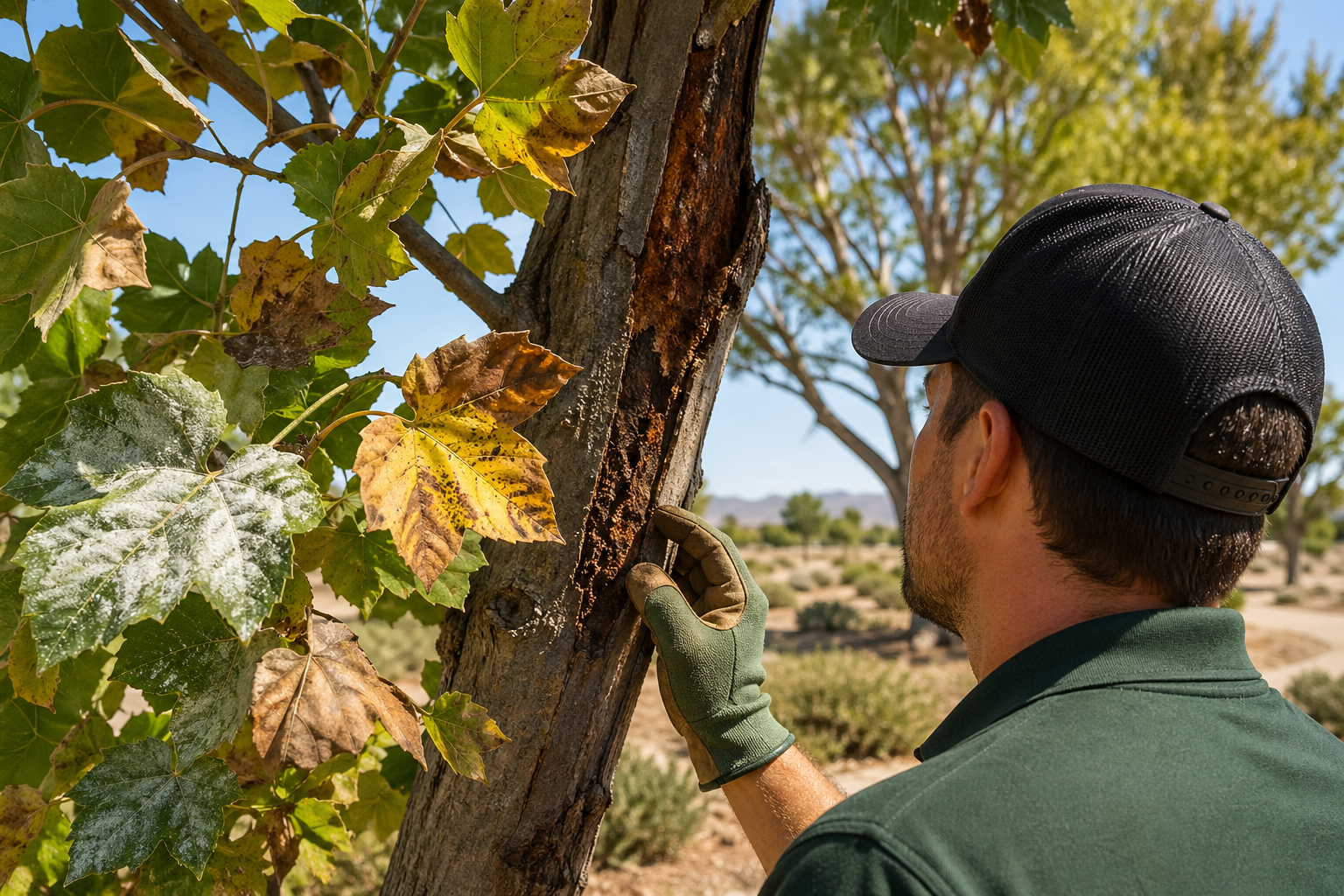
Dead Tree Removal-The Hidden Danger in Your Front Yard: Why That Dead Tree Can’t Wait When you look out your front window, what do you see? A strong shade tree? A patch of dry grass? Maybe a dying or already-dead tree that’s been sitting there longer than it should? If you’re nodding your head, this article is for you. At Tip Top Arborists, we’ve been in the tree care business long enough to know that a dead tree in the front yard is more than just an eyesore. It’s a liability — one that could cost you far more than you think. Let’s break down what’s really going on with that tree and why putting off its removal could be one of the most expensive decisions you make this year. What Happens When a Tree Dies? It doesn’t always look dramatic at first. A few dry branches, some patchy leaf growth. Maybe it’s been dropping bark or you’ve noticed more birds pecking away at soft spots. But over time, a dead tree loses its structural integrity — from the roots to the crown. Here’s what that means: Roots decay, and the tree becomes unstable in high winds or heavy rain. Branches dry out and snap, often without warning. Trunks become hollow, creating a domino effect of weakness. Pests move in, from termites to carpenter ants to powderpost beetles. Fungus spreads, often affecting nearby plants or even causing health issues in pets or people. At a glance, it might still look like a “tough old tree.” But under the bark, it’s a ticking time bomb. The Real Risk: What That Tree Could Cost You A dead or dying tree on your property might seem like “no big deal” until it’s suddenly a very big deal. Here’s a breakdown of what could go wrong — and how much it could cost: 1. Property Damage Dead trees don’t fall politely. They snap in storms, collapse onto cars, fences, roofs, sheds — and when they do, they can cause thousands of dollars in damage. We’ve seen a single branch bring down power lines, crush a new SUV, or knock a hole in a roof. Average cost of repair? Between $5,000 and $20,000, depending on the damage. 2. Injury or Legal Liability If that tree falls and injures a visitor, neighbor, delivery driver, or even a passing pedestrian, the situation moves from unfortunate to legally complicated — fast. Homeowners insurance may cover part of it, but if the tree was known to be dead or neglected, you could be on the hook. Especially if it crosses property lines or hits public infrastructure. 3. Decreased Property Value Curb appeal matters. A half-dead or decaying tree makes your home look neglected. It can affect real estate appraisals and make buyers nervous — especially if there’s visible damage or the tree threatens the driveway, porch, or windows. Signs Your Tree Might Be Dead (Or Close) Not sure if your tree is really dead? Here are signs to look for: No leaves during the growing season Bark peeling off in large sheets Brittle, dry limbs that snap easily Hollow-sounding trunk Fungal growth at the base Visible lean or soil heaving around the roots No new growth for two or more seasons If any of these match what you’re seeing — it’s time to get it checked. At Tip Top, we offer hazard assessments that give you clear answers before things get worse. Don’t Wait Until Storm Season- Dead Tree Removal Every year, we get a flood of emergency calls right after the first major storm. A gust of wind, some unexpected rain, and suddenly a tree that “looked fine yesterday” is lying across a roof or blocking a driveway. By then, it’s too late for prevention. Emergency removals are often more expensive. Crews may need to work at night, during active weather, or around active power lines. Costs go up. Stress goes up. And it didn’t have to happen. Removing a dead or dying tree during clear, calm weather is safer, easier, and significantly more affordable. The Tip Top Promise: Dead Tree Removal If you’ve got a front yard tree that’s on its last legs, Tip Top Arborists wants to help you out. Whether it’s completely lifeless or halfway there, we’ll inspect, confirm, and safely remove it before it becomes a liability. Call our office at 661-942-5501 and ask for Tom. He’ll get you scheduled, walk you through the estimate, and make sure everything is taken care of from permit to cleanup. What’s Included in Our Service? We don’t just “cut and go.” Our certified crews handle the job from start to finish, including: Site inspection and risk assessment Safe tree removal and limb lowering Stump grinding (optional but recommended) Cleanup of all debris Haul-away and recycling of wood waste We’re licensed, insured, and have been serving the Antelope Valley and surrounding areas for over 40 years. You’re in good hands. Final Thought: Don’t Gamble with Gravity A dead tree isn’t just “something to get to later.” It’s a hazard that grows more dangerous every day. And unlike a slow leak or a cracked tile, when this goes bad — it goes really bad. You wouldn’t ignore a broken brake light on your car. Don’t ignore the dead tree outside your front door. Let’s handle it now, before it costs you more than it should. Tip Top Tree Care: Straightforward, Safe, Reliable Ready to get that tree out of the way? We’re here to help — no pressure, no guesswork, no surprises. Call Tip Top Arborists today at 661-942-5501 Or visit www.tiptoparborists.com to schedule your removal or hazard inspection. Take care of that risk — before it takes care of your roof, fence, or insurance deductible.
Palm Tree Skinning Experts in Lancaster, CA | Tip Top Arborists
Palm Tree Skinning Experts in Lancaster, CA There’s a reason Lancaster locals call us when their palms start looking more like shaggy old mops than the desert royalty they’re meant to be. Palm trees are a classic part of Southern California living, but keeping them looking sharp takes more than a quick trim and a prayer. That’s where palm skinning comes in. It’s not just about keeping up appearances. It’s about safety, tree health, and making your whole property feel pulled together. Now if you’ve never heard of palm skinning, don’t worry. It’s not a spa treatment and we’re not using face scrubs. Palm tree skinning is the process of removing the dead fronds and dried-up leaf bases that cling to the trunk. These little guys are called boots, and they can hang around for years. Over time, they make your palm look tired and overgrown. But more than that, they can become a hazard if left unchecked. Why Skin a Palm Tree? We hear this question a lot. “Do I really need to do anything? Can’t I just let it be?” Technically, sure. But if you want your tree to be healthy and strong and not raining dead leaves on your car, skinning is a smart choice. Here’s why. They Look Better Clean palms make a big difference. They give your yard or property a neat, cared-for look, like someone’s paying attention. When we skin a palm, it’s like giving it a fresh haircut. Tidy. Clean. Ready for its close-up. They’re Safer Dead fronds don’t always fall on your schedule. One minute your tree looks peaceful, the next a heavy frond is crashing down from thirty feet. And those boots near the crown? Perfect hiding spots for pests. We’ve seen rats, snakes, and even scorpions make themselves right at home. Skinning clears that out fast. They’re Less of a Fire Risk Here in the Antelope Valley, dry weather is a fact of life. All that dead material is perfect fuel for fire. Removing it keeps your property safer, especially during wildfire season. They Stay Healthier Removing old material helps the tree focus its energy on new growth up top. Think of it like clearing leaves out of a gutter. Everything flows better when it’s not clogged with debris. How We Do It Right Skinning a palm the right way takes skill and the right tools. It’s not about stripping the tree bare. If you go too far, you risk hurting the tree, or even killing it. Our team knows exactly how much to remove and when to stop. Every cut is intentional. Every climb is done with care. We use rigging systems to climb safely and avoid damage. This isn’t something you want to tackle with a ladder from the garage. And we tailor every job to the tree species. The tall, skinny Mexican Fan Palm? That one needs regular skinning. The Canary Island Date Palm? It takes a bit more finesse. Even the smaller Queen and Mediterranean Fan Palms benefit from a good cleanup every now and then. When’s the Best Time? We like to time palm skinning around late spring or early summer. That’s when the trees are putting out new fronds, so we can clear away the old ones without stressing them out. Plus, it means your palms will look their best right when the BBQs and backyard parties start up. But hey, if your palm looks wild right now, don’t wait. We work year-round. Trees don’t follow calendars, and we don’t either. Just give us a call and we’ll take a look. What You’ll See After a Skinning A freshly skinned palm looks sharp. The trunk is smooth and even, tapering cleanly up to the crown. No drooping fronds. No layers of dry, dusty clutter. Just a tall, proud tree standing against the Lancaster sky. We often hear, “Wow, I didn’t know it could look that good.” And we love that. Because it means we’ve helped someone see their tree in a new light. Whether you’re sprucing up a home, managing an HOA, or keeping your business looking polished, well-skinned palms send the right message. Why Tip Top? Sure, anyone can buy a chainsaw. But not everyone knows what they’re doing. We’ve seen the damage that comes from rushed or careless work – scars on the trunk, injured crowns, entire trees lost to rot and disease. It’s not worth the risk. We’ve been caring for trees across Lancaster and the Antelope Valley for decades. We’re licensed, insured, and trained to handle palm trees the way they deserve. We follow ISA standards, use proper gear, and never leave a mess behind. That’s just who we are. Whether you’ve got a single palm in your front yard or a line of them down your driveway, we’ve got you covered. Your trees are in good hands. Did You Know? Palms don’t actually have bark. Their trunks are made up of tough, fibrous layers that need careful handling during skinning. In some island communities, palm boots were once used for everything from roofing to scrub brushes. The tallest palm species on Earth is the Quindío wax palm, which can grow over 200 feet high. Not something you’ll find in Lancaster, but hey – it’s a fun fact. Your palms deserve to look their best, and stay strong in the Lancaster sun. If yours need a little grooming, give you local arborists a call. We’ll make sure your trees stand out for the right reasons. Need a second opinion or just want peace of mind? Give Tip Top Arborists a call. We’ve been keeping Lancaster’s trees in tip-top shape since 1976. Book a Free Estimate | Explore Our Services