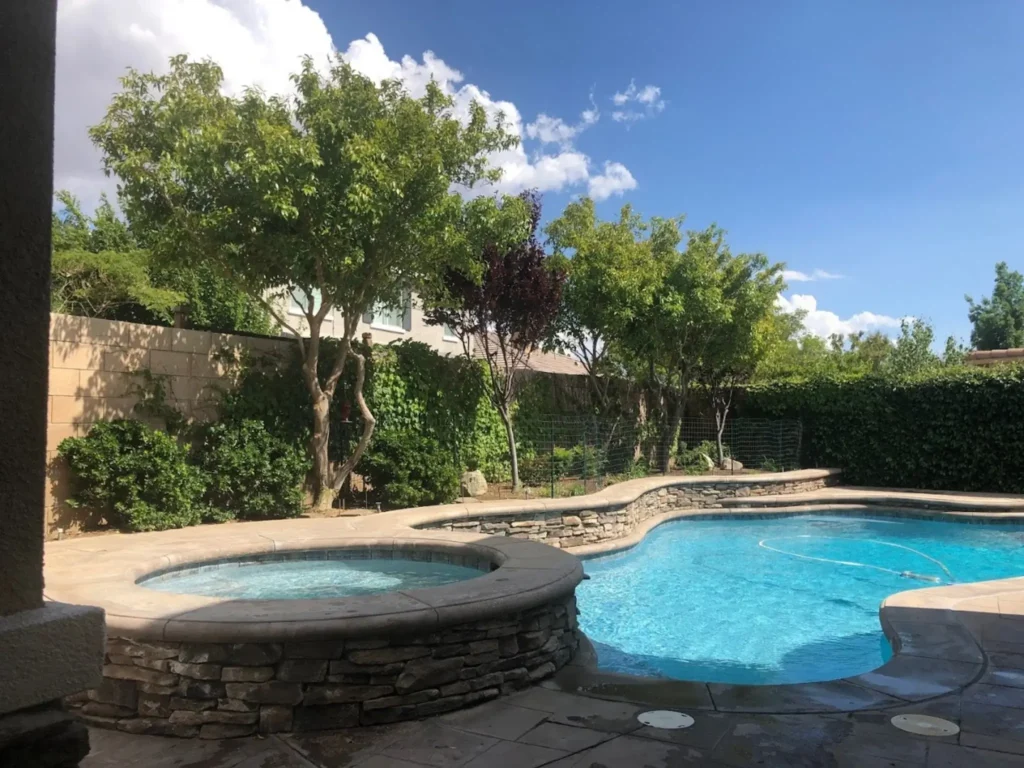
Southern California summers are no joke. Temperatures push past 100°F in inland areas, the soil dries fast, and hot winds can show up when you least expect them. Even hardy, drought-tolerant trees in SoCal can struggle if they are watered the wrong way, pruned too aggressively, or left without any protection at the root zone. The goal is not to “overwater to make up for heat.” It is to keep roots hydrated at depth, keep soil cooler, and prevent stress from snowballing into pests, dieback, or hazardous limbs.
This guide covers what actually helps your trees through peak heat, with a focus on drought-tolerant trees in SoCal homeowners commonly rely on.
In most of the country, winter is the hard season. In SoCal, summer is. Heat increases water demand, low humidity speeds up moisture loss, and hot ground can cook shallow roots. That combination can weaken trees gradually, so the real damage often shows up late in summer or even in fall, when people assume the worst is over.
Drought-tolerant trees in SoCal handle dry periods better than many species, but they still have limits. If they are surrounded by pavement, rock, or south-facing walls, the heat load is higher and the root zone dries faster. A little extra planning in summer makes the difference between a tree that holds its canopy and one that declines quietly for months.
Drought-tolerant trees in SoCal
Shallow watering keeps roots near the surface, which is the hottest, driest zone. Deep watering trains roots to grow downward, where soil stays cooler and moisture lasts longer. The Arbor Day Foundation recommends watering in a way that soaks the root area, not just the surface. https://www.arborday.org/trees/tips/watering.cfm
A solid baseline for established trees:
For newer trees (under 3 years):
A common field rule is around 10 gallons per inch of trunk diameter per watering session for established trees. Treat it as a starting point, then adjust based on how quickly your soil drains and how your tree responds. Sandy soils may need more frequent deep soaks, while heavier soils may need longer gaps between sessions.
Early morning is usually best. It reduces evaporation and gets water into the root zone before the hottest part of the day. Evening watering can leave surfaces damp overnight, which is not ideal for some disease-prone situations.
If you do one thing besides watering, mulch. A good mulch ring helps drought-tolerant trees in SoCal yards depend on because it reduces evaporation and protects roots from heat.
Benefits:
How to mulch correctly:
Heat stress can look like a minor cosmetic issue until it is not. Catching it early gives you options.
Common signs:
Before you water “just in case,” check soil moisture 4 to 6 inches down. If it is still moist there, your tree may be responding to heat, not drought. Overwatering can cause root problems, especially in compacted soils.
Trees use their canopy to shade themselves and produce energy. Heavy summer pruning removes that protection at exactly the wrong time.
What is usually safe in summer:
What to avoid:
ISA explains why topping causes long-term harm and increases hazard risk. https://www.treesaregood.org/Portals/0/TreesAreGood_Why%20Topping%20Hurts_0321.pdf
If you need professional pruning:
https://tiptoparborists.com/tree-pruning/
Heat-stressed trees attract pests. Two that matter here:
Bark beetles
UC IPM notes bark beetles often attack trees already stressed by drought, disease, or injury. Watch for small holes, frass at the base, and pitch tubes on some conifers. https://ipm.ucanr.edu/home-and-landscape/bark-beetles/
Invasive shot hole borers
UC IPM covers invasive shot hole borers and the fungi they introduce, and notes they attack many landscape trees. Look for tiny holes, staining, and branch dieback patterns. https://ipm.ucanr.edu/home-and-landscape/invasive-shothole-borers/
If you see new holes, staining, or sudden canopy decline, get an arborist opinion rather than guessing.
Drought-tolerant trees in SoCal Summer care is also fire care in much of Southern California. Clean up leaf litter and deadwood, reduce ladder fuels, and keep vegetation managed near structures. CAL FIRE defensible space guidance is the baseline reference for most homeowners in fire-prone areas. https://www.fire.ca.gov/dspace
Call a certified arborist if you see:
You can verify credentials here:
https://www.treesaregood.org/findanarborist
For local help:
How often should I water drought-tolerant trees in SoCal in summer?
Deep watering every 7 to 14 days is a good baseline for established trees, adjusted for heat and soil type.
Is mulch really worth it?
Yes. It helps soil hold moisture and keeps roots cooler, which reduces stress.
Can I prune in summer?
Deadwood removal is fine. Avoid heavy pruning and never top trees.
When should I call a pro?
If the tree is close enough to hit something important and shows stress, damage, or pest signs, get an arborist assessment.
Tell us about your tree care needs and our team will follow up with a detailed estimate and recommended solutions.
Call a certified arborist if you see:
You can verify credentials here:
https://www.treesaregood.org/findanarborist
For local help: