
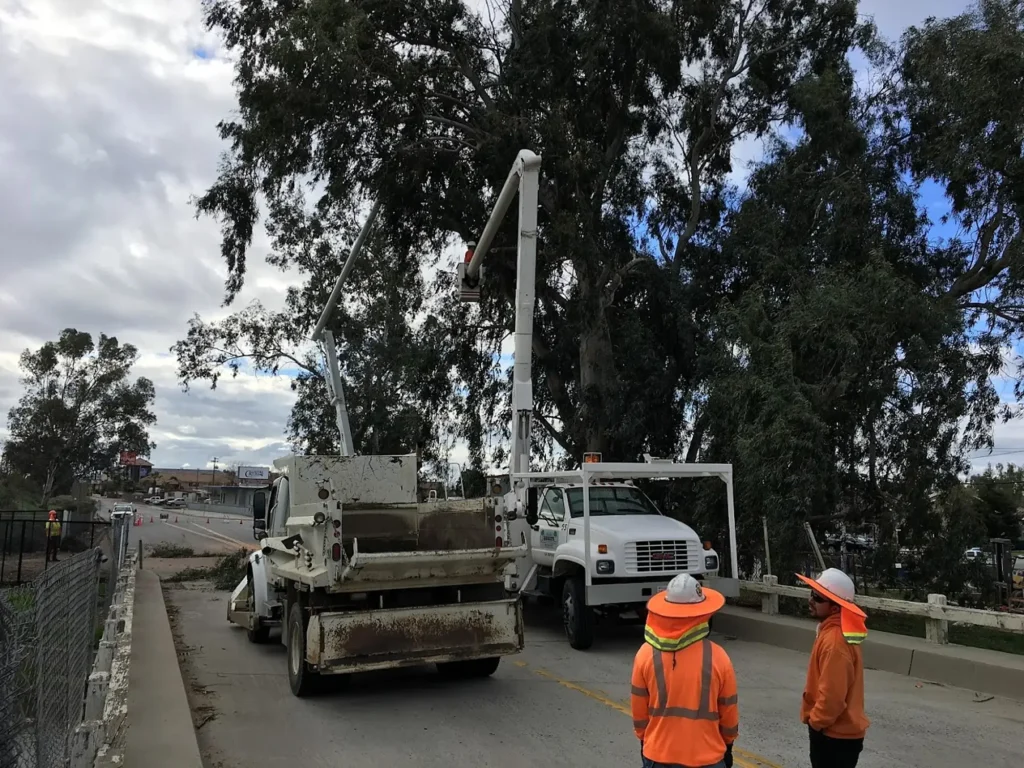
Palm tree trimming Lancaster CA is not just about curb appeal. In the Antelope Valley, tall fan palms drop heavy, dry fronds, catch wind like sails, and can build up a skirt of dead material that becomes both a safety issue and a fire concern. When palms are trimmed like “regular trees,” the result is usually overcut crowns, stressed trees, and more problems later.
This guide breaks down what crews commonly do wrong, what correct palm care looks like, and what to ask before you hire anyone in Lancaster or Palmdale.
Palm tree trimming Lancaster CA get long dry stretches, intense summer heat, and periodic high-wind events. That combination dries dead fronds fast and increases the chance they fall or become ignition fuel. Defensible space guidance focuses heavily on removing dead vegetation and managing fuels close to structures, and palm skirts and dead fronds fall into that category when they are left in place. (California Water Board)
Palm tree trimming Lancaster CA are also biologically different from oaks and pines. They do not “heal” pruning wounds the same way, and their fronds play a bigger role in nutrient storage and recycling. When a crew strips too many green fronds, the palm tree trimming Lancaster CA pays for it with slower growth, weaker structure, and long-term decline. (UC Agriculture and Natural Resources)
The most common bad trim in palm tree trimming Lancaster CA is the hurricane cut, where crews remove nearly everything except a tight tuft at the top. It looks clean for a week, then it creates a chain reaction of problems.
Correct guidance is conservative: remove dead fronds, or at most fronds down to the horizontal line, often explained as the “3 to 9 o’clock” line through the crown. UC Agriculture and Natural Resources includes this exact guidance and warns against removing fronds above horizontal. (UC Agriculture and Natural Resources)
Why it matters:
Another common problem is trunk damage from aggressive “skinning” or cutting frond bases too tight. Those wounds create entry points for decay and pests. UC ANR specifically cautions that overzealous leaf removal and trunk work can leave wounds that allow disease and decay. (UC Agriculture and Natural Resources)
What good looks like: clean cuts on the frond base, no gouging, no chainsaw scraping down the trunk, and no rushing the job on tall palms.
Palm tree trimming Lancaster CA are top-heavy. That crown is real weight, and wind adds dynamic load. When a crew removes too many fronds, they do not magically make the palm “safer.” They often make it weaker. Proper trimming is about removing dead weight and obvious hazards while keeping a balanced crown that can handle wind.
If a company cannot explain how they reduce risk in high winds (controlled removal, safe drop zones, proper equipment, rigging if needed), keep looking.
A flat quote that ignores height is usually a warning sign. A 15-foot palm tree trimming Lancaster CA is not the same job as a 60-foot palm near a roofline.
Pricing varies widely, but the logic should be consistent:
If you are comparing bids, ask each company to confirm what happens to the fronds and whether cleanup and haul-away are included.
Palm tree trimming Lancaster CA waste is not handled the same way as typical greenwaste in many parts of Los Angeles County. LA County Sanitation lists palm trunks and loads where the majority is palm fronds as examples of greenwaste loads that can be rejected. (Los Angeles County Sanitation Districts)
A professional crew should tell you, before the job starts:
If they act casual about disposal, you may end up with a huge pile you cannot easily get rid of.
Post-trim care is still care. Palm tree trimming Lancaster CA in high-desert conditions can be stressed by heat and drought, and watering rules can affect what homeowners can legally do week to week. For example, Palmdale Water District’s conservation guidance has specific outdoor watering day and time limits during certain conservation periods. (Palmdale Water District)
The practical takeaway: follow current local watering rules, and do not “panic water” after trimming. A good company will give you simple aftercare guidance that fits the season and local restrictions.
A solid palm service visit usually includes:
If removal is needed (dead palm, dangerous lean, too close to structures), the plan should shift to rigging and controlled dismantling, not “cut and pray.” If you want a deeper look at removal tactics, this is a useful reference point: (tiptoparborists.com)
Use these five questions on the phone:
How often should palm tree trimming Lancaster CA be trimmed?
Usually once per year for many fan palms, plus as-needed after wind events if fronds are hanging or damaged. The goal is hazard reduction and health, not repeated cosmetic cutting.
Are falling palm fronds actually dangerous?
Yes. Height plus weight is what matters. A dry frond dropping from a tall palm can damage vehicles, roofs, and fences, and it can injure someone underneath.
Can I trim my own palms?
Small palm tree trimming Lancaster CA might be manageable with the right tools and caution. Tall palms are a different risk category. Falls and uncontrolled frond drops are the common failure points, so professional equipment and training matter.
Do you serve both Lancaster and Palmdale?
These areas are commonly serviced together. If you are near the edges (Quartz Hill, Acton, Rosamond), confirm travel and scheduling.
Palm tree trimming Lancaster CA is simple only when it is done correctly. The wrong trim strips green fronds, wounds trunks, ignores wind loads, and leaves you with a weaker palm and a bigger hazard later. A good crew trims conservatively to the horizontal guideline, keeps a balanced crown, plans for wind and targets, and handles disposal and cleanup properly. (UC Agriculture and Natural Resources)
If your palms have not been trimmed in over a year, or you noticed loose fronds after the last wind event, book an assessment and get it handled before the next gust cycle.
Contact Tip Top Arborists: https://tiptoparborists.com/contact-us/
Tell us about your tree care needs and our team will follow up with a detailed estimate and recommended solutions.