Apple Valley Tree Care: Desert Conditions Demand Desert Expertise for Tree Service in Apple Valley
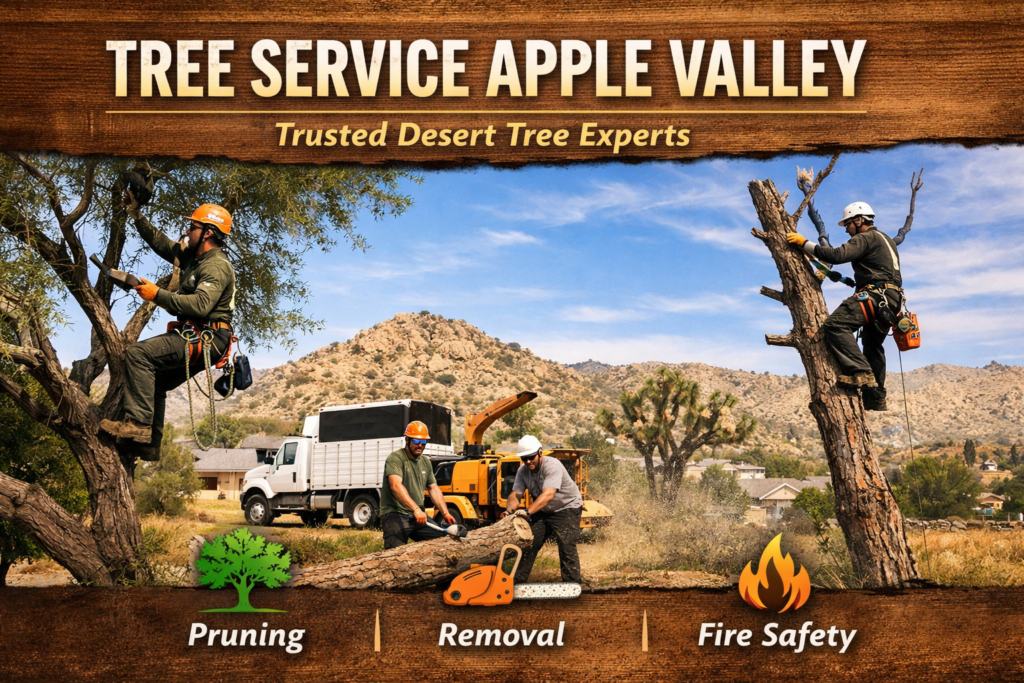
If you are looking for tree service in Apple Valley homeowners can rely on, the High Desert is exactly why you should be picky. Apple Valley is not a mild coastal environment where mistakes take years to show up. Heat, wind, drought, and fire season pressure test every tree and every pruning cut. The result is simple: the wrong work can turn a healthy tree into a hazard faster than you expect.
Tip Top Arborists serves tree service in Apple Valley with ISA-certified arborists and has been providing tree care since 1976. If you want local service details first, start here: Tree service in Apple Valley. Then come back to this guide to understand what you should be asking for, and what you should avoid.
What Makes Apple Valley Tree Care Different
Tree service in Apple Valley deal with stress in layers, and those layers stack up quickly. Summer heat dries canopies fast, and dry wood becomes brittle earlier than most homeowners expect. Wind events add serious load to trees that already have hidden issues like weak branch unions, old topping cuts, or root damage from trenching and hardscape. That is how “fine last month” becomes “why is it leaning” in a single season.
Soil and watering habits matter more here, too. In the High Desert, trees often end up with one of two bad setups: not enough deep watering during establishment, or too much shallow watering that keeps roots near the surface. Shallow roots plus wind is a common recipe for lean, lift, and failure. A good plan corrects watering and pruning together, instead of treating them like separate problems.
Tree service in Apple Valley. Fire season raises the stakes even more. Defensible space is about reducing ignition potential near structures, especially in the close-in areas where embers land and smolder. If tree work ignores defensible space, you can end up with more risk, not less. For a baseline on defensible space, see: Ready for Wildfire: Defensible Space.
What 50 Years in High Desert Tree Work Teaches Fast
Tree service in Apple Valley rarely fail out of nowhere. Most failures start as small signals that get ignored, like a new lean after a storm, a long crack where two stems meet, or deadwood that keeps expanding each season. In Apple Valley, those signals matter because wind and heat turn small defects into big outcomes. When you catch the problem early, you usually have more options and lower cost.
You also learn that the “cheap trim” often becomes the expensive trim. Over-thinning in heat, topping, and random stub cuts can trigger fast regrowth that is weakly attached. That regrowth becomes the next round of broken limbs when the wind comes back. The bill shows up later, and it is usually bigger.
The best outcomes come from boring, consistent maintenance. A light, correct structural prune on a schedule usually beats a dramatic cut every few years. When pruning decisions are tied to structure and site risk, you get fewer surprises and fewer emergency calls.
The Core Services Apple Valley Homeowners Usually Need
Tree Trimming and Pruning That Reduces Risk
Most homeowners call it trimming, but the goal should be structure, clearance, and hazard reduction, not just making the tree smaller. A good prune removes deadwood, reduces end weight on long limbs, and fixes rubbing branches before they create wounds that invite pests and decay. It also keeps clearance where it matters most: roofs, driveways, walkways, fences, and power lines.
Tree service in Apple Valley. If you want a simple reference for what proper pruning includes, use: Tree pruning services. In Apple Valley heat, it is especially important to avoid “shock pruning” that strips too much canopy at once. If you need a significant reduction, it is usually safer to phase it, unless a real hazard requires immediate action.
Tree Removal When the Risk Is No Longer Manageable
Removal is not the first choice when a tree can be made safe with a better pruning plan. Still, some trees need to come down due to decline, structural defects, or location. In Apple Valley, removals often become necessary when a tree has significant canopy dieback, a severe lean with root plate movement, or trunk defects that cannot be mitigated.
Tree service in Apple Valley. A solid removal plan includes controlled sectioning, protection of targets below, debris handling, and a clear next step for the stump and grade. For expectations and scope, see: Tree removal services. If your quote does not clearly spell out cleanup and haul-away, ask for it in writing.
Emergency Response After Wind Events
High Desert emergencies are usually wind-driven: limb failures, partial uproots, and cracked stems that are suddenly unstable. Emergency calls should focus on making the site safe first, then planning the rest of the work so the tree does not shift into a structure mid-cut. If power lines are involved, keep your distance and call the utility before anyone touches the tree.
Tree service in Apple Valley. For emergency service reference: Emergency tree removal. During storm demand, response speed matters, but safety and credentials matter more. Avoid anyone pressuring you to approve major work before the immediate hazard is stabilized.
How to Choose a Tree Company You Can Trust in Apple Valley
Start with licensing and insurance, then move to credentials and process. California’s contractor rules can be confusing, so it is worth checking directly before you hire anyone for a big job. Use the official verification tool here: CSLB license check. If a company will not share a license number or proof of insurance, that is your answer.
Next, look for ISA certification when you want diagnosis, risk calls, or pruning that protects long-term structure. You can search and verify here: ISA Find an Arborist. This is also where you can confirm a credential is current, not just used in marketing.
Finally, judge the estimate itself. A trustworthy quote is written, specific, and clear about:
- what is included (haul-away, cleanup, stump handling)
- how risk is managed (rigging, controlled lowering, access plan)
- what could change the price (crane need, hidden defects, access limits)
If someone will not put scope and cleanup in writing, keep looking.
Typical Costs for Tree Service in Apple Valley
Pricing depends on access, size, targets, and hazard level. These ranges help you sanity-check quotes, not replace an on-site estimate.
Service | Typical range |
Small tree trim | $150 to $400 |
Medium to large tree trim | $400 to $1,200+ |
Small to medium removal | $300 to $900 |
Large or complex removal | $900 to $3,000+ |
Emergency response | Add 20% to 50% |
Two cost tips that matter in Apple Valley:
- Tight access and proximity to structures usually drive cost more than height alone.
- Dead or brittle trees can cost more than healthy trees because they are less predictable during rigging and cutting.
Fire Season Prep That Actually Helps
If your goal is fire readiness, focus on what changes ignition risk around structures. Clear deadwood, reduce ladder fuels, and keep canopies from overhanging roofs where embers can collect in roof valleys and gutters. In many cases, the best plan is not clear-cutting. It is selective pruning, spacing where needed, and consistent maintenance so dead material does not pile up year after year.
Use defensible space guidance as your baseline, then tailor it to your property’s layout: Ready for Wildfire: Defensible Space. If you are unsure what to prioritize, start with the trees closest to structures and the ones with visible deadwood or poor structure.
FAQs
How often should I schedule tree service in Apple Valley?
Most properties do best with a quick structural check yearly and pruning as needed every couple of years, depending on species and site exposure. Wind-exposed trees and trees near targets usually need more frequent attention. A light, regular plan is typically cheaper than reactive work.
Do I need an arborist consultation or just a trimming quote?
If you are dealing with a lean, cracking, canopy dieback, or anything near a structure, start with an arborist-style assessment. If the tree is healthy and you just need clearance, a standard pruning estimate may be enough. When in doubt, ask who is doing the assessment and whether they are ISA-certified.
What is the fastest way to reduce wind risk?
Remove deadwood, reduce end weight on long limbs, and correct obvious structural issues where possible. Avoid topping, because it often increases future breakage risk through weak regrowth. Wind risk reduction is usually a series of smart, smaller decisions, not one extreme cut.
Will insurance cover storm tree work?
Often only if the tree damages a covered structure, and coverage depends on your policy. Take photos first, then call your insurer before major cleanup when possible. Ask your tree company for written documentation and an itemized invoice.
Ready to Book an Estimate or a Risk Check?
If you want tree service in Apple Valley homeowners can count on, start with a clear description of what you are seeing and a few photos. Book here: Contact Tip Top Arborists. We can help you figure out what is urgent, what can wait, and what the safest plan looks like for your property.
Request A Quote
Tell us about your tree care needs and our team will follow up with a detailed estimate and recommended solutions.
Get In Touch
- Tip Top Arborists, Inc.
- tip_top_arborists