
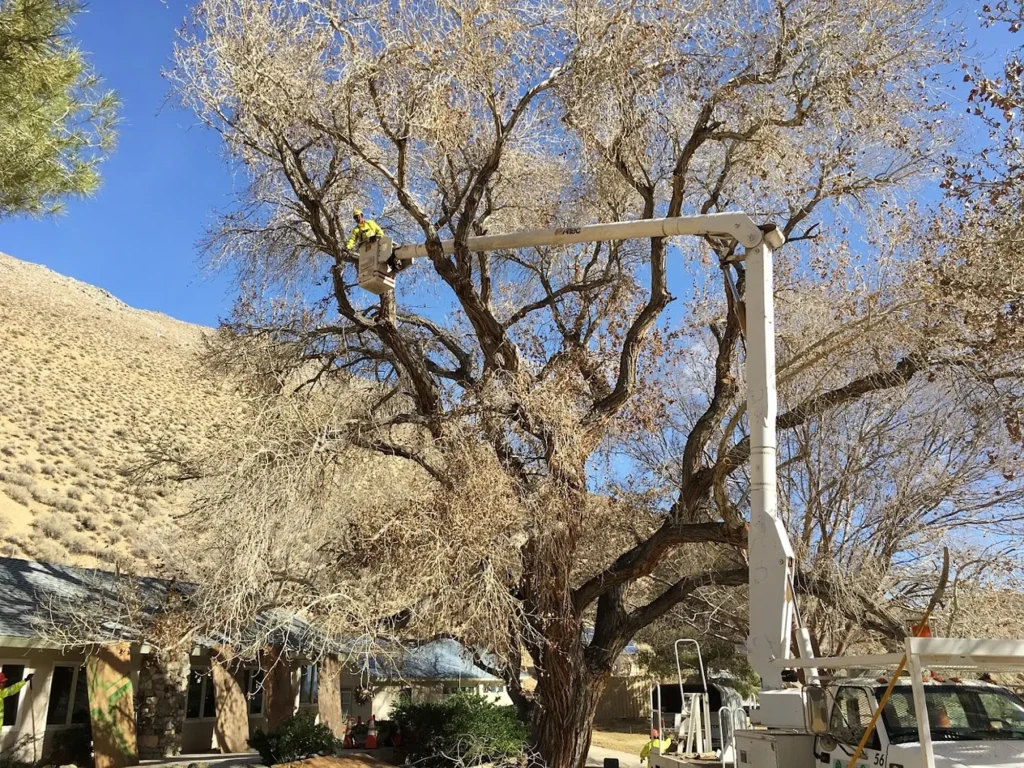
Whether you have a tree service Tehachapi oak dropping limbs near a fence line or a pine that has gone brown after a few dry seasons, hiring the right tree service Tehachapi homeowners can rely on comes down to two things: safety and local know how. Tehachapi is wind-exposed, elevation-driven, and full of microclimates. The same tree can behave very differently depending on slope, soil, irrigation, and how much wind it takes on.
This guide gives you a clear picture of what professional tree care looks like in the Tehachapi Valley, what to expect on pricing, and what questions to ask so you do not get stuck with a mess later.
In tree service Tehachapi, most jobs fall into a few core categories. Knowing which one you need helps you avoid paying for the wrong solution.
Tree trimming and pruning are the routine services. Trimming usually means clearance and hazard reduction: deadwood, branches over roofs, limbs crowding lines, and canopy weight that becomes risky in wind. Pruning is more targeted and structural: fixing weak branch unions, reducing end weight on long limbs, and shaping young trees so they grow with better form over time. If you are comparing quotes, ask each company to define what they mean by trimming versus pruning, and ask what cuts they plan to make and why.
Tree removal is usually the last resort. It is recommended when a tree is dead, structurally compromised, or positioned so closely to a structure or line that the risk is no longer manageable. A careful crew will plan the removal around targets, access, and how the tree is loaded by wind and lean.
Stump grinding is often separate, and it matters. Stumps can attract pests, create trip hazards, and complicate landscaping. Grinding typically takes the stump below grade so you can replant or restore the area without a permanent obstacle.
Tree service TehachapiIf. you want a simple baseline of service scope, these pages are useful starting points:
Tree service Tehachapiis not flat, mild, or consistent. Wind exposure is the headline, but it is not the only factor. Trees here commonly deal with drought stress, shallow rooting in compacted areas, and freeze-thaw cycles that can open up cracks and encourage decay over time. When a tree is already stressed, it sheds limbs sooner and recovers more slowly after heavy pruning.
Slope and drainage matter too. A tree on a slope can be stable for years, then lose holding power after erosion or a change in runoff. If you have trees above a driveway, retaining wall, or downhill of the house, a risk-based pruning plan is usually smarter than cosmetic cutting.
A good local crew will talk to you about wind sail (how dense the canopy is), end weight (how long limbs behave under gusts), and targets (what the tree could hit). If no one brings up those points, you may be getting a generic trim instead of a Tehachapi-appropriate plan.
For tree service Tehachapi, the goal is rarely “make it smaller.” The goal is “make it safer and more stable.” That usually means removing deadwood, reducing end weight on long limbs, and correcting obvious structural issues before the next wind event.
Ask your arborist to point out:
A practical rule that holds up in wind corridors: avoid drastic canopy removal unless a true hazard forces it. Heavy cuts can trigger fast regrowth that is weakly attached and more likely to break later. If you need significant reduction, ask about staged pruning over time rather than a single aggressive visit.
Removal is appropriate when the tree is dead, declining past recovery, or structurally unsafe. In Tehachapi, removals often become necessary after repeated wind damage, advanced dieback, or a severe lean with signs of root plate movement. If a tree is close to the home, fence, or lines, sectional dismantling (top-down in pieces) is standard and usually safer than felling.
If you are planning removal, confirm what the quote includes:
For local service context, these can help set expectations:
Tree service Tehachapi wind events can turn a normal situation into an urgent one fast. Emergency calls usually involve broken tops, hanging limbs, partial uproots, or trees resting on structures. The first priority is making the site safe, not finishing everything in one pass.
If a tree is touching a power line, keep clear and call the utility first. Treat everything as energized until the utility confirms it is safe. A reputable emergency crew will tell you the same thing and will not push you into unsafe work.
If you want an emergency reference page for customers, this is a clean place to send them:
Anyone can advertise tree work. ISA certification is a strong filter when you need diagnosis, risk decisions, or technical pruning that protects long-term structure. An ISA-certified arborist is trained to evaluate tree biology, structure, and hazard potential, not just run a saw.
You can find and verify ISA-certified arborists here:
If you are comparing companies, ask whether the person doing the assessment is ISA-certified, not just “someone on the team.” That distinction matters when the site is complex or the risk is high.
Permits can apply if a tree is in a public right of way, part of an HOA landscape plan, or otherwise regulated by local ordinances. Because tree service Tehachapi addresses can fall under different local jurisdictions, your safest move is to ask the city or county early, especially for large removals or trees near streets.
If licensing is relevant for the scope and cost of the job, verify contractors through CSLB:
Pricing depends on access, slope, targets, and tree size. These ranges are meant to help you sanity-check quotes, not replace an on-site estimate.
Service | Typical Range |
Small tree trimming (under 25 ft) | $150 to $400 |
Large tree trimming (25 to 60 ft) | $400 to $900 |
Tree removal (small to medium) | $300 to $700 |
Tree removal (large or complex) | $800 to $2,500+ |
Stump grinding | $100 to $400 per stump |
Emergency or after-hours service | add 25% to 50% |
Two pricing reality checks that come up a lot in tree service Tehachapi: steep terrain and tight access can raise cost more than height alone, and brittle dead trees can cost more than healthy trees because they are less predictable during rigging.
What is the cost of tree removal in Tehachapi?
Most residential removals land between a few hundred and a couple thousand dollars depending on size, access, and proximity to structures. If a crane is required or the tree is on a steep slope, the quote can rise quickly. Always ask for an itemized scope so you know what is included.
When is the best time to trim trees in Tehachapi?
For many deciduous trees, late winter pruning works well because structure is visible and recovery is strong heading into spring. For certain species, timing can be more specific, so a local arborist should recommend the safest window based on the tree and the site. Hazardous deadwood should be removed any time of year.
Is stump grinding included in removal?
Often not. Ask directly, and decide up front whether you want the stump ground below grade or left cut low. Bundling stump grinding with removal is often simpler than scheduling it later.
Do you offer emergency storm response?
Many tree service Tehachapi crews do, but response times change during major wind events. If you are in a wind-exposed area, it is smart to save a local emergency number before you need it.
If you want a tree service Tehachapi plan that is built around wind risk, access, and long-term structure, start with an on-site assessment and a written scope. For local booking and service info, send homeowners here:
Tell us about your tree care needs and our team will follow up with a detailed estimate and recommended solutions.