
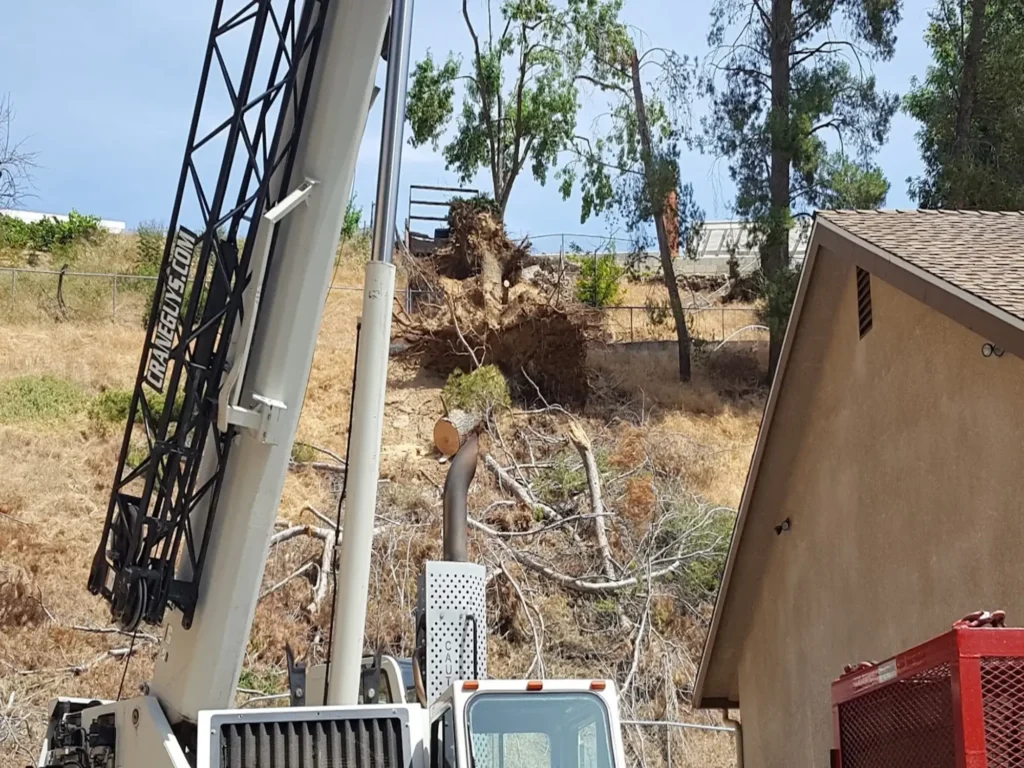
If you live in Palmdale, you already know what fall can bring. The heat backs off, the air dries out, and then the Santa Ana winds arrive and start testing everything in your yard. When trees are not ready, those gusts can snap dead limbs, peel out weak branches, and send debris into rooflines, fences, and power lines. In the worst cases, wind-driven damage becomes a fire risk, not just a cleanup problem.
Getting ahead of the season with tree trimming in Palmdale is one of the most practical things you can do as a homeowner. The goal is not to “cut it back hard.” The goal is to remove hazards, reduce wind resistance, and keep trees healthy enough to handle the stress that comes with dry wind events.
Palmdale’s high desert conditions push trees through extremes. Summer heat dries soil quickly, winter can bring hard freezes, and wind events show up during the transition seasons. Trees that might coast along in milder coastal climates often struggle here, especially if irrigation is inconsistent or the tree has been over-pruned in the past.
Wind is the big trigger. A canopy that is too dense can catch gusts like a sail, and a canopy that has been “lion-tailed” or stripped improperly can become structurally unstable. The result is a tree that looks trimmed but is more likely to fail. That is why tree trimming in Palmdale should be risk-based, not purely cosmetic.
Santa Ana winds are dry offshore winds that can show up in fall and winter and bring strong gusts. For trees, that means weak attachments, deadwood, and unbalanced canopies are much more likely to fail. What feels like “a normal windy day” can become a branch through a roof if the tree has unresolved hazards.
Fall is a useful preparation window because trees have finished their summer growth, deadwood is easier to spot, and there is still enough time for many species to begin closing wounds before deeper winter stress sets in. If you wait until the first big wind warning, you are competing with emergency calls and limited crew availability.
A good wind-season trim is not one single cut style. It is a set of targeted actions based on what the tree needs.
Dead branches break first, every time. They are also extremely dry, which matters in low humidity wind events. Removing deadwood is one of the highest-value services because it reduces both wind hazard and fire fuel around your home. This is the first thing most arborists prioritize in a fall safety trim.
When done correctly, thinning removes select interior branches so wind can move through the canopy instead of slamming into it. This is not the same as stripping the outside of the tree or cutting everything back evenly. The goal is to reduce wind resistance while keeping the tree’s structure balanced and healthy.
If a company proposes topping or heavy reduction as the default approach, pause. Topping is harmful and tends to create weak regrowth and higher long-term hazard risk. ISA’s consumer guide explains why topping hurts trees.
https://www.treesaregood.org/Portals/0/TreesAreGood_Why%20Topping%20Hurts_0321.pdf
Some trees have weak branch unions, co-dominant leaders, or long limbs that carry too much end weight. Structural pruning reduces the chance that those weak points fail under gust pressure. This is especially important for younger trees, because early training affects how the tree handles wind for decades.
Raising the canopy helps keep branches off roofs, fences, vehicles, and walkways. It can also help reduce ladder fuels in yards where fire risk is part of the seasonal reality. The key is balance. Removing too many lower limbs can shift weight upward and make the canopy less stable, so this should be done with a plan, not as a quick “lift it high” request.
Palms are common in Palmdale, and they are also easy to mishandle. Dead fronds can hang tight to the trunk and build into a skirt, which becomes both a wind sail and a fire ladder. Removing dead fronds and old fruit stalks is often the right move before peak wind season.
What you want to avoid is over-trimming. Removing too many green fronds weakens the palm and can make it more vulnerable to stress and pests. A simple rule that helps homeowners is to remove dead fronds and avoid cutting healthy fronds that are still supporting the crown.
Many Palmdale properties sit in or near higher fire risk zones, especially near foothills and open land edges. Defensible space is not only brush. Trees matter too. CAL FIRE outlines defensible space expectations, including reducing fuels close to structures.
https://www.fire.ca.gov/dspace
For fall wind prep, this usually means:
Tree trimming in Palmdale can support defensible space goals without stressing trees, but it needs to be selective and well-timed.
Some removals and major work may require permission depending on where the tree is and what it is. HOAs often require approval before significant trimming or removal, even on private lots. If you are in an unincorporated pocket, county rules may apply differently than city rules. When in doubt, ask your contractor what they have seen locally and confirm before removal.
Also verify the contractor’s license classification. In California, tree and palm work falls under the CSLB C-49 Tree and Palm Contractor classification.
https://www.cslb.ca.gov/about_us/library/licensing_classifications/Licensing_Classifications_Detail.aspx?Class=C49
Pricing varies by tree size, access, and complexity, but here are common planning ranges:
If a tree is near power lines, roofs, or tight access areas, costs rise because the work is slower and requires more controlled rigging.
Use this quick scan around your property:
If any of these show up, schedule tree trimming in Palmdale before the next wind warning.
Fall in Palmdale is beautiful, but it is also the start of a real risk window. Dry conditions and strong Santa Ana winds can turn unresolved tree hazards into expensive damage fast. A smart trim removes deadwood, reduces wind load, and improves structure without stressing the tree. Done early, it is one of the best home maintenance investments you can make.
If you want a local crew to assess your trees and give you a written estimate, start here:
Tell us about your tree care needs and our team will follow up with a detailed estimate and recommended solutions.