
When Roots Go Rogue: What Every Homeowner Should Know About Tree Root Damage
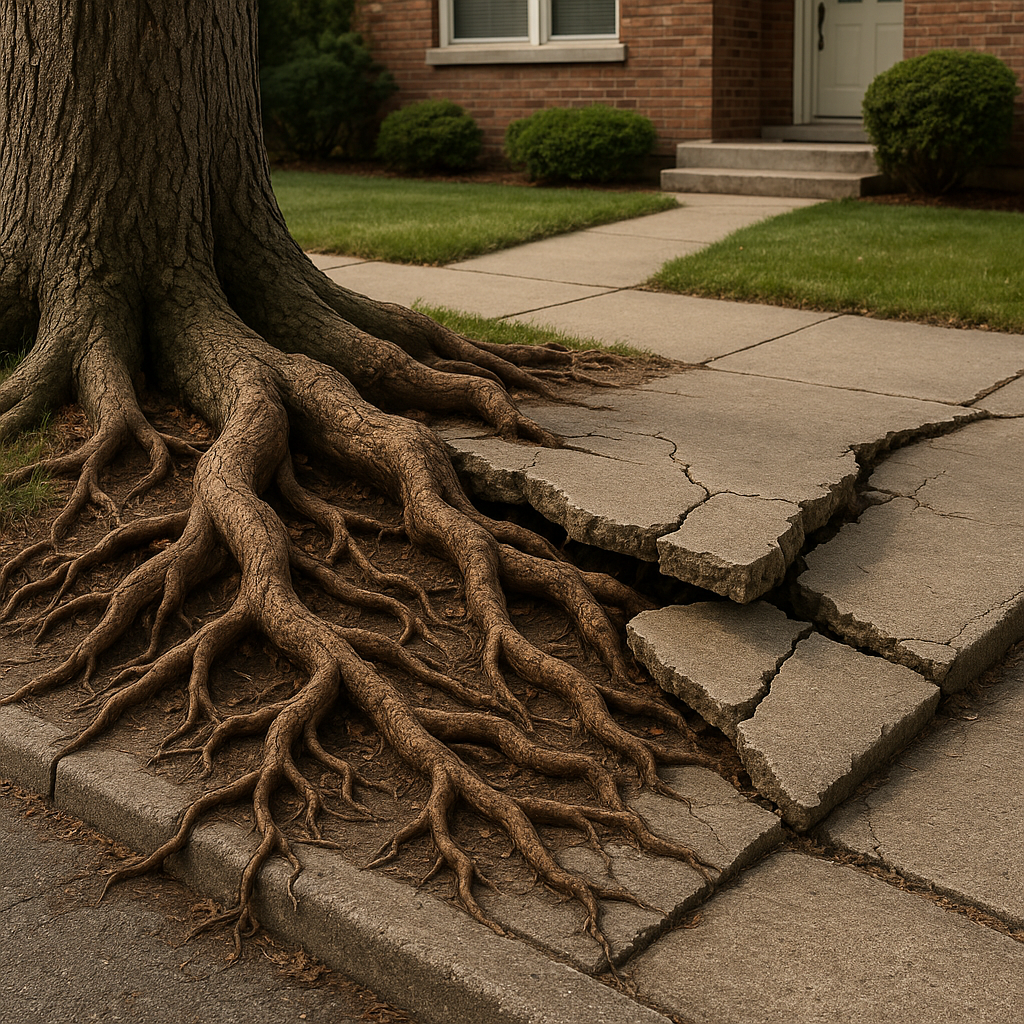
At Tip Top Arborists, we’ve had more than a few calls that start like this:
“Our driveway is cracking and lifting, and we think it’s the neighbor’s tree…”
It’s a more common problem than most people realize—and not just in old neighborhoods. Tree roots are constantly searching for water and stability, and sometimes that means they end up where they don’t belong: under driveways, foundations, plumbing, and sidewalks.
In cities like Lancaster, Palmdale, and the Antelope Valley, expansive clay soil and older infrastructure only make it worse.
In this post, we’ll break down what causes root damage, how to spot the early signs, your legal options, and how to deal with the issue—without losing the tree (or your mind).
What Causes Tree Root Damage?
Tree roots grow laterally more than vertically—often spreading 2-3 times beyond the tree’s canopy. If your tree is within 10–20 feet of concrete, foundations, or pipes, there’s a good chance those roots are already causing stress underground.
Damage typically occurs when:
- Tree roots dry out or shift soil beneath a slab or sidewalk
- Roots physically push against concrete or pipes
- Clay soil expands and contracts with weather, exacerbating cracks
Common culprits in our area include sycamores, liquidambars, ficus, and eucalyptus.
Warning Signs You Might Have Root Damage
Don’t wait for the slab to crack wide open. Early detection can save thousands. Watch for:
- Cracked or uneven sidewalks and driveways
- Bulging lawn areas or heaving soil
- Moisture pooling near the base of the tree
- Cracks along interior walls or floor tiles
- Tree growth unusually tilted or one-sided
If you notice any of these signs, schedule a tree health inspection before the damage worsens.
Can You Legally Remove Invasive Roots?
This is where things get complicated—and neighborly.
In California, you can trim roots that extend onto your property as long as it doesn’t kill or destabilize the tree. But if cutting roots causes the tree to die, and it wasn’t growing on your property? You could be liable for damages.
That’s why it’s best to bring in a certified arborist who can evaluate the risk before anyone picks up a saw.
If the tree is on city property or an HOA landscape, there may be permit requirements as well.
When It’s Time for Root Barrier Installation
One of the best ways to prevent root damage long-term is to install a root barrier. This involves:
- Digging a trench between the tree and the structure
- Installing a physical barrier material (usually plastic or metal)
- Redirecting root growth downward or away from hardscape
Root barriers are especially smart for:
- New home construction near mature trees
- Landscape redesigns near hardscapes
- Preventing future lawsuits or damage claims
You can learn more about this option in our tree root and soil management service page.
Cost of Ignoring Root Damage
You might think the cracks are “just cosmetic,” but here’s what can really happen:
- Undermined foundations can lead to settling or structural damage
- Broken pipes can result in sewage leaks or water line failures
- Sidewalks lifted by roots can be a liability risk to guests and neighbors
According to California State Water Resources Board, even minor root intrusion into plumbing can cost thousands to repair—and can lead to fines for water waste or noncompliance.
It’s not worth the risk.
Let Tip Top Handle the Hard Part
If you’re dealing with root issues, don’t go it alone. We’ll help you:
Diagnose the root cause (literally)
Mediate with neighbors or city planners
Offer root-safe solutions for removal or redirection
Protect both your property and the tree
We’re not just here for the tree—we’re here for you.

Book a Root Inspection Before the Next Crack Appears
We’ve seen what happens when root issues get ignored. Don’t wait for a minor crack to become a major foundation repair.
Call Tip Top Arborists at 661-942-5501
Serving Lancaster, Palmdale, Quartz Hill & beyond
www.tiptoparborists.com