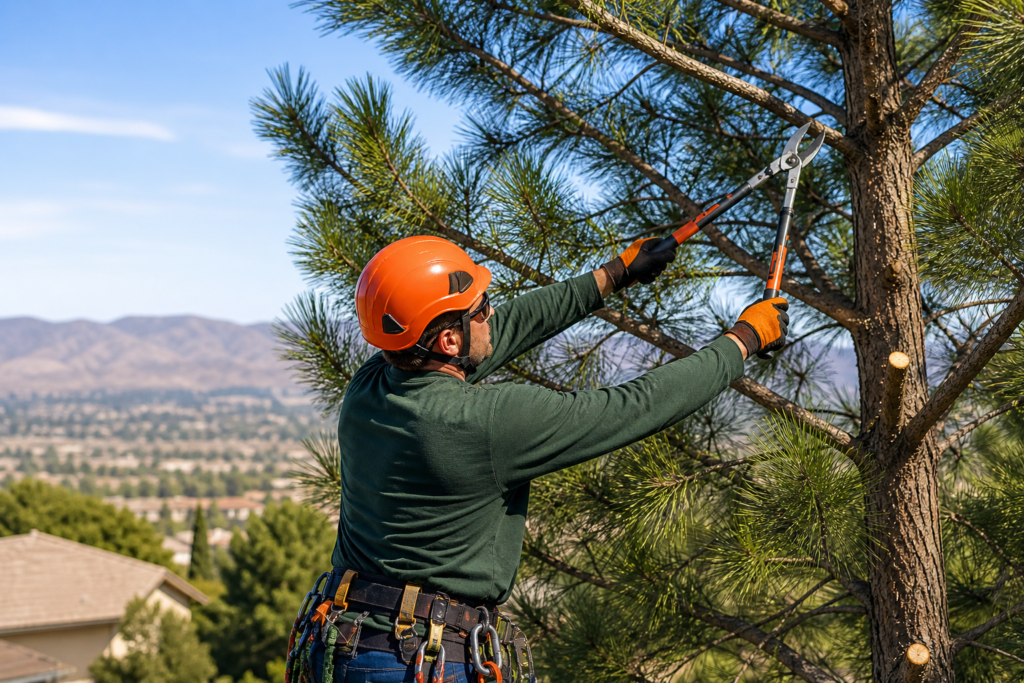
This guide will help you understand pine tree pruning in Antelope Valley and how to do it safely and effectively.Pine trees add beauty and shade to many yards in the Antelope Valley, but keeping them healthy and attractive requires regular pruning. Without the right knowledge and technique, pruning can do more harm than good, leaving your trees vulnerable to disease or poor growth. Many homeowners struggle with understanding when and how to prune their pine trees to maintain their vitality. If you are looking for a comprehensive and easy-to-follow guide, you are in the right place.
At Tip Top Arborists, we understand the challenges faced by residents of the Antelope Valley when it comes to proper pine tree care. Our goal is to help you feel confident in pruning your pine trees the right way so they will thrive for years to come. This guide covers everything from the best time to prune to step-by-step instructions and safety tips.
Pruning pine trees is essential to promote healthy growth, prevent disease, and maintain an attractive shape. The dry climate of the Antelope Valley can stress pine trees, making them more vulnerable to pests and fungal infections. Removing dead or diseased branches improves air circulation and sunlight penetration, which helps keep trees strong.
According to the International Society of Arboriculture, properly pruned trees can live up to 30% longer than neglected ones (ISA, 2023). This statistic highlights why regular care is especially important in areas like the Antelope Valley, where environmental stresses are common.
In addition, pruning can reduce the risk of branches falling and causing damage during storms or high winds. This is particularly crucial in the Antelope Valley since the area experiences occasional gusty winds that may threaten weak or overgrown trees.This is why pine tree pruning in Antelope Valley is essential for maintaining strong and healthy trees.
The best time to prune pine trees is late winter to early spring, before new growth starts. Pruning during this period allows wounds to heal quickly when the tree becomes active in the growing season. Avoid heavy pruning in summer or fall, as this can stress the tree and increase vulnerability to pests.Choosing the right season is a key part of successful pine tree pruning in Antelope Valley.
If your pine tree has dead or broken branches or safety concerns, prompt pruning is necessary regardless of the season. However, the general maintenance pruning should follow the late winter schedule recommended by local arboriculture experts, including the team at Tip Top Arborists. This timing fits perfectly with the Antelope Valley’s seasonal patterns.
Follow these steps for proper pine tree pruning in Antelope Valley to keep your trees healthy and strong.Successful pine tree pruning might seem intimidating, but following these clear steps can make the process manageable and safe.
Before you start pruning, make sure you have the right tools. Use sharp pruning shears for small branches and a pruning saw for thicker limbs. If working higher up, a pole pruner or ladder may be necessary. Always wear safety glasses and gloves to protect from debris and tree sap.
Look for dead, diseased, or damaged branches first. These should be pruned to prevent health risks. Also, remove branches that cross or rub against each other, as this can create wounds and invite diseases. Thin out any overly dense clusters to improve airflow.Proper inspection is an important step in pine tree pruning in Antelope Valley to prevent long-term damage.
When cutting a branch, trim close to the trunk but avoid cutting into the branch collar—the swollen area at the base of the branch. Cutting here correctly will help the tree heal faster and reduces the risk of decay.
Pruning too much can stress your pine tree severely. Limit your cuts to less than a quarter of the live canopy during any session. If heavy pruning is needed, plan to spread it out over multiple seasons.
Dead or diseased branches should be removed from your property to prevent spreading pests or diseases. Healthy clippings can be composted or chipped for mulch.
Many homeowners make errors during pine tree pruning in Antelope Valley without realizing the impact. One big mistake is topping the tree, which means cutting the top off. Topping weakens the tree structure and can cause rapid, weak growth. Another is pruning too late in the growing season, which exposes trees to pests.
Over-pruning or removing live branches excessively can also reduce the tree’s ability to photosynthesize and store energy. It is important to prune conservatively and only remove what is necessary, a practice recommended by professionals like Tip Top Arborists to support healthier tree growth.
The Antelope Valley experiences hot, dry summers and cold winters with occasional frost. These conditions affect how pine trees should be pruned. Dry weather means wounds heal slower, so pruning during cooler, early spring months helps reduce stress on the tree.Climate plays an important role in pine tree pruning in Antelope Valley, especially due to hot summers and dry conditions.
Drought conditions common to the region require trees to use their stored energy carefully. Over-pruning can deplete these reserves and harm your pine tree’s health. Tip Top Arborists recommend assessing tree health regularly to adjust your pruning schedule based on weather patterns in the Antelope Valley.
Professional help ensures safe and effective pine tree pruning in Antelope Valley for large or damaged trees.You might consider calling in professionals like Tip Top Arborists if your tree shows signs such as large dead limbs, heavy damage after storms, or severe disease. Climbing high branches or pruning large trees can be dangerous without proper equipment and expertise.
Professional arborists have the tools and knowledge to prune pine trees safely and correctly in the Antelope Valley’s unique environment. They can also provide treatments for pests and diseases that may not be obvious to an untrained eye.
For detailed pruning standards, visit the [International Society of Arboriculture (ISA)](https://www.treesaregood.org)
Learn more about our [Tree Health Assessment Services]
Contact us for [Professional Pruning Services]https://tiptoparborists.com/contact
Q1: How often should I prune my pine trees in the Antelope Valley?
Pine trees should be annually inspected and pruned as needed, but major pruning is best done every 2-3 years during late winter or early spring. Tip Top Arborists recommends regular maintenance pruning to remove dead or hazardous branches to keep your pine tree healthy in the Antelope Valley’s climate.
Q2: Can I prune my pine tree myself or should I hire a professional?
Small, minor pruning can be done by homeowners, especially with proper tools and safety measures. However, for larger jobs, diseased trees, or hard-to-reach branches, Tip Top Arborists in the Antelope Valley can ensure safe and effective pruning without damaging your tree.Hiring experts for pine tree pruning in Antelope Valley ensures safety and proper tree care.
Q3: What should I avoid when pruning pine trees in the Antelope Valley?
Avoid pruning during hot summer months or late fall as this can stress your pine tree. Never remove more than 25% of the canopy at once, and don’t top your tree. Following these guidelines from Tip Top Arborists helps promote healthy tree growth in the Antelope Valley.
Q4: Does pruning help with pest control in pine trees?
Yes, pruning improves air circulation and sunlight penetration, which discourages pests and fungal diseases. Tip Top Arborists integrates pruning as part of pest management strategies to help pine trees thrive in the Antelope Valley environment.
If you want to keep your pine trees healthy and beautiful, proper pruning is a must. The experts at Tip Top Arborists are here to help you every step of the way. Whether you want advice, a professional assessment, or skilled pruning services, we are your go-to team in the Antelope Valley.Proper pine tree pruning in Antelope Valley helps your trees grow stronger, healthier, and more beautiful over time.
Contact Tip Top Arborists today to schedule your pine tree pruning or to learn more about tree care tailored for Antelope Valley residents. Your trees will thank you with stronger growth and lasting beauty.
Tell us about your tree care needs and our team will follow up with a detailed estimate and recommended solutions.