
How to Prepare Your Trees for Wind and Rain Season in the Antelope Valley
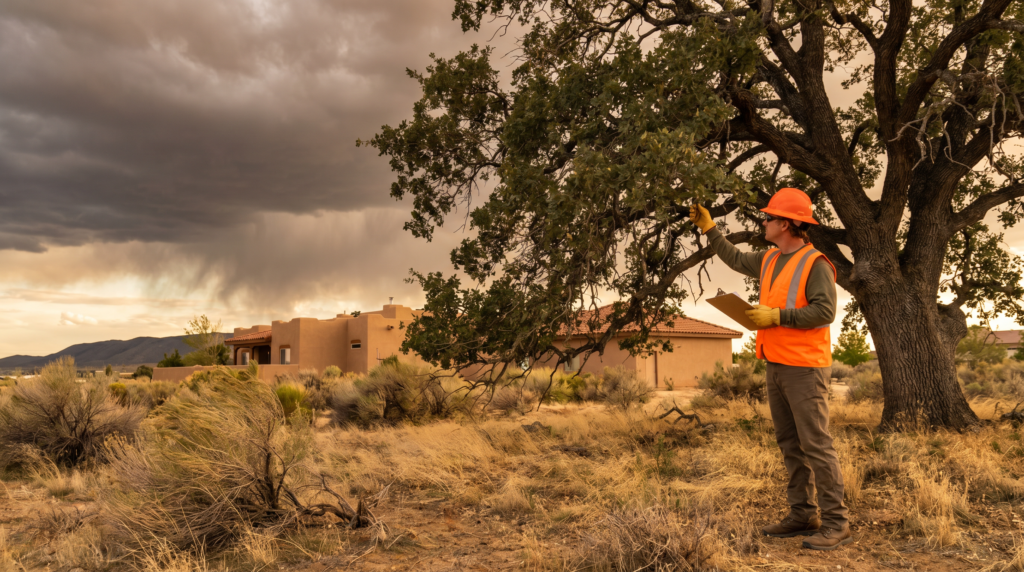
Prepare Trees for Wind and Rain Season Antelope Valley Prepare trees for wind and rain season Antelope Valley to protect your property before storms arrive.Rain and wind are forecast for the Antelope Valley this week, with gusts expected to reach 35 mph by Tuesday. For homeowners in Lancaster, Palmdale, and Acton, that kind of weather is not just an inconvenience. It is a test that every tree on your property will either pass or fail. A well-maintained tree sheds wind and sheds water. A neglected one becomes a liability. Tip Top Arborists has been serving the Antelope Valley for over a decade. Our ISA-certified arborists respond to more emergency tree calls in the 48 hours after a wind event than at any other time of year. Almost all of them could have been prevented with a single pre-season inspection and a targeted pruning visit. This guide walks you through exactly what to do before the next storm arrives. Why Wind Is More Dangerous Than It Looks The Antelope Valley sits at the edge of the Mojave Desert, where seasonal wind events can arrive with very little warning. Santa Ana conditions in the fall and spring low-pressure systems in April and May regularly produce gusts between 30 and 55 mph across Lancaster and Palmdale. At those speeds, a structurally compromised tree does not bend. It breaks. The most common failure points are: Deadwood in the canopy. Dead branches have no flexibility. They snap cleanly and fall with significant force. Co-dominant stems. Two or more main trunks growing from a single base create a structural weakness called an included bark union. Under wind load, these split apart. Overextended lateral branches. Long, heavy branches growing horizontally act as levers. Wind amplifies the load at the attachment point. Root zone saturation. When rain follows wind, already-stressed soil can become waterlogged. A tree that survived the gusts may still uproot 12 to 24 hours later when the ground softens. Understanding these failure points is the first step. Acting on them before the storm is what protects your property. The Pre-Storm Tree Checklist for Antelope Valley Homeowners Use this checklist in the days before a forecast wind or rain event. If you are not comfortable assessing your trees yourself, call Tip Top Arborists at (661) 382-8722 for a professional hazard assessment. Walk the perimeter of each tree and look up. Look for hanging branches, dead limbs, or any branch that appears to be attached at an unusual angle. If a branch is already partially detached, it is a hazard that needs to be removed before the storm, not after. Check for co-dominant stems. If your tree has two or more main trunks growing from the same base, look at the point where they meet. If the bark appears to be growing inward between the stems rather than outward, that is an included bark union and it is a high-risk failure point. Assess the canopy density. A dense, unpruned canopy acts like a sail in high wind. Crown thinning reduces wind resistance by removing select interior branches, allowing air to pass through rather than push against the tree. Check the base of the tree. Cracks in the bark at the base, mushroom growth, or soft or spongy wood at ground level are all signs of internal decay. A tree with root or trunk decay can fail at wind speeds well below what would normally cause damage. Clear the area around the tree. Remove any objects that could become projectiles if a branch falls. Patio furniture, children’s play equipment, and parked vehicles should be moved away from the drip line of any large tree before a wind event. Note any trees near power lines. Trees growing into or near power lines require clearance pruning by a qualified arborist. Do not attempt to prune near power lines yourself. Call Tip Top Arborists or contact Southern California Edison for utility line clearance. Frequently Asked Questions Q: How much wind does it take to knock down a tree? A: Healthy, well-maintained trees can withstand sustained winds of 60 to 80 mph. However, trees with internal decay, deadwood, co-dominant stems, or saturated root zones can fail at wind speeds as low as 30 to 40 mph. The condition of the tree matters far more than the wind speed. Q: Should I water my trees before a windstorm? A: No. Watering before a wind event saturates the soil and reduces root anchorage. If rain is also forecast, avoid watering entirely in the days before the storm. Q: Can a tree be saved after it has been partially uprooted by wind? A: In some cases, yes. If the root ball is still partially intact and the tree is reset within 24 to 48 hours, survival is possible. However, this requires professional assessment. Call Tip Top Arborists immediately if a tree on your property has been uprooted or is leaning after a storm. Q: How often should trees in the Antelope Valley be pruned for wind safety? A: Most mature trees benefit from a structural pruning visit every two to three years. Trees near structures, power lines, or high-traffic areas should be assessed annually. Q: Does homeowner’s insurance cover wind-damaged trees? A: Most homeowner’s policies cover tree removal if a fallen tree damages a covered structure such as your home, fence, or vehicle. Removal of a fallen tree that did not damage a structure is typically not covered. An arborist report from Tip Top Arborists can support your insurance claim. INTERNAL LINKS Homeowners looking for professional tree trimming can visithttps://tiptoparborists.com/tree-trimming-palmdale-ca/ for full service details.If you’re located in the area, explore local services here:https://tiptoparborists.com/palmdale/ Need expert advice? Request a free estimate today:https://tiptoparborists.com/contact-us/ EXTERNAL LINKS International Society of Arboriculturehttps://www.isa-arbor.com/ Tree Care Industry Associationhttps://www.tcia.org/ USDA Forest Servicehttps://www.fs.usda.gov/ What Tip Top Arborists Does Before Storm Season Our pre-storm service includes a full hazard assessment by an ISA-certified arborist, targeted deadwood removal, crown thinning to reduce wind load, and structural pruning to address co-dominant stems and overextended laterals. We serve
How Long Does Tree Trimming Last? What Antelope Valley Homeowners Need to Know
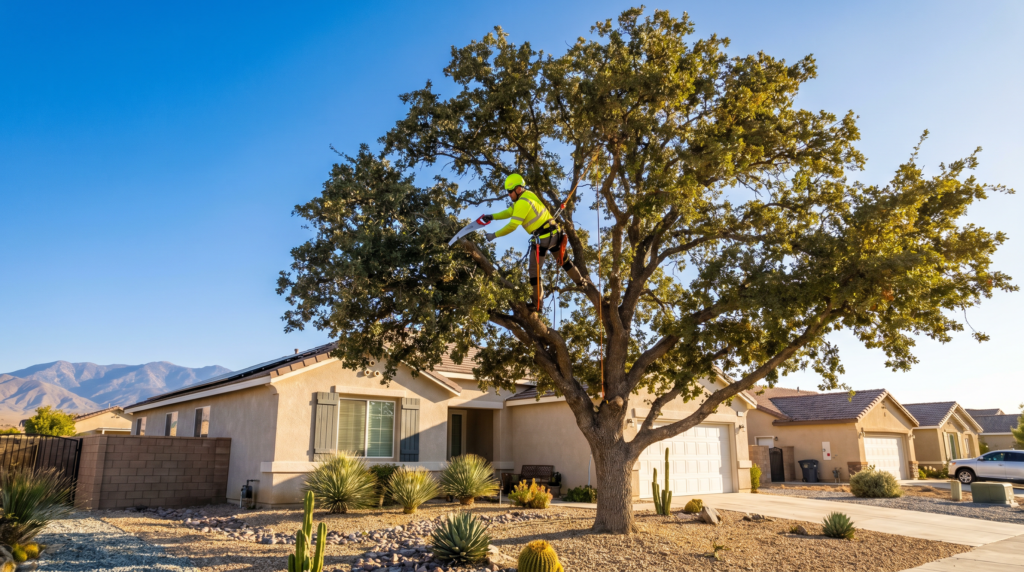
Introduction One of the most common questions Tip Top Arborists receives from homeowners across Lancaster, Palmdale, and Acton is a simple one: how long will this trim last? It is a practical question that matters for budgeting, planning, and understanding what your trees actually need. The honest answer is that it depends – but not in a vague way. There are specific, measurable factors that determine how quickly a tree regrows after trimming, and understanding them allows you to plan your tree care schedule with confidence rather than guesswork. This guide explains those factors and gives you a clear framework for thinking about tree trimming frequency in the Antelope Valley. The Short Answer For most mature residential trees in the Antelope Valley, a professional trimming visit every two to three years is the appropriate maintenance interval. This is the guidance Tip Top Arborists provides to the majority of our clients after completing a job. However, that two-to-three-year window is not a universal rule. It is a starting point that gets adjusted based on the specific tree, its location, and the conditions it is growing in. What Affects How Long a Tree Trim Lasts 1. Tree Species Different species grow at dramatically different rates. Mulberry trees – by far the most common trimming request in the Antelope Valley – are fast-growing and may require attention every one to two years in irrigated residential settings. Ash trees grow at a moderate pace and typically fall into the two-to-three-year range. Mature pine trees, once properly shaped, may only need attention every three to five years. 2. Irrigation and Water Access Trees in irrigated residential landscapes grow significantly faster than trees in dry, unirrigated settings. A mulberry tree on a regular drip system in Palmdale will regrow its canopy much faster than the same species growing on rainfall alone in a rural Acton property. 3. Type of Trimming Performed The type of work done at the last visit directly affects how long it lasts. Crown thinning, which removes interior branches while preserving the overall structure, tends to hold well for two to three years. Crown reduction, which reduces the overall size of the canopy, typically requires a follow-up visit sooner because the tree responds by producing vigorous new growth at the cut points. 4. Proximity to Structures and Power Lines Trees growing near rooflines, gutters, or utility lines need more frequent attention because the acceptable clearance margin is smaller. A branch that would be fine on an open-canopy tree may become a hazard within 12 months when it is growing toward a structure. 5. Storm and Wind Damage The Antelope Valley’s wind events can set back a trimming job significantly. A tree that was well-shaped in the spring may have broken or displaced branches by the following autumn. Annual inspections are advisable for trees in exposed locations or near structures, even if a full trim is not needed every year. The Two-Year Rule at Tip Top Arborists When Tip Top Arborists completes a trimming job, our arborists provide a specific maintenance timeline based on the tree’s species, growth rate, and the work performed. For many of our Palmdale and Lancaster clients, that timeline is two years. Palmdale homeowner Mina Monden, who has been a Tip Top client for nine years, noted in her recent five-star review that after her most recent trimming, she was told the tree would not need attention again for two years. That kind of specific, honest guidance is what allows homeowners to plan and budget rather than react. Signs Your Tree Needs Trimming Sooner Than Expected Even with a clear maintenance timeline, certain conditions should prompt an earlier visit: Branches have grown within 18 inches of your roofline or gutters You can see dead or hanging branches in the canopy The tree has developed a noticeably unbalanced or lopsided shape There has been a significant wind event since the last trim New growth is growing toward a power line or neighboring property If any of these apply, call Tip Top Arborists for an assessment before the next scheduled visit. Frequently Asked Questions Q: How long does tree trimming last for a mulberry tree in Palmdale? A: Mulberry trees are fast-growing and typically require trimming every one to two years in irrigated residential settings in Palmdale and Lancaster. In drier, unirrigated conditions, the interval may extend to two to three years. Q: Does the type of trimming affect how long it lasts? A: Yes. Crown thinning, which removes interior branches while preserving the tree’s overall structure, tends to hold well for two to three years. Crown reduction, which reduces the overall canopy size, typically requires a follow-up sooner because the tree responds with vigorous new growth at the cut points. Q: How do I know when my tree needs trimming again? A: Look for branches growing within 18 inches of your roofline, dead or hanging branches in the canopy, a noticeably unbalanced shape, or any growth toward power lines or structures. Tip Top Arborists also provides a specific maintenance timeline at the end of every job. Q: Is annual tree trimming necessary? A: For most mature trees in the Antelope Valley, annual trimming is not necessary. However, annual inspections are advisable for trees near structures, power lines, or in high-wind exposure areas, even if a full trim is not required every year. Q: Does Tip Top Arborists offer a maintenance schedule or reminder service? A: Yes. Tip Top Arborists tracks maintenance timelines for our clients and can provide reminders when your trees are due for their next visit. Call (661) 382-8722 to discuss a maintenance plan for your property. INTERNAL LINKS Homeowners looking for professional tree trimming can visithttps://tiptoparborists.com/tree-trimming-palmdale-ca/ for full service details.If you’re located in the area, explore local services here:https://tiptoparborists.com/palmdale/ Need expert advice? Request a free estimate today:https://tiptoparborists.com/contact-us/ EXTERNAL LINKS International Society of Arboriculturehttps://www.isa-arbor.com/ Tree Care Industry Associationhttps://www.tcia.org/ USDA Forest Servicehttps://www.fs.usda.gov/ Planning Your Tree Care Budget Understanding trimming frequency allows you to plan your tree care as a
Wind Storm Tree Damage in Lancaster CA: What to Do Next
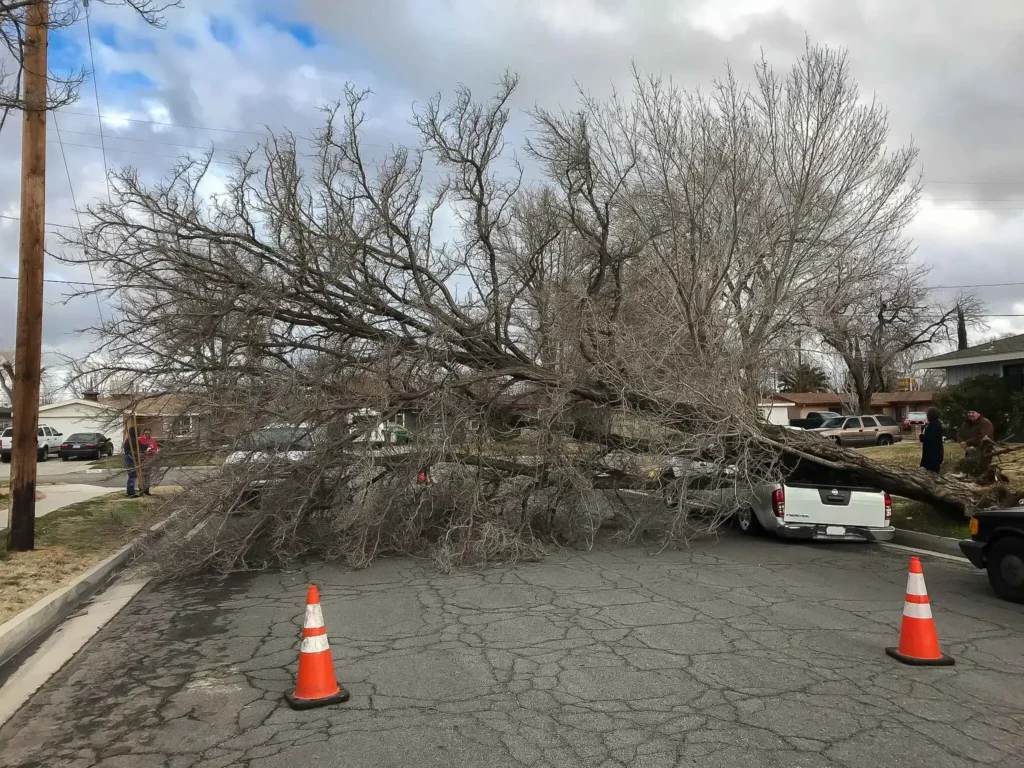
Lancaster CA is known for its beautiful high desert landscapes, but it is also famous for its intense wind events. When the wind howls through the Antelope Valley, trees can take a serious beating. If you wake up after a storm to find broken branches or leaning trunks in your yard, knowing exactly what to do can save your property from further damage and protect the health of your trees. In this guide, we will walk you through the immediate steps to take when you discover wind storm tree damage on your property. From assessing the danger from a safe distance to knowing when to call in the professionals, we have you covered. Step 1: Prioritize Safety Above All Else The very first thing you must do after a wind storm is ensure the safety of your family and neighbors. Fallen trees and broken branches can create incredibly hazardous situations. Look for Downed Power Lines Before you even step foot in your yard, look up and around. If a tree or large branch has fallen on or near a power line, do not approach it. The ground around the tree could be electrified. Call your local utility company immediately to report the downed line, and keep everyone away from the area until professionals declare it safe. Check for Hanging Branches Sometimes the most dangerous branches are the ones that have not fallen all the way down yet. Look up into the canopy of your trees. Are there large, broken limbs hanging precariously? These are known as “widow-makers” in the tree care industry because they can drop at any moment without warning. If you see hanging branches, avoid walking under the tree and keep pets and children indoors. Assess Structural Damage If a tree has fallen onto your house, car, or other structures, evacuate the area if necessary and contact your insurance company. Do not attempt to remove the tree yourself if it is resting on a structure, as shifting the weight could cause the structure to collapse further. Step 2: Document the Damage Once you have ensured that the immediate area is safe from electrical hazards and imminent falling debris, take time to document the damage. This step is crucial if you plan to file an insurance claim. Take clear photos and videos of the damaged trees from multiple angles. Capture the entire tree, the specific broken areas, and any property damage caused by the falling limbs. If the tree was uprooted, take pictures of the exposed root system and the hole left in the ground. Write down the date and time of the storm, as well as a detailed description of what happened. Having this information ready will make the insurance claims process much smoother. Step 3: Evaluate the Tree’s Condition Not all wind damage means a tree has to be removed. Many trees can recover from storm damage with the right care. Here is how to evaluate the situation. Minor Damage If the tree has only lost small branches and the main trunk is intact, it will likely recover just fine. You can clean up the small debris yourself. However, the broken ends of the branches should be pruned cleanly to prevent disease and pests from entering the tree. Moderate Damage If the tree has lost larger limbs but the trunk is solid and the overall structure remains balanced, it may still be salvageable. A professional arborist can assess the tree and determine if selective pruning can restore its health and appearance. Severe Damage Severe damage occurs when the main trunk is split, the tree has lost more than half of its canopy, or it has been significantly uprooted. In these cases, the tree is often beyond saving and will need to be removed safely. Step 4: Resist the Urge to DIY Major Repairs It can be tempting to grab a chainsaw and start cutting away the damaged parts of your tree, but DIY tree repair is incredibly dangerous. Tree work is consistently ranked as one of the most hazardous professions, and doing it without proper training and equipment is a recipe for disaster. Cutting branches under tension can cause them to snap back violently. Chainsaw kickback can cause severe injuries. And without a deep understanding of tree biology, you might make improper cuts that doom the tree to a slow death from disease or rot. For anything more than picking up small twigs from the ground, it is always best to hire a certified arborist. Step 5: Call a Professional Arborist When you are dealing with wind storm tree damage in Lancaster CA, bringing in a professional is the smartest move you can make. An International Society of Arboriculture certified arborist has the training and experience to handle storm damage safely and effectively. What an Arborist Will Do When an arborist arrives at your property, they will conduct a thorough assessment of the damaged trees. They will look for hidden structural weaknesses that might not be obvious to the untrained eye. If the tree can be saved, the arborist will perform corrective pruning. This involves making clean cuts to remove broken branches, which helps the tree heal faster and prevents decay. They will also balance the canopy to ensure the tree is stable and less likely to fail in the next wind storm. If the tree must be removed, the arborist has the specialized equipment to take it down safely, even in tight spaces or near structures. They can also grind the stump, leaving your yard clean and ready for new landscaping. Preventing Future Wind Damage While you cannot control the weather, you can take steps to prepare your trees for the high winds that frequently hit the Antelope Valley. Regular Pruning The best defense against wind damage is a well-maintained tree. Regular pruning removes dead or diseased branches before they can be ripped off by the wind. It also thins the canopy, allowing wind to pass through the tree more easily rather than pushing against