What To Do With Wood Chips After Tree Removal

When professional arborists remove a tree from your property, they may offer to mulch the wood and deliver it to you in the form of chips. Making good use of these chips can help you reduce waste. Explore these ideas for what to do with wood chips after tree removal. Then, schedule tree services in Bear Valley Springs, CA, to start the removal process. Mulch Your Landscape Beds Wood shavings make an attractive and effective mulch to sprinkle around flower beds, bushes, and shrubs. This form of mulch is organic, allowing you to avoid the chemical contaminants that come with rubber mulch and other artificial materials. It also does an excellent job of enriching the soil, boosting moisture retention, suppressing weeds, and maintaining proper ground temperature. As an added benefit, wood mulch creates a clean, attractive appearance. Lay the mulch in a three-inch layer around plant life on your property to make good use of this organic material. Create Pathways Through Your Garden Another option for recycling wood chips is creating paths through your back yard or garden. These paths probably won’t hold up to heavy foot traffic, but they can create designated areas to walk around flowers and other plant life while watering. They also give you an opportunity for eco-friendly wood chip disposal. Start by removing the grass and weeds from the designated area, then lay landscaping fabric to prevent weeds from growing through the mulch. Finally, spread a thick layer of wood chip mulch along the pathway. You can place stones or bricks around the edges to help contain the path. Fill the Gap Left Behind by the Stump When arborists remove a tree and its stump, they may leave a shallow hole behind. One idea for what to do with wood chips after tree removal is to fill in the hole and create a level surface. Tree removal wood chips decompose over time, adding nutrients to the surrounding soil. Eventually, you can plant flowers or grass seed in the area to create a more uniform appearance. Post Them on Neighborhood Groups If you have exhausted all other uses for wood chips, consider gifting the remainder to friends or neighbors. You can post them on Craigslist or your neighborhood’s Facebook group. You may be surprised by how quickly they disappear from your property. Gifting the shavings to neighbors ensures they go to good use rather than ending up in a landfill. If desired, you can consider charging a small amount of money rather than giving them away for free. Schedule Tree Removal Today From Tip Top Arborists Now that you know what to do with wood chips after tree removal, it’s time to schedule service. Whether you want to enlist an arborist for trimming trees or to remove the branches, trunk, and stump, Tip Top Arborists is a reliable choice in Bear Valley Springs, CA. Contact us today at 661-942-5501 to schedule service or discuss other wood chip options.
Can You Plant a New Tree After Stump Grinding?
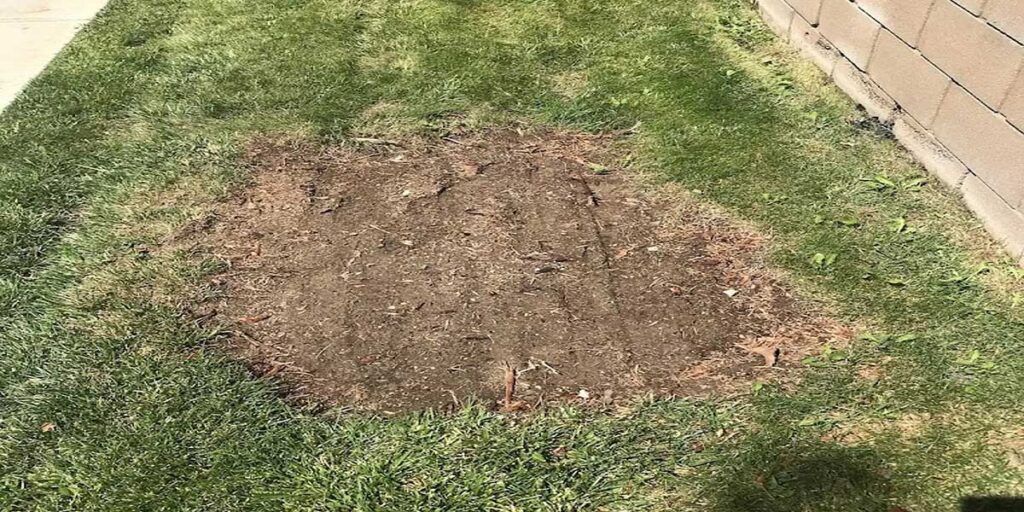
Tip Top Arborists is a team of professionals offering world-class tree services in Valencia, CA. Trust us to handle any stump grinding needs you have. Grinding helps eliminate these eyesores from your property. Afterward, it may be time to plant a new tree, leaving many to wonder, “Can you plant a new tree after stump grinding?” The answer to this common question may not be as simple as you think. Read on for a comprehensive overview. What Is Stump Grinding? Stump grinding is a process for removing a tree stump from your yard. Grinding does not excavate the specimen or pull it from the soil. Instead, it grinds the stump to mulch, leaving only a tidy pile of wood chips. Skilled professionals use specialized heavy machinery. These machines generally have discs with rotating teeth that pulverize even the toughest wood. They are available in various sizes, depending on your needs. Trees with deeper trunks, for instance, require heavier machinery. A professional will always have the right one for the job. Why Grind a Stump? Property owners remove trees for various reasons. They may be in a bad location or in poor health, or they may suffer storm damage and must be removed to mitigate a safety hazard. Cutting a tree down leaves a stump behind, making a yard look messy or unfinished. Moreover, they can pose a tipping hazard, especially for children at play. For many, the best choice is to grind the stump, eliminating it from the yard. Planting a New Tree After Grinding Technically, you can plant a tree in the same place as a ground stump, but doing so is not advisable. You must remember that trees need large areas to spread their roots, and mulch blocks this growth. Furthermore, mulch can attract pests, creating an inhospitable environment. You must also consider why you removed the original tree. It may have been diseased or in a poor spot. When replanting after stump removal, your best bet is to choose a new location. Stump Grinding Replanting Tips That brings us back to our original question: “Can you plant a new tree after stump grinding?” When planting, consider the following. Location: You want a place where your new tree can spread its roots. It’s best to pick an isolated area away from other plants. Temperature: You want trees to thrive in sunny areas, but you should place a new one or seed in cool soil. You can plant at dusk, at night, or early in the morning. Soil quality: A good tree needs a balanced environment to grow. A high-nitrogen fertilizer can prepare the soil accordingly. You may also use organic compost to enhance nitrogen levels. An experienced team like ours knows how to navigate all these factors and more for the best results. Getting Professional Help So, can you plant a new tree after stump grinding? You can, but you’ll want to choose a new location. Tip Top Arborists knows what’s best for your property and can help you avoid common tree care myths. Call us today at (661) 942-5501!
The Process of Professional Stump Grinding Explained
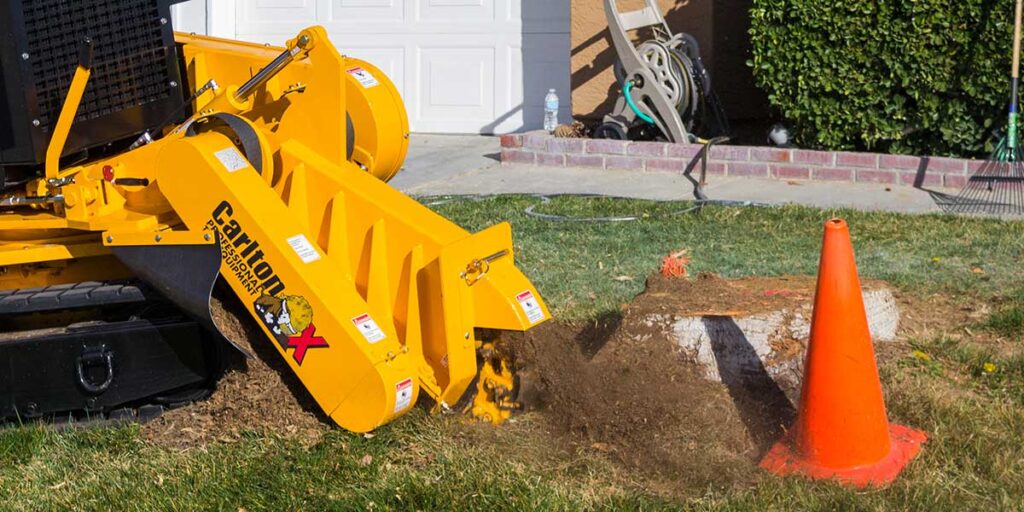
Whether you cut down a tree yourself or enlist professional help, you may be left with a tree stump that you’re now struggling to get rid of. As the last stage of the tree removal process, a lot of property owners choose to try this project themselves. Instead of learning how to grind a tree stump as a DIY project, we recommend reaching out to a professional for tree services in Apple Valley, CA. Continue reading to learn what this process entails and why you should rely on experts to complete the job. How To Grind a Tree Stump As a critical part of the tree removal process, stump grinding is not as complex as it may seem. Experts take the following steps: Eliminate hazards by removing debris and other obstacles near the stump. Move the stump grinder to the edge of the stump and position it from the top down. Grind the wood layer by layer from the top of the stump down to the roots. Stop the process upon reaching the final layer near the main root system to prevent the tree from growing back. Clear all wood chips to either discard them or repurpose them and use them as mulch. How Stump Grinding Benefits the Environment Along with stopping unwanted trees from growing back, removing the potential habitat for pests, and creating a safe environment for your family, stump grinding is an environmentally friendly tree service. This sustainable practice eliminates the need for harmful chemicals to decay tree stumps, which ultimately benefits the soil’s health. This process also provides the following advantages: Soil temperature regulation Soil moisture retention Weed growth reduction Consider booking this service over DIY attempts at stump removal. Why You Need a Professional Tree Service Company for Stump Grinding There are other factors that go into stump grinding like soil preparation. If the area around the stump contains excessive debris, metal, or other hazards, this unsafe situation can damage your machine or cause injury. Equipment operation is also an important component, so if you lack this knowledge, it’s best to rely on professionals. Dealing with an unsightly tree stump can be a frustrating process that can lead to unexpected costs if you decide to try it yourself. Professional arborists know the right techniques to perform each job with precision. Experts also know how important it is to take the necessary safety precautions and adhere to the manufacturer’s guidelines. Contact Tip Top Arborists – The Region’s Premier Tree Service Company After reading about how to grind a tree stump, we hope you understand why you shouldn’t take risks that can lead to serious health and safety issues. You can trust Lancaster’s ISA-certified and TCIA-accredited tree service company. At Tip Top Arborists, we have the experience to take care of every tree-related need, from root removal to effective techniques that avoid common pruning mistakes. We also recycle 100% of all green and wood waste. Fill out our online form to request a free estimate, or call us at (661) 942-5501.
Can a Dead Tree Have Green Leaves in Acton, CA?
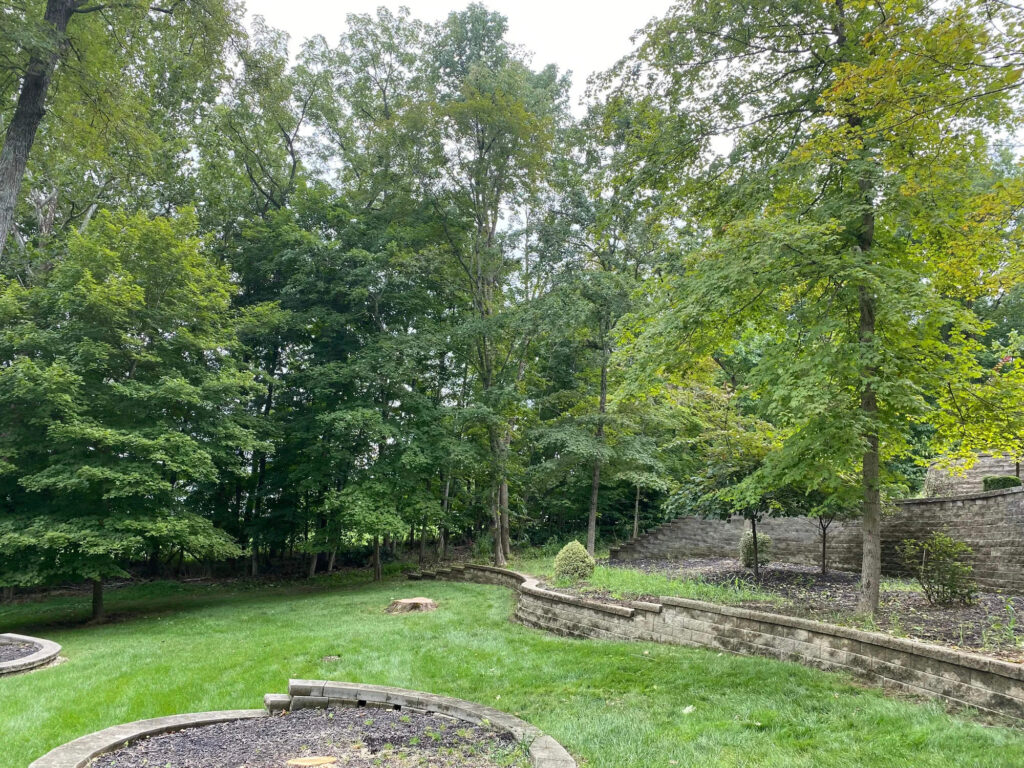
If you live on a property with abundant foliage, you know how beautiful and serene it is, encouraging wildlife, giving you privacy from your neighbors, and reducing energy costs. Can a dead tree have green leaves? If you’re asking this question, you’re likely dealing with some of the disadvantages of a full landscape. An unhealthy canopy is problematic and can lead to serious issues, such as causing damage to your home or vehicle and posing threats to you and your loved ones. If you need professional assistance, Tip Top Arborists provides tree service in Acton, CA. We’ve crafted the following blog post to help you better understand tree health. How To Know If Your Tree Is Unhealthy Trying to figure out if a tree is dead can leave you bewildered and unsure whether it is viable or should be removed. Either way, you will need a professional inspection. Here are several tree health indicators that let you know yours is sick. Bark Damage While bark is often self-healing, if you’ve noticed unhealthy bark fully surrounding your tree, this is a dangerous pattern called girdling. Girdling indicates extreme bark damage, and while trees facing this issue can survive, we recommend contacting a professional arborist to diagnose it. Dead Branches Have you found dead branches on the ground or randomly dropping off? Do the limbs appear dry and brittle? Dead branches fall when they lose the ability to bend in the wind. It’s best to have them removed immediately before they cause more serious problems. Decaying Wood Fungal growth and mistletoe infestation are telltale signs of decaying wood. Moist conditions stimulate and encourage these unhealthy growth patterns. Dying or Missing Leaves So, can a dead tree have green leaves? While the simple answer to this question is yes, after the weather shifts from winter to spring, you should notice new foliage beginning to sprout. If you don’t notice signs of leaf retention or growth, consider getting an expert assessment. A Final Sign of Poor Tree Health An uneven growth pattern is another sign of poor tree health. If the trunk or branches lean in one direction, this issue could be caused by a lack of water or nutrient transport from the soil, improper pruning, or storm damage. The Importance of Tree Health Understanding how healthy trees get sick is critical for the vitality of your landscape. Tip Top Arborists has the expertise to get to the root of the issue. We provide comprehensive tree services, from diagnosing diseases to professional landscape planning. Our team of ISA-certified experts has earned a reputation for being reliable, trustworthy, and fully committed to customer satisfaction. Book Tree Service in Acton, CA If you’ve been grappling with questions like, “Can a dead tree have green leaves?” you likely have additional landscape concerns. For complete service, including a tree structure assessment, look no further than Tip Top Arborists. Request a free estimate or contact us at (661) 942-5501.
Who Is Responsible for Trimming Trees Near Power Lines in Newhall, CA?
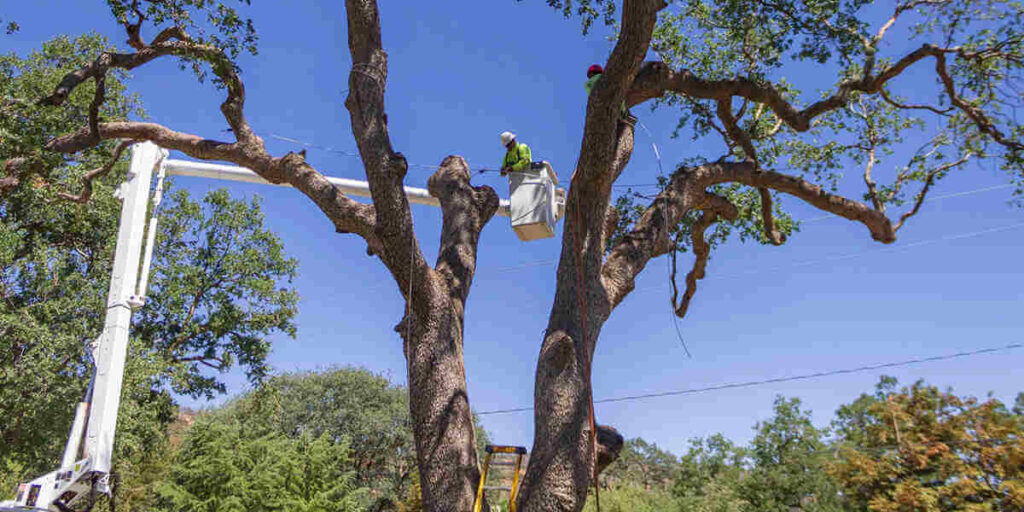
If you’ve noticed a tree growing dangerously close to a power line on your Newhall property, you’re probably wondering: Who is responsible for trimming trees near power lines? Often, the utility company is liable for trimming trees near power lines. However, depending on your utility company, you may be responsible for informing your power company of the tree’s dangerous position or scheduling tree services in Newhall, CA. Understanding Responsibility for Trimming Trees Near Power Lines California utility companies have the option of covering tree trimming themselves or leaving it up to the homeowner. It is usually in the utility company’s favor to trim trees near power lines, as allowing unruly trees to continue growing could create a serious hazard and leave the utility company liable. That’s why many companies opt to fully cover this service for homeowners. When the Homeowner Is Responsible If you notice a tree growing too close to a power line on your property, your first step should be to notify your utility company. It will tell you who is responsible for trimming trees near power lines: you or the company. If your utility company does not have a program in place to trim trees near utility lines, you may be on the hook for trimming the tree. This does not mean you should attempt to trim the tree yourself. Doing so could put you at risk of serious injury from electrocution. Instead, call a tree company experienced in trimming and removing trees near power lines. Due to the risk involved, not every company offers this service. When the Utility Company Is Responsible Utility companies are typically responsible for maintaining at least an 18-inch clearance between trees and power lines. If your tree is growing too close to the power line, your utility company may trim it for free. For example, Southern California Edison has a free “make-safe” program where it hires a company to remove portions of trees to a level that would make them safe for other workers to work on. Some utility companies completely cover the cost of trimming trees near power lines, while others will reimburse you for part of the expense. When Is a Tree Too Close to a Power Line? Trees should never be planted within 10 feet of a power line, as this proximity could allow the branches to reach the line as the tree grows. If you notice that a tree’s branches have extended to within a few feet of a powerline, schedule a tree trimming service soon. Tree branches that come into contact with power lines can cause electric shock and fire. At the very least, they can cause power outages and disruptions in your neighborhood. Schedule Tree Trimming in Newhall, CA, With Tip Top Arborists Today Are you concerned about who is responsible for trimming trees near power lines? Is your energy company neglecting to address this safety concern? Tip Top Arborists has you covered. Contact us today at 661-942-5501 to request a free estimate, then learn about tree care myths from our tree professionals.
Five Benefits of Trees in Your Yard
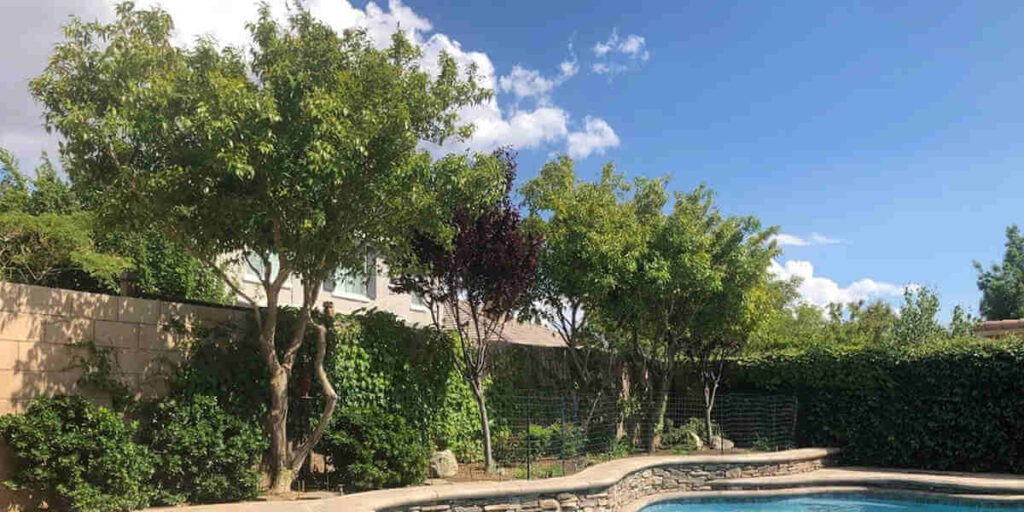
Do you have very few or even no trees in your yard right now? You might be missing out on the many benefits that come along with having trees on your property. Change this by hiring one of the best tree services in Lancaster, CA, to plant new trees. Although it might take them time to grow tall, it won’t be long before you’re soaking up all they have to offer. Here are the top five benefits of trees in your yard. 1. Deliver Shade Is the hot sun constantly beating down, making it impossible to enjoy outdoor time? One of the biggest benefits of trees in your yard is that they will provide plenty of shade. This shade will make it easier to spend more time outside. It will also cool off your yard and possibly even your home. 2. Offer Energy Efficiency Are your energy bills getting out of control? Planting trees might be an effective way to bring them back down to earth. Well-positioned trees will prevent the sun from shining directly into your home all day long, making it more comfortable without you constantly having to run your HVAC system. This will save you money on your energy costs and make your home more energy efficient. 3. Welcome More Wildlife Planting more trees in your yard will help you do your part to protect the environment by minimizing the energy your home uses. It will also help Mother Nature by cleaning the air in your area and stopping pollution from wreaking havoc on it. But these aren’t the only eco-friendly benefits of trees. They will also invite more small wildlife into the vicinity, giving you access to nature in your own back yard. 4. Improve Curb Appeal Planting new trees in your back yard might not do much to improve your home’s curb appeal. If, however, you plant them in the front yard, they may work wonders for its overall appearance. If you’ve been brainstorming different ways to enhance your home’s curb appeal, planting new trees might be the best solution. 5. Provide Fun The more trees you have in your yard, the more you can incorporate them into recreational activities and use them for fun. For example, you and your fellow family members may want to climb these trees. You might even wish to invest in a tree house. Trees will set families up with hours of fun. It’s just one more of the benefits of trees in your yard to keep in mind when you’re considering planting more of them. Call Us To Start Enjoying the Benefits of Trees in Your Yard Do you want to see how the benefits of trees in your yard can positively impact your life? Let Tip Top Arborists help you plant new trees in the right places. We will also assist you with maintaining existing trees and talk to you about the dangers of cutting tree roots while caring for them. Contact us at (661) 942-5501 to request a free estimate.
Can Bad Pruning Cuts Harm Your Tree?
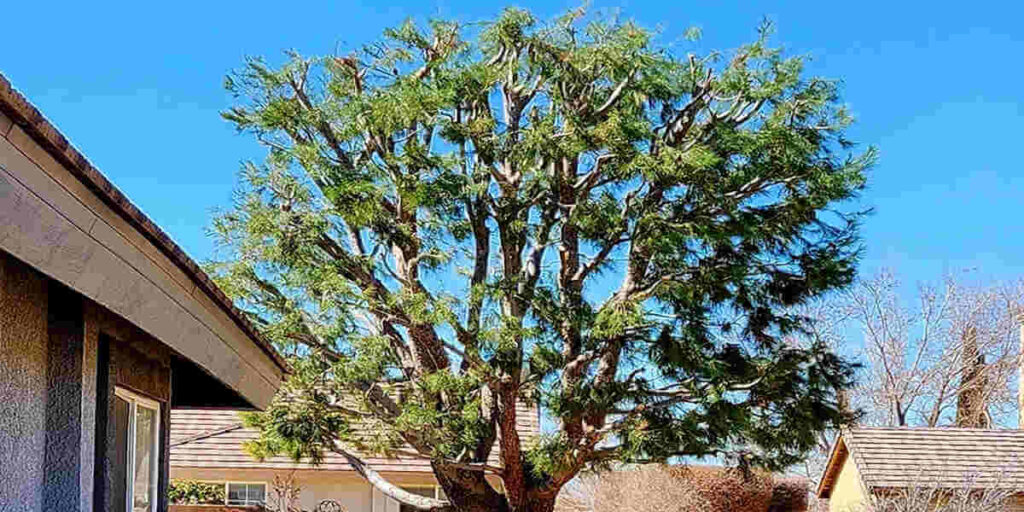
Trees clean your air, provide shade for your home, improve the beauty of your landscape, and can even boost your property value. In return, they need regular care, including pruning. While proper pruning improves a tree’s shape, health, and stability, improper pruning can do more harm than good. You may inadvertently damage your tree if you cut at the wrong time, choose the wrong equipment, or use incorrect techniques. In this post, a professional tree service in Santa Clarita discusses how bad pruning cuts and other mistakes may harm or even kill your trees. Five Common Improper Pruning Cuts The following common bad pruning cuts can threaten the health of your tree: Flush cuts: While cutting a branch flush with the trunk may look tidy, it exposes the tree to pest and disease infestations. Proper pruning leaves the branch collar (which contains specialized healing tissue) intact. Stub cuts: Unlike flush cuts, stub cuts leave so much of the remaining branch that the collar cannot seal off the wound. Heading cuts: Heading removes only a portion of the branch, often at an indiscriminate point. These cuts stimulate the growth of many small, weak branches. Lion tailing: This pruning mistake removes all interior growth, resulting in long branches with leaves only at the tip. Lion tailing compromises the tree’s structural integrity, making it more susceptible to wind damage. Tree topping: An outdated pruning method, tree topping prevents wound closure, inhibits future growth, and leaves trees vulnerable to diseases and storms. Other Common Pruning Mistakes Bad pruning cuts aren’t the only form of improper pruning. The following errors also endanger your trees: Cutting too much: Removing more than one-third of the branch makes it difficult for the tree to heal and photosynthesize nutrients. Trimming too often: Overly frequent pruning prevents trees from recovering and growing between sessions. Pruning at the wrong time: If you prune during droughts or in the wrong season, your tree may suffer. Focusing on the wrong aspect: Selective pruning removes dead, diseased, or unwanted branches for maximum health and growth. By contrast, shearing removes all outer edges of a plant for aesthetic reasons, producing heavy growth outside and weak growth inside. Using the wrong tools: Using shears instead of loppers (or loppers when chainsaws are in order) can mangle branches, leaving them open to insects and disease. To avoid these and other pruning mistakes, consult a professional for assistance. Certified arborists have specialized knowledge of tree growth patterns, local pests and diseases, and tree work safety. Importantly, they also know how to avoid the common pitfalls of improper pruning. In addition to avoiding these common mistakes, it’s essential to consider how you manage the aftermath of tree maintenance, such as handling wood chips after tree removal. These chips can be repurposed as mulch, compost material, or even as a ground cover to reduce soil erosion and retain moisture. Experienced Tree Care Services in Southern California Now that you know the dangers of bad pruning cuts, is it time to call in the pros? At Tip Top Arborists, we are a full-service tree company in Southern California with over 45 years of experience. Whether you need help pruning fruit trees for maximum production or need urgent tree trimming after a storm, our certified experts are ready to assist you. Call our Santa Clarita team today at (661) 942-5501!
20 Myths About Trees and Tree Care
Physiology / Biology 1. Tree roots systems extend deep below the ground. The large supporting root system near the base of the tree tapers rapidly into smaller roots, with the vast majority of all roots being concentrated in the upper few inches of soil. While a few roots may extend as deep as several feet, it is rare for many to exist at significant depths (more than a few feet). Therefore, protecting these upper layers of soil is critical to maintaining tree health. 2. I should buy the tallest or bushiest tree I can find at the nursery to get the most for my money. The tallest tree may actually be weaker than smaller specimens in the same size container. While aesthetic features are important, tree trunk, branch and root system structure are far more critical to the long term success of the tree. Early structural ( trunk/branches) or root system problems are often the source of failure (breakage) of the tree many years later. 3. A good, strong, stake with strong ties is crucial when planting a tree. While some nursery stock may require staking to remain upright, a tree that is capable of standing on its own should not be routinely staked. Improper or unnecessary staking can create problems that did not previously exist. When faced with significant winds, or a weak specimen, proper staking may be necessary, and can make the difference in a success or failure. However, no type of support system can hold up a seriously defective tree indefinitely. Staking must be viewed and installed as a temporary assist while the tree develops its own strength, and then removed as soon as possible. Pruning and Tree Maintenance 4. Pruning trees or shrubs invigorates them. Pruning, particularly severe pruning, often results in the stimulation of dense, vigorous sprout growth. However, this production of vigorous growth consumes great amounts of the tree’s limited energy, weakening it’s natural defenses. While the benefits of pruning are many, there is always some negative impact from the loss of foliage. Reduction of the foliage mass, however small, means a reduction in the tree’s capacity to photosynthesize, thus reducing the energy available for all its life processes. Progressive techniques can maximize the benefits of pruning while minimizing the negative impacts. Conversely, improper or severe pruning maximizes the negative impacts while realizing very little, if any, of the benefits of pruning 5. Topping: (the removal of the upper portion of a main stem Regardless of technique, topping is always a serious injury to the tree and usually results in serious, long-term structural consequences. A few of the negative impacts of topping: 6. Filling cavities in trees with concrete strengths and helps them heal Filling cavities does not increase structural strength. The process may actually cause harm and increase decay. Generally, management of tree cavities is best left to the tree itself. 7. Making pruning cuts close to the trunk or parent limb will help the tree heal Trees do not heal, in that they do not replace lost tissue, but only cover injuries (e.g., Pruning cuts) with new layers of wood. To minimize decay and promote closing of wounds, do not penetrate the tree trunk but retain the “branch collar” (the slightly raised areas surrounding the base of most branches.) 8. Installing cables, bolts or other hardware will render a hazardous limb or tree safe. Sometimes, to preserve a substantial limb, trunk or entire tree it becomes necessary to provide additional support through the installation of hardware. The installation of cables, bolts and other hardware in trees is intended to reduce hazard potential only and does not permanently remedy structural weaknesses and is not a guarantee against failure. Such hardware must also be inspected periodically and adjusted or replaced as necessary. Chemicals, Amendments and Other Materials 9. Tree seal/ paint (or other tree wound dressings) prevents diseases, decay, insect infestations, or will otherwise help the tree heal Tree sealants (tar, paints, shellac, etc.; ) do not prevent disease, decay, insect infestations or promote closing of wounds. There is actually some evidence that such sealants may actually cause harm. Leave wounds open and allow the tree’s natural defenses to work as intended. 10. Applying a fungicide to a cavity or wound will prevent or stop decay. Trees reduce decay by forming internal chemical barriers at the time of and after wounding. The effectiveness of this process depends on each tree’s genetic characteristics and health at the time of wounding. Treatments after injury (e.g., Tree paint, cutting out decay, chemicals, etc.) Do not assist this process or reduce decay and such attempts often result in additional injury. 11. Annual or regular spraying of my garden will control insects and diseases. Both insects and diseases require timely, targeted efforts for effective management. The best management technique may not be complete eradication, as natural predators (birds, other insects, etc.) Require some food source to remain in the vicinity. Routine spraying with board-spectrum materials not only will not effectively address most problems, but may kill many beneficial insects, fungi and may even effect birds and mammals. 12. If I use a strong enough pesticide or fungicide, I can cure any insect or disease problem. There are no blanket chemicals or schedule that can control all the insects and disease problems your plants may encounter. In fact, many diseases of plants have no known chemical controls. 13. Adding good topsoil, soil amendments and fertilizers when planting or transplanting is crucial to a plant’s success. To significantly improve poor soils, a very large quantity of amendment (additions such as sand, redwood mulch, etc.) would be required over a very large area. Amendments in the planting hole alone will likely have more negative effect than benefit. Planting a new tree after stump grinding can be particularly challenging, as the soil might need additional adjustments to support the tree’s long-term health. It is far more critical to plant at the right depth, in the right location for the species and to
Top 10 Tree Problems in Los Angeles
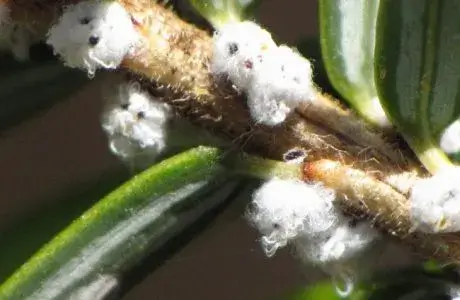
Many tree problems in the Los Angeles metropolitan area are caused by insects and diseases. These problems can completely threaten the health, beauty and life of your trees. Our certified arborists have listed below the Top 10 problems that can plague trees in Antelope Valley, Santa Clarita Valley, Tehacapi Valley and Victor Valley. Lace Bugs Lace bugs target broad-leaf evergreens such as andromeda, azalea, and rhododendron. Early detection is the key to getting rid of an infestation. Look for yellow-silver stippling on the topsides of leaves. Mites Mites pose a serious threat a wide variety of plants, and can seriously impact the visual appearance of a plant. Mites favor warm, dry climates, and are an extremely serious issue for many homeowners. Tent Caterpillars Caterpillars can weaken many trees and shrubs, increasing the chance of a secondary infestation. Look for silken, yellow cocoons. Borers Borers are attracted to unhealthy trees, burrowing in and laying eggs inside the trunk. The best defense against borers is to keep your trees healthy and unstressed. Hemlock Woolly Adelaide One of the most common pests, these insects can cause the death of a tree if left untreated. They leave behind a telltale white wax and target primarily older trees. Scale Insects These insects target primarily hardwoods and conifers. Some signs of an infestation include abnormal leaf and shoot growth, yellow or red leaves, and branch grouting. Anthracnose Disease This fungal disease affects deciduous and flowering trees. Look for a spotting of foliage in spring and summer. Winter Injuries Even during mild winters, evergreens can lose moisture and not be able to replenish it. Thus, make sure your evergreens have sufficient soil moisture. Weevil Insects Weevils are commonly found on flowers and fruits. Look for notches around the edge of leaves. Aphid Insects Aphids are small and pearl shaped. An infestation can cause yellow discoloration and defoliation. but as this year’s bounty. Remember the rule when picking – two for the bucket, one for the mouth. Bon appetite!
What Are Hidden Underground Hazards?
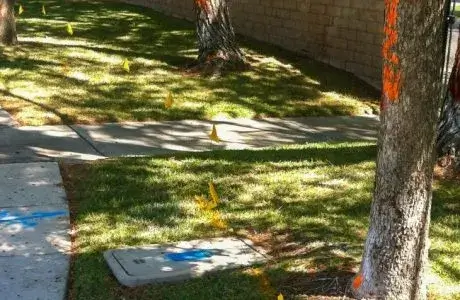
For many people, the idea of planting or removing a tree is a simple concept – dig a hole to plant, or dig up the stump and yank. Yet there is so much more under the ground than many realize. When you turn on that light switch, light the top burner on your stove or even make that phone call (if you still have that archaic land line attached to the rotary phone), those services get to you most likely from underground cables and pipes. It doesn’t take much to sever those services with a shovel, and the results can be disastrous – shockingly so. So, before you decide to wear a pair of angel wings, riding on top of a mushroom cloud caused by a natural gas explosion, call your local utility companies to have the area you are working in marked. Your family and friends will love you for it. If you don’t have the utility company numbers on speed dial, contact DigAlert (https://www.digalert.org/) by pressing 811. It’s more preferable than 911.