How to Spot a Diseased Tree Before It Becomes an Emergency
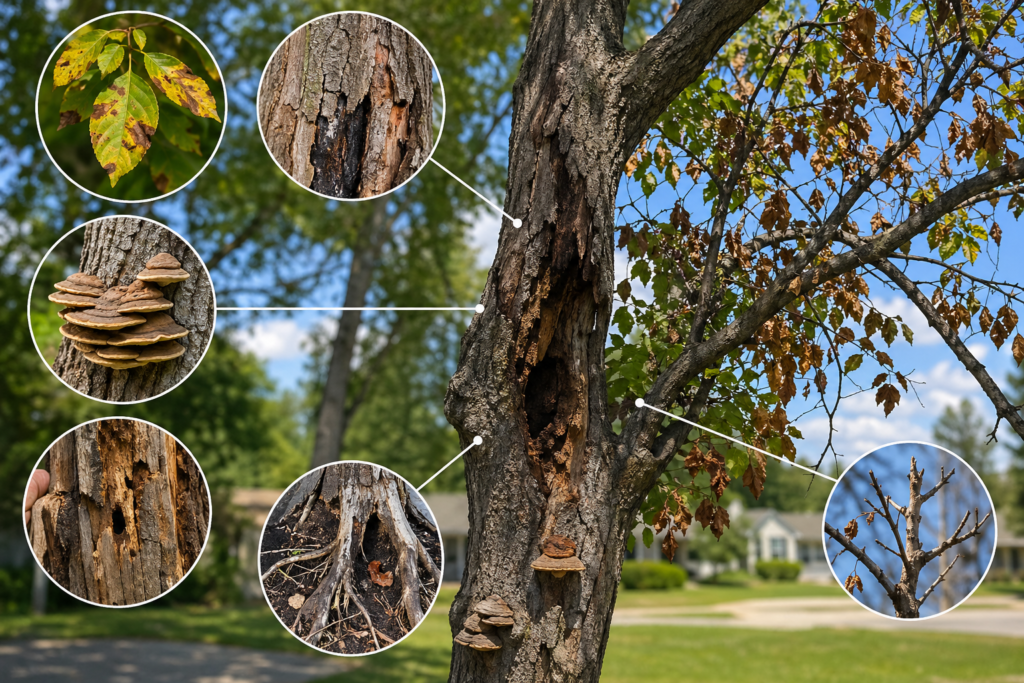
Trees are a vital part of our environment, providing shade, beauty, and clean air. At Tip Top Arborists, we understand how important it is to keep your trees healthy and safe. Detecting signs of disease early can save your tree and prevent costly emergencies. Here is a helpful guide on how to spot a diseased tree before it becomes a serious problem. 1. Look for Unusual Leaf Changes One of the earliest signs of diseased Tree is a change in leaf appearance. Watch for yellowing, browning, or spotted leaves that do not match the normal seasonal cycle. Leaves that wilt or drop unexpectedly can also indicate distress. Fungal infections, bacterial diseases, and even pest infestations can cause these symptoms. 2. Inspect the Bark for Damage Healthy bark should be firm and consistent in texture and color. Cracks, holes, or oozing sap can signal disease or pest activity. Look for areas where the bark is peeling away or has sunken spots. These can be signs of cankers, fungal infections, or insect infestations. 3. Check for Fungal Growth Fungi often appear as mushrooms or conks growing on the trunk or around the base of a tree. Their presence usually means the tree is decaying inside. If you notice these growths, it is important to have a professional assessment immediately. Fungal infections can spread quickly and weaken the tree’s structure. 4. Examine Tree Branches and Twigs Dead or dying branches are a red flag. Look for branches that are brittle, discolored, or have no leaves during growing season. Broken or cracked branches can also increase the risk of falling limbs. Regular pruning of affected branches can help prevent the spread of disease. 5. Watch for Root Problems Sometimes symptoms start at the roots and show up as poor growth, leaning, or soil disturbance around the tree. Mushrooms at the base or unusual soil conditions may indicate root rot or decay. Stable, well-anchored trees with healthy roots are less likely to become emergencies. 6. Notice Any Changes in Tree Growth A sudden slowdown in growth or abnormal new growth patterns can be a sign the tree is struggling. If your tree looks weaker or smaller than usual year after year, it may be time for a closer inspection. INTERNAL LINKS Homeowners looking for professional tree trimming can visithttps://tiptoparborists.com/tree-trimming-palmdale-ca/ for full service details.If you’re located in the area, explore local services here:https://tiptoparborists.com/palmdale/ Need expert advice? Request a free estimate today:https://tiptoparborists.com/contact-us/ EXTERNAL LINKS International Society of Arboriculturehttps://www.isa-arbor.com/ Tree Care Industry Associationhttps://www.tcia.org/ USDA Forest Servicehttps://www.fs.usda.gov/ When to Call Tip Top Arborists If you notice any of these signs, do not wait. Early detection and treatment can save your tree and prevent hazards. Our expert arborists at Tip Top Arborists are trained to identify tree diseases accurately and recommend the best solutions. Whether it is pruning, treatment, or removal, we prioritize your safety and the health of your landscape. Final Thoughts Keeping an eye on your trees can prevent costly and dangerous emergencies down the line. Regular inspections by professionals and prompt action are key. Contact Tip Top Arborists today for expert advice and care that keeps your trees tip top.Call us at [(661) 942-5501] or visit https://tiptoparborists.com/ to get started. Request A Quote Tell us about your tree care needs and our team will follow up with a detailed estimate and recommended solutions. Select Ad SourceFacebookGoogleInternet SearchReferralTruck SignsWebsiteYelp Submit Get In Touch Tip Top Arborists, Inc. tip_top_arborists
Expert Commercial Tree Service in Lancaster CA | Tip Top Arborists
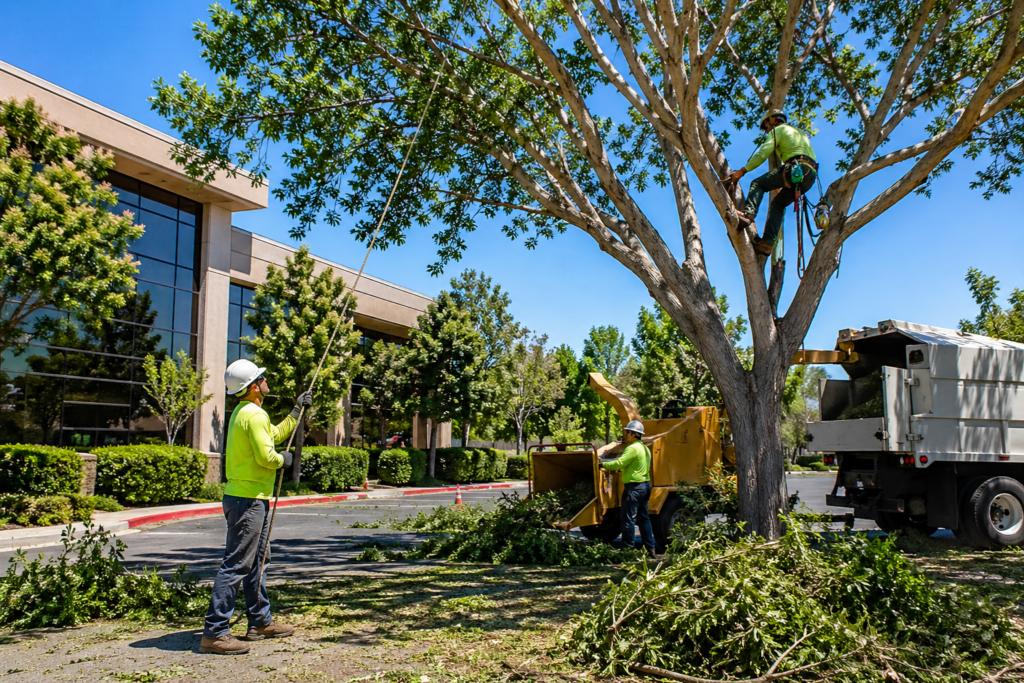
Maintaining healthy trees is essential for both residential and commercial properties in Lancaster CA. For businesses, well-managed trees not only enhance the curb appeal but also ensure safety and compliance with local regulations. If you are looking for commercial tree service Lancaster in CA, Tip Top Arborists specializes in services tailored to meet the unique needs of Lancaster’s business community. Why Commercial Tree Service in Lancaster CA Matters Trees play a crucial role in creating inviting outdoor spaces for customers and employees alike. However, without proper care, trees can become hazardous and costly. Dead branches, overgrown limbs, and root problems can pose risks to buildings, power lines, and pedestrians. Regular commercial tree maintenance helps prevent accidents, reduces liability, and protects your investment. Our Commercial Tree Services in Lancaster CA Tip Top Arborists offers comprehensive Commercial Tree Service in Lancaster CA care designed to keep your property safe and attractive. Our services include: Tree Pruning and Trimming: Proper pruning improves tree health, encourages growth, and maintains shape. We remove damaged or diseased branches to reduce risk and promote safety around business areas. Tree Removal: When trees are dead, diseased, or interfere with infrastructure, professional removal is necessary. Our team uses safe and efficient methods to minimize disruption to your operations. Emergency Tree Services: Storm damage can happen without warning. We provide prompt emergency tree removal and cleanup to protect your property and get your business back to normal quickly. Tree Health Assessments: Our certified arborists evaluate tree conditions and recommend treatments for pests, diseases, or nutrient deficiencies, ensuring long-term vitality. Planting and Transplanting: We assist with selecting and planting the right trees to complement your commercial landscape. Proper placement maximizes benefits such as shade, aesthetics, and environmental impact. Why Choose Tip Top Arborists for Your Commercial Trees? Operating in Lancaster CA, we understand local climate challenges like drought and strong winds. Our experienced team tailors each service to the specific needs of your property. We prioritize safety, efficiency, and customer satisfaction on every job. Additionally, we comply with all municipal codes and utility company standards to maintain a worry-free environment. Boost Your Business with Healthy Trees Well-maintained trees contribute to a positive business image, increase property value, and create comfortable outdoor environments. Whether you manage a shopping center, office park, industrial site, or municipal property, Tip Top Arborists offers reliable commercial tree service solutions in Lancaster CA. EXTERNAL LINKS Homeowners looking for professional tree trimming can visithttps://tiptoparborists.com/tree-trimming-palmdale-ca/ for full service details.If you’re located in the area, explore local services here:https://tiptoparborists.com/palmdale/ Need expert advice? Request a free estimate today:https://tiptoparborists.com/contact-us/ EXTERNAL LINKS International Society of Arboriculturehttps://www.isa-arbor.com/ Tree Care Industry Associationhttps://www.tcia.org/ USDA Forest Servicehttps://www.fs.usda.gov/ Contact Tip Top Arborists Today Don’t wait for a tree emergency to impact your business. Schedule a consultation with Tip Top Arborists for expert Commercial Tree Service in Lancaster CA. Call us at [(661) 942-5501] or visit our website at https://tiptoparborists.com/ to learn more and request a free estimate. Invest in the health and safety of your Commercial Tree Service in Lancaster CA with Tip Top Arborists. Your property deserves nothing less than the best care from Lancaster’s trusted tree experts. Request A Quote Tell us about your tree care needs and our team will follow up with a detailed estimate and recommended solutions. Select Ad SourceFacebookGoogleInternet SearchReferralTruck SignsWebsiteYelp Submit Get In Touch Tip Top Arborists, Inc. tip_top_arborists
Storm Damage Cleanup and Insurance Documentation: A Guide from Tip Top Arborists
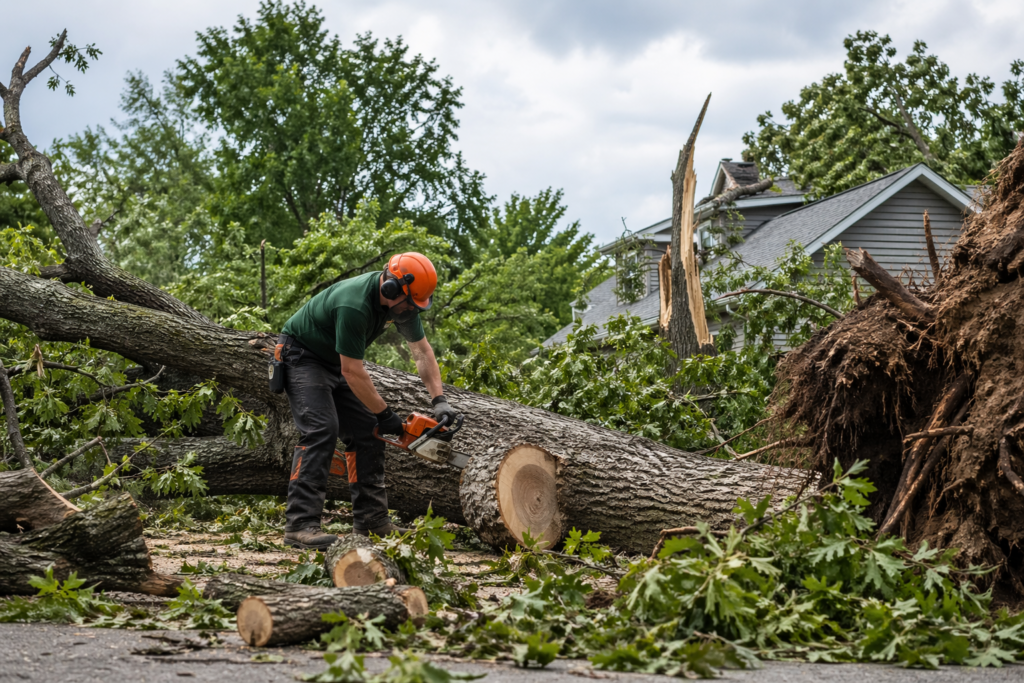
When storms strike, the aftermath can leave trees damaged, posing safety risks and property concerns. At Tip Top Arborists, we understand how overwhelming storm damage cleanup can be. Our team is here to help you restore the beauty and safety of your property while making the insurance claim process smoother. Why Storm Damage Cleanup Matters Storms can cause broken branches, fallen limbs, or even uprooted trees. These hazards can endanger your family, damage your home, or block access to your property. Prompt cleanup prevents further damage, reduces safety risks, and helps maintain the health of your trees. Professional cleanup is not just about aesthetics. Our experts assess tree health and identify risks that may not be obvious. Removing unstable trees or pruning damaged branches prevents secondary accidents. We also ensure debris is removed safely and efficiently. How Tip Top Arborists Handles Storm Damage Cleanup Our certified arborists start with a thorough inspection. We evaluate which trees can be saved and which need removal. We prioritize safety in every step, especially when dealing with power lines or structural damage. Using specialized equipment, we safely remove hazardous limbs and fallen debris. We also provide recommendations for tree care to promote recovery and prevent disease or pest infestations after damage. Documenting Storm Damage for Insurance Claims Documenting damage properly is essential for a successful insurance claim. Many homeowners find this process confusing and time-consuming. Tip Top Arborists can assist you by providing detailed reports and photographs that clearly show the extent of damage. Our documentation includes: Date and time of inspection Description of damage to trees and surrounding property Assessment of potential risks Recommended cleanup or removal services Photographic evidence with clear labeling Submitting detailed and accurate documentation to your insurance provider increases the likelihood of claim approval and faster settlement. Tips for Preparing Your Insurance Claim Contact your insurer promptly: Report the damage as soon as possible to start the claims process. Keep records: Save all communication with your insurance company and keep copies of any documents submitted. Obtain professional assessments: Use expert reports like those from Tip Top Arborists to validate your claim. Avoid major cleanup before documentation: Wait for a professional inspection and photographs unless safety is at risk. Understand your policy: Know what types of storm damage are covered under your insurance. INTERNAL LINKS Homeowners looking for professional tree trimming can visithttps://tiptoparborists.com/tree-trimming-palmdale-ca/ for full service details.If you’re located in the area, explore local services here:https://tiptoparborists.com/palmdale/ Need expert advice? Request a free estimate today:https://tiptoparborists.com/contact-us/ EXTERNAL LINKS International Society of Arboriculturehttps://www.isa-arbor.com/ Tree Care Industry Associationhttps://www.tcia.org/ USDA Forest Servicehttps://www.fs.usda.gov/ Trust Tip Top Arborists for Your Storm Damage Needs Recovering from storm damage can be stressful. Our knowledgeable and friendly team is dedicated to helping you through every step, from cleanup to insurance documentation. With Tip Top Arborists, you get expert care, safety, and peace of mind. If your property has been affected by recent storms, contact Tip Top Arborists today for a free consultation. Let us help you protect your home and restore your trees with professionalism and care. Tip Top ArboristsYour trusted partner for storm damage cleanup and tree careCall us at [(661) 942-5501] or visit https://tiptoparborists.com/ to get started. Request A Quote Tell us about your tree care needs and our team will follow up with a detailed estimate and recommended solutions. Select Ad SourceFacebookGoogleInternet SearchReferralTruck SignsWebsiteYelp Submit Get In Touch Tip Top Arborists, Inc. tip_top_arborists
Stump Grinding Cost in Lancaster CA: What You Need to Know
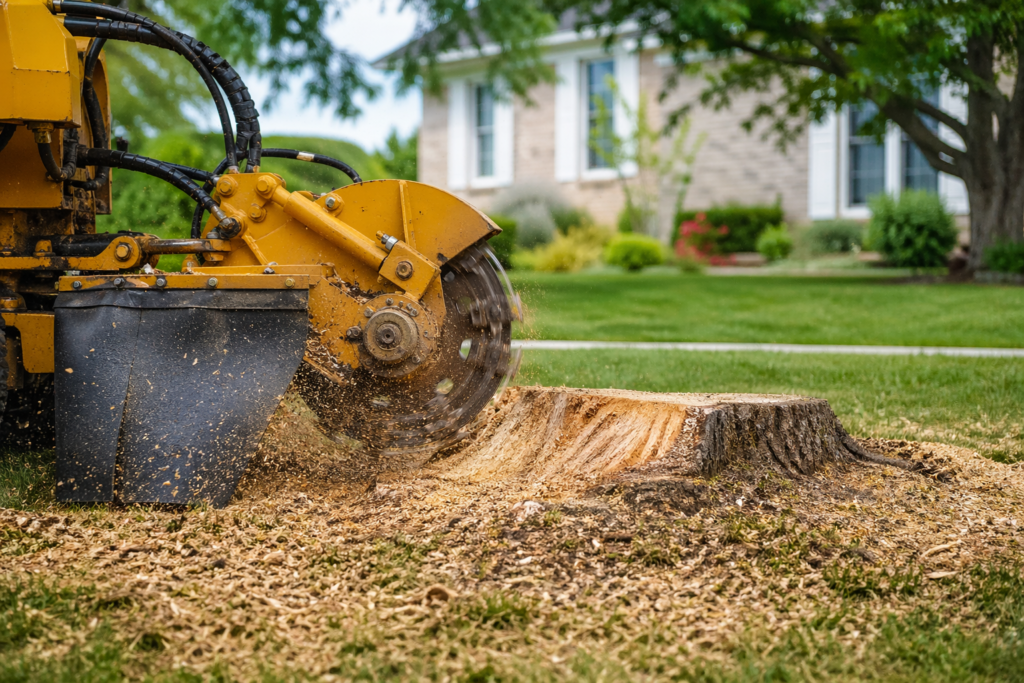
Removing tree stumps from your property is an important part of maintaining a safe and attractive landscape. If you live in Lancaster CA, understanding the cost of stump grinding can help you plan your yard work budget effectively. At Tip Top Arborists, we strive to offer clear, expert advice about stump removal so you can make the best decision for your home or business. Why Choose Stump Grinding? Tree stumps left in your yard can cause several problems. They take up valuable space, harbor pests, and make mowing difficult. Stump grinding is an effective way to remove these stumps by grinding the remaining wood down below ground level. This allows you to replant grass, shrubs, or install new landscaping without worries. Factors Influencing Stump Grinding Cost in Lancaster CA Several factors affect the overall cost of stump grinding, including: Stump Size: Larger stumps require more effort and time to grind. Typically, a stump’s diameter directly influences the price. Number of Stumps: Removing multiple stumps usually results in a lower cost per stump since the equipment and crew are already on site. Stump Location: If the stump is in a hard-to-reach area or close to structures, additional care and labor may increase the price. Root Depth: Some trees have deep roots that require extra grinding to remove completely. This can add to the cost. Site Conditions: Rocky or uneven terrain can make the job more challenging and impact pricing. What Is the Average Cost of Stump Grinding in Lancaster CA? On average, stump grinding costs in Lancaster range between $100 and $400 per stump. Smaller stumps (less than 12 inches in diameter) may cost around $100 to $150. Medium stumps (12 to 24 inches) often fall between $150 and $250. Larger stumps over 24 inches typically cost $250 or more depending on complexity. Keep in mind that these prices are estimates. The best way to get an accurate quote is to have a professional arborist assess your specific situation. Why Hire Tip Top Arborists for Stump Grinding in Lancaster CA? At Tip Top Arborists, we bring years of experience and specialized equipment to every job. Our team ensures all wood debris is properly removed or mulch is created to improve your soil quality. We also follow local regulations to dispose of tree materials responsibly. Choosing Tip Top Arborists means you get reliable, efficient service with transparent pricing and no hidden fees. We care about making your yard safe and beautiful. INTERNAL LINKS Homeowners looking for professional tree trimming can visithttps://tiptoparborists.com/tree-trimming-palmdale-ca/ for full service details.If you’re located in the area, explore local services here:https://tiptoparborists.com/palmdale/ Need expert advice? Request a free estimate today:https://tiptoparborists.com/contact-us/ EXTERNAL LINKS International Society of Arboriculturehttps://www.isa-arbor.com/ Tree Care Industry Associationhttps://www.tcia.org/ USDA Forest Servicehttps://www.fs.usda.gov/ Get Your Free Stump Grinding Estimate Today If you have unsightly stumps in your Lancaster CA yard, do not wait to remove them. Contact Tip Top Arborists for a free consultation and estimate. Our friendly experts will help you understand your options and provide affordable solutions tailored to your property. Removing tree stumps can boost your curb appeal, improve safety, and open space for new landscaping projects. Trust Tip Top Arborists to get the job done right. Tip Top ArboristsYour Trusted Lancaster CA Tree Care ExpertsCall us at [(661) 942-5501] or visit https://tiptoparborists.com/ to get started. Request A Quote Tell us about your tree care needs and our team will follow up with a detailed estimate and recommended solutions. Select Ad SourceFacebookGoogleInternet SearchReferralTruck SignsWebsiteYelp Submit Get In Touch Tip Top Arborists, Inc. tip_top_arborists
Palm Tree Trimming in Lancaster CA: Expert Care by Tip Top Arborists
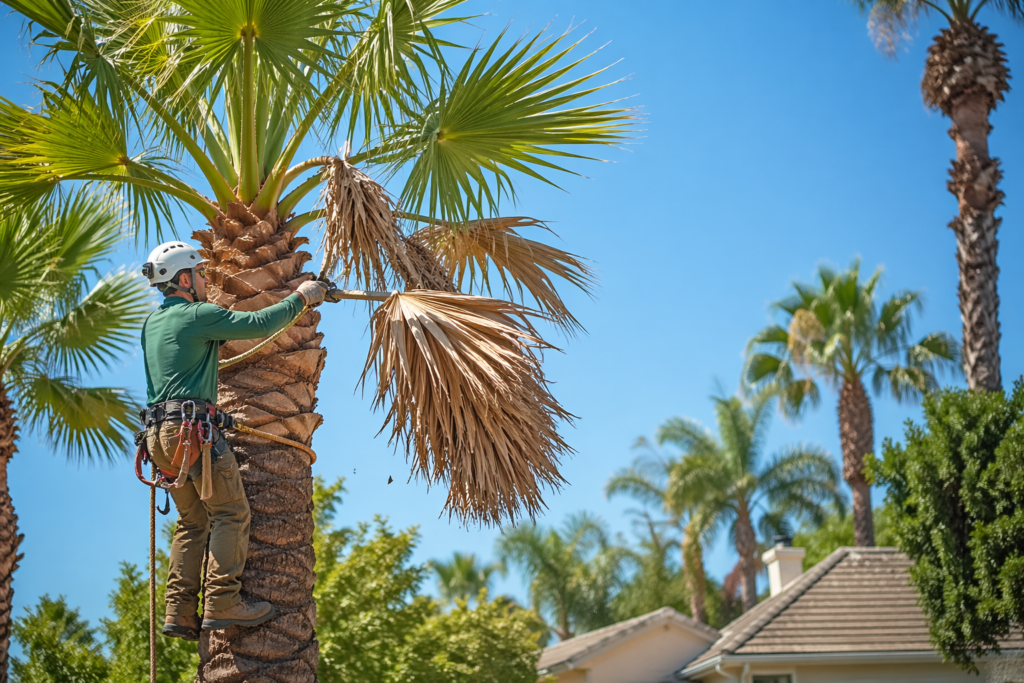
Palm Tree Trimming Lancaster CA in landscapes are a beautiful and iconic feature. They add a tropical charm and enhance the curb appeal of homes and businesses alike. However, to keep them healthy and looking their best, regular palm tree trimming is essential. At Tip Top Arborists, we specialize in professional palm tree care designed to promote growth, improve appearance, and prevent safety hazards. Why Palm Tree Trimming Matters Palm Tree Trimming Lancaster CA is not just about aesthetics. These unique trees require specific care to maintain their health. Dead or dying fronds can cause problems. They attract pests, create fire hazards, and can fall unexpectedly, causing damage or injury. Regular trimming removes these old fronds and seeds, helping the tree focus its energy on healthy growth. Proper trimming also prevents common diseases and encourages a fuller, vibrant canopy. For palm trees, timing and technique are critical. Incorrect trimming can harm the tree and reduce its lifespan. Expert Palm Tree Trimming Services Lancaster CA At Tip Top Arborists, our certified arborists understand the nuances of palm tree care in the Lancaster climate. We offer comprehensive trimming services including: Removal of dead, dying, or broken fronds Pruning of seed pods to prevent unwanted litter and reduce pest attraction Cleaning the crown to enhance airflow and promote healthy growth Proper shaping that respects the natural form of the palm Our team uses the right tools and understands the biology of palm trees. This ensures that each cut supports the tree’s long-term health rather than harming it. Safety First Climbing and trimming tall palm trees can be dangerous without the proper equipment and expertise. Our professionals follow strict safety protocols, protecting both our crew and your property. We carry liability insurance and adhere to industry standards to provide peace of mind with every job. When to Trim Your Palm Trees Palm Tree Trimming Lancaster CA, the best time to trim palms is once or twice a year, typically during the spring or early summer. This timing allows the tree to heal quickly during the growing season. Avoid trimming during cold weather or drought to reduce stress on the tree. INTERNAL LINKS Homeowners looking for professional tree trimming can visithttps://tiptoparborists.com/tree-trimming-palmdale-ca/ for full service details.If you’re located in the area, explore local services here:https://tiptoparborists.com/palmdale/ Need expert advice? Request a free estimate today:https://tiptoparborists.com/contact-us/ EXTERNAL LINKS International Society of Arboriculturehttps://www.isa-arbor.com/ Tree Care Industry Associationhttps://www.tcia.org/ USDA Forest Servicehttps://www.fs.usda.gov/ Why Choose Tip Top Arborists? Selecting the right arborist makes a difference in the health and beauty of your palm trees. Tip Top Arborists brings years of local experience, a passion for tree care, and a dedication to customer satisfaction. We provide personalized care plans tailored to your specific needs and property. Our goal is to help your palms thrive and enhance your outdoor space for years to come. Contact Us Today If you need expert palm tree trimming services in Lancaster CA, Tip Top Arborists is ready to help. Contact us today for a consultation and let our skilled team take care of your palms with the professional attention they deserve. Call us at [(661) 942-5501] or visit https://tiptoparborists.com/ to get started. By trusting Tip Top Arborists with your palm tree trimming needs, you ensure healthy, safe, and attractive palms that complement the beautiful Lancaster landscape. Request A Quote Tell us about your tree care needs and our team will follow up with a detailed estimate and recommended solutions. Select Ad SourceFacebookGoogleInternet SearchReferralTruck SignsWebsiteYelp Submit Get In Touch Tip Top Arborists, Inc. tip_top_arborists
HOA Tree Service in the Antelope Valley: How Tip Top Arborists Can Help Your Community Thrive
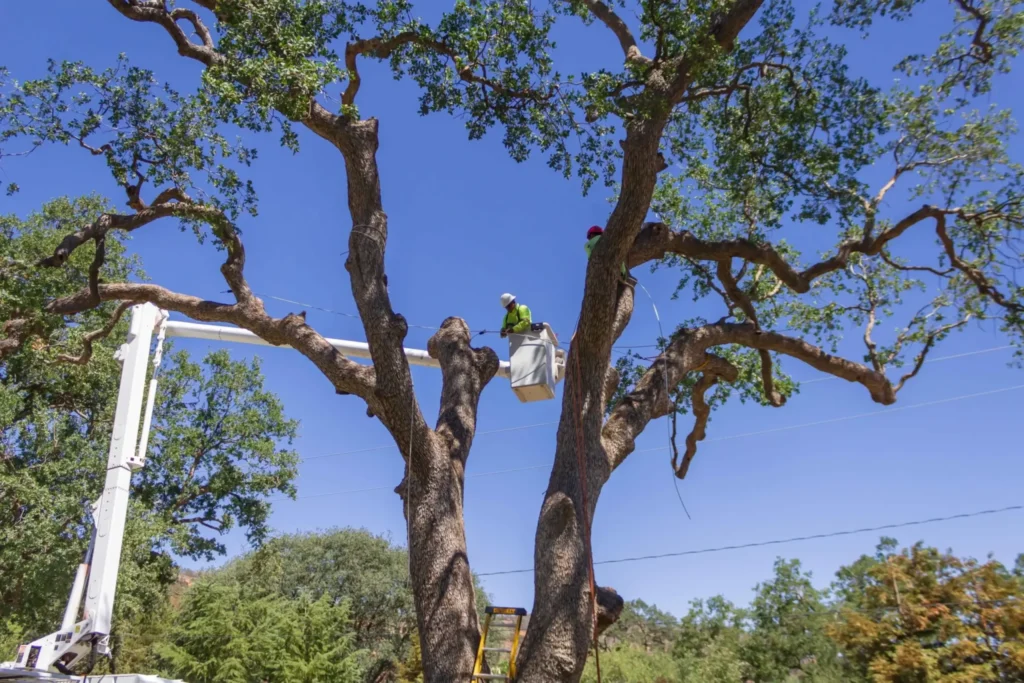
HOA tree service in Antelope Valley is essential for keeping community landscapes safe, healthy, and visually appealing year-round.Trees are a vital part of any community landscape, especially in the Antelope Valley where the desert environment presents unique challenges. For Homeowners Associations (HOAs), maintaining healthy, beautiful trees isn’t just about curb appeal. Proper tree care promotes safety, property value, and the overall well-being of residents. That is where Tip Top Arborists comes in. With years of experience serving the Antelope Valley, we specialize in comprehensive HOA Tree Service in Antelope Valley designed to keep your community’s trees healthy and thriving. Why Tree Care Matters for HOAs in the Antelope Valley The Antelope Valley is a high desert environment. Trees here must withstand hot summers, limited water, and occasional high winds. Without expert care, trees can become stressed, unhealthy, or even hazardous. This puts residents at risk and may lead to costly damage. For an HOA Tree Service in Antelope Valley, well-maintained trees enhance property values and create inviting, shaded common areas for neighbors to enjoy. Additionally, many HOAs have specific regulations about tree maintenance and removal. Partnering with a knowledgeable arborist ensures compliance and helps avoid disputes. Our HOA Tree Services Tailored for the Antelope Valley At Tip Top Arborists, we understand the unique needs of HOA communities in the Antelope Valley. Our tree services include: Tree Health Assessments: We carefully evaluate tree health to identify disease, pests, or structural concerns before they become serious problems. Tree Pruning and Trimming: Proper pruning maintains healthy growth, reduces fire risk, and improves the appearance of your trees. Tree Removal and Stump Grinding: When a tree is dead, damaged, or poses a hazard, we safely remove it and grind the stump to prevent regrowth and tripping hazards. Planting and Replacement: We assist with selecting native, drought-resistant species suited for the desert climate when planting new trees. Emergency Tree Services: After storms or high winds, we provide quick response to remove dangerous limbs or fallen trees. Experienced Professionals Committed to Your Community Our team at Tip Top Arborists is licensed, insured, and trained in the latest arboricultural best practices. We use industry-standard equipment to perform a variety of tree care tasks safely and efficiently. Our experts also communicate clearly, providing detailed reports and recommendations that make it easy for HOAs to plan regular maintenance and budgeting. Why Choose Tip Top Arborists for Your HOA Tree Needs? Local Expertise: We specialize in the Antelope Valley environment and understand how to keep trees healthy in dry, desert conditions. Customized Service: No two communities are alike. We tailor our services to meet your HOA’s unique guidelines and aesthetic preferences. Safety First: Protecting residents and property is our top priority during all tree work. Sustainable Practices: We promote environmentally responsible tree care that conserves water and supports long-term tree vitality. INTERNAL LINKS Homeowners looking for professional tree trimming can visithttps://tiptoparborists.com/tree-trimming-palmdale-ca/ for full service details.If you’re located in the area, explore local services here:https://tiptoparborists.com/palmdale/ Need expert advice? Request a free estimate today:https://tiptoparborists.com/contact-us/ EXTERNAL LINKS International Society of Arboriculturehttps://www.isa-arbor.com/ Tree Care Industry Associationhttps://www.tcia.org/ USDA Forest Servicehttps://www.fs.usda.gov/ Schedule Your HOA Tree Service in the Antelope Valley Today If your HOA is looking for expert tree service in the Antelope Valley, Tip Top Arborists is here to help. Whether you need routine maintenance or emergency care, we will partner with your HOA board to create a tree care plan that supports a safe, beautiful community. Contact us today to schedule a consultation or to learn more about our HOA tree services. Tip Top ArboristsYour trusted partner for HOA tree service in Antelope Valley.Call us at [(661) 942-5501] or visit https://tiptoparborists.com/ to get started. Request A Quote Tell us about your tree care needs and our team will follow up with a detailed estimate and recommended solutions. Select Ad SourceFacebookGoogleInternet SearchReferralTruck SignsWebsiteYelp Submit Get In Touch Tip Top Arborists, Inc. tip_top_arborists
How to Read the Signs of Wind Damage on Your Trees: A Lancaster Homeowner’s Guide
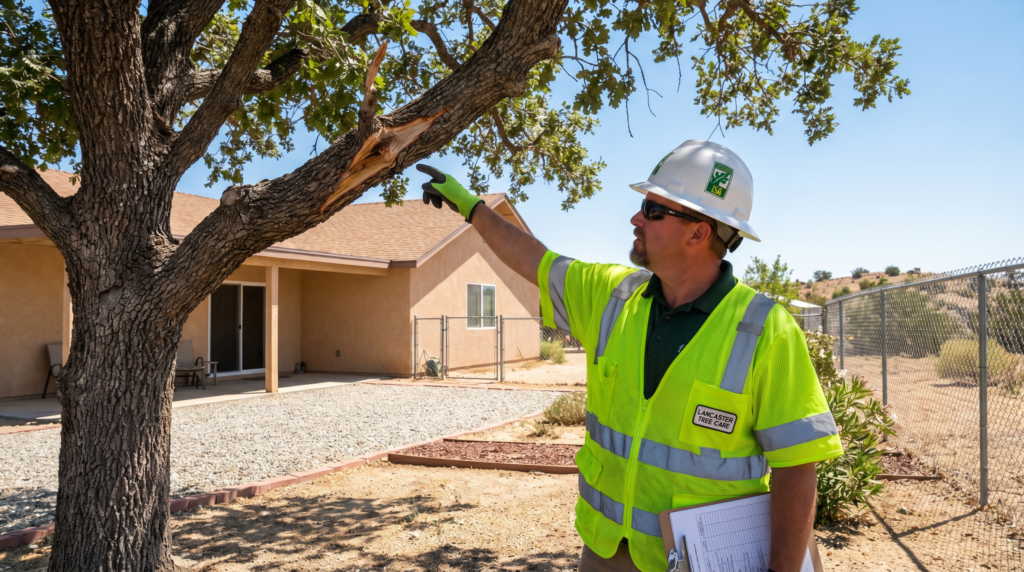
Introduction Wind damage trees in Lancaster CA are a serious concern for homeowners, especially during high-wind seasons in the Antelope Valley.The Antelope Valley is known for its persistent and sometimes fierce winds. When gusts exceed 35 mph, as they frequently do during seasonal transitions in Lancaster, the trees on your property are put to the test. While some damage is obvious—a massive branch lying across your driveway—much of the structural damage caused by high winds is subtle. If left unaddressed, these hidden fractures can lead to catastrophic failure weeks or months after the storm has passed. Tip Top Arborists has been responding to wind damage calls across the Antelope Valley for decades. Our ISA-certified arborists know exactly what to look for when a tree has been stressed by high winds. This guide will help you identify the early warning signs of wind damage so you can act before a compromised tree becomes a safety hazard. The Hidden Impact of Wind on Trees Trees are naturally engineered to sway and flex in the wind. However, when wind speeds exceed a tree’s structural limits, or when the wind comes from an unusual direction, the mechanical stress can cause wood fibers to tear. This is particularly common in Lancaster, where the combination of dry high desert conditions and sudden wind events can push trees beyond their breaking point. The danger of wind damage is that it does not always result in an immediate break. A branch may crack internally but remain attached, waiting for the next gust of wind or heavy rain to bring it down. Identifying these compromised areas requires a careful, methodical inspection. How to Inspect Wind Damage Trees in Lancaster CA (Step-by-Step Guide) Inspecting wind damage trees in Lancaster CA early can prevent accidents.Professional arborists can assess wind damage trees in Lancaster CA safely. After a significant wind event in Lancaster, wait until the weather has calmed completely. Then, walk your property and conduct a visual inspection of your trees from a safe distance. Do not stand directly under a tree that you suspect may be damaged. Inspect the Ground and Root Zone The inspection begins at the base of the tree. Look for any signs of soil lifting or cracking on the windward side of the trunk. This indicates that the root system has been compromised and the tree is beginning to uproot. If you see exposed roots that were previously buried, or if the tree has developed a noticeable lean, it is a critical hazard. Keep away from the area and call a professional arborist immediately. Examine the Trunk for Cracks Move your eyes up the main trunk. Look for fresh, vertical cracks in the bark. These stress fractures occur when the tree bends too far, tearing the internal wood fibers. Even small cracks can be a sign of significant structural failure. Pay special attention to areas where the trunk splits into two or more main branches, known as co-dominant stems. If you see a crack forming in the union between these stems, the tree is at high risk of splitting apart. Scan the Canopy for Hangers Look up into the canopy for “hangers” or “widow-makers.” These are branches that have snapped but remain suspended in the tree, caught on other branches. They are incredibly dangerous because they can fall at any moment, even on a calm day. Do not attempt to dislodge a hanging branch yourself. Look for Twisted or Splintered Branches Some branches may not break off entirely but will twist or splinter under wind torsion. Look for areas where the bark is torn away, revealing the lighter wood underneath. These branches have lost their structural integrity and will eventually die and fall. They need to be pruned cleanly back to the trunk or a healthy lateral branch to prevent decay from entering the tree. Check the Leaves and Small Twigs While less dangerous than structural damage, wind-whipped trees often suffer from “windburn.” The leaves may appear scorched, torn, or shredded. While the tree will typically recover from this cosmetic damage, a massive loss of foliage can stress the tree and make it more susceptible to pests and disease in the harsh Lancaster climate. Frequently Asked Questions Q: How quickly does a wind-damaged tree need to be addressed? A: If the tree is leaning, has soil lifting at the base, or has large hanging branches over a structure or walkway, it is an emergency and should be addressed immediately. For minor splintering or torn bark, you can schedule a standard pruning visit within a few weeks. Q: Can a tree recover from a cracked trunk? A: It depends on the severity and location of the crack. Minor surface cracks may heal, but deep structural cracks often compromise the tree permanently. An ISA-certified arborist must evaluate the crack to determine the safest course of action. Q: Will my homeowner’s insurance cover the cost of removing a wind-damaged tree? A: Insurance typically only covers tree removal if the tree has fallen and damaged a covered structure, such as your house or fence. Preventative removal of a damaged tree that has not yet fallen is usually the homeowner’s responsibility. Q: What is the best way to prevent wind damage to my trees? A: The most effective prevention is regular, professional pruning. Crown thinning reduces wind resistance, and removing deadwood eliminates the branches most likely to snap. Tip Top Arborists recommends a structural pruning visit every two to three years for mature trees in Lancaster. INTERNAL LINKS Homeowners looking for professional tree trimming can visithttps://tiptoparborists.com/tree-trimming-palmdale-ca/ for full service details.If you’re located in the area, explore local services here:https://tiptoparborists.com/palmdale/ Need expert advice? Request a free estimate today:https://tiptoparborists.com/contact-us/ EXTERNAL LINKS International Society of Arboriculturehttps://www.isa-arbor.com/ Tree Care Industry Associationhttps://www.tcia.org/ USDA Forest Servicehttps://www.fs.usda.gov/ When to Call a Certified Arborist If your inspection reveals any of the following, you need professional intervention: A new or worsening lean. Soil lifting at the base of the tree. Cracks in the main trunk or major branch unions.
Arborist Report in Lancaster CA: When You Need One and What It Covers
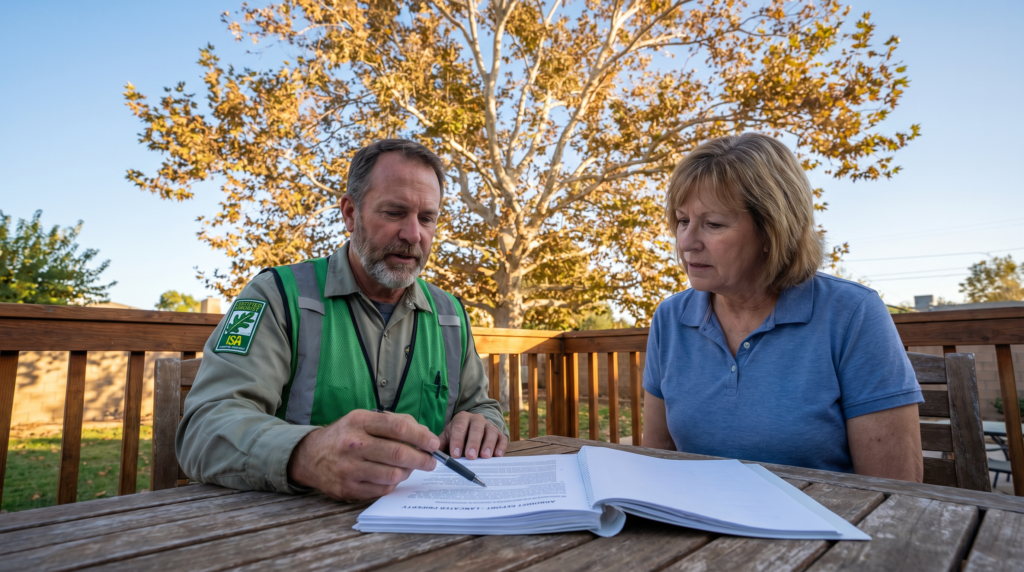
Introduction If you own property in Lancaster, CA, you already know that maintaining your trees is a year-round job. But sometimes, simply knowing your tree needs help is not enough. Whether you are filing an insurance claim after a windstorm, applying for a building permit, or dealing with a protected species like a Joshua tree, you need official documentation. That is where an arborist report comes in. An arborist report in Lancaster CA is not just a casual estimate or a quick quote. It is a formal, legal document prepared by an ISA-certified arborist that details the exact condition, risks, and recommended actions for a specific tree. Tip Top Arborists has been providing comprehensive arborist reports for homeowners, commercial property managers, and municipalities across the Antelope Valley for decades. In this guide, we will explain exactly what an arborist report covers and when you are required to have one. What Is an Arborist Report in Lancaster CA? An arborist report in Lancaster CA is a detailed technical document based on a comprehensive on-site inspection. Unlike a free estimate—which simply outlines the cost to perform a requested service—an arborist report provides a scientific assessment of the tree’s health and structural integrity. While the specific contents vary based on the purpose of the report, a standard arborist report from Tip Top Arborists typically includes: Tree Identification: The exact species, age, size (diameter at breast height), and location of the tree on the property. Health Assessment: A detailed evaluation of the tree’s vitality, including signs of disease, pest infestation, or environmental stress (such as drought or poor soil conditions). Structural Evaluation: An analysis of the tree’s physical integrity. This includes noting co-dominant stems, decay, root lifting, or previous improper pruning (like topping). Risk Assessment: A formal calculation of the likelihood of the tree (or its branches) failing and the potential consequences if it does (e.g., hitting a house or power line). Recommended Action Plan: The arborist’s professional, science-based recommendation, which may include specific pruning techniques, disease treatment, or complete removal. Photographs and Diagrams: Visual evidence supporting the arborist’s findings. 4 Situations Where You Need an Arborist Report in Lancaster CA Insurance Claims After Storm Damage When a tree falls and damages your home, fence, or vehicle, your homeowner’s insurance will usually cover the repairs and the tree removal. However, the insurance adjuster will often require an arborist report to confirm the cause of the failure (e.g., windstorm vs. pre-existing rot) and to justify the cost of the cleanup. Protected Species Permitting In the Antelope Valley, removing or significantly altering certain trees requires a permit. This includes native Oak trees (protected by LA County ordinance) and Western Joshua Trees (protected by state law). To obtain a removal permit from the city or the Department of Fish and Wildlife, you must submit an arborist report proving that the tree is dead, dying, or poses an unavoidable hazard. Construction and Property Development If you are building an addition, installing a pool, or doing significant grading on your property, the city of Lancaster may require an arborist report. The report will outline how the construction will impact the root zones of existing trees and detail the protective measures required to keep those trees alive during and after the project. Neighbor Disputes If a neighbor’s tree is encroaching on your property, dropping hazardous branches, or threatening your foundation, an arborist report provides an objective, third-party assessment. This document is often necessary to resolve disputes amicably or, if necessary, in a legal setting. INTERNAL LINKS Homeowners looking for professional tree trimming can visithttps://tiptoparborists.com/tree-trimming-palmdale-ca/ for full service details.If you’re located in the area, explore local services here:https://tiptoparborists.com/palmdale/ Need expert advice? Request a free estimate today:https://tiptoparborists.com/contact-us/ EXTERNAL LINKS International Society of Arboriculturehttps://www.isa-arbor.com/ Tree Care Industry Associationhttps://www.tcia.org/ USDA Forest Servicehttps://www.fs.usda.gov/ Frequently Asked Questions Q: How much does an arborist report cost in Lancaster? A: The cost varies depending on the complexity of the report and the number of trees involved. A basic health assessment for a single tree will cost less than a comprehensive construction impact report for a multi-acre property. Call us for a specific quote based on your needs. Q: Is an arborist report the same as a free estimate? A: No. A free estimate is a quote for the cost of services (like trimming or removal). An arborist report is a paid, formal document detailing the scientific health and structural assessment of the tree, often required for legal or insurance purposes. Q: How long does it take to get an arborist report? A: After the on-site inspection is completed, a standard arborist report is typically delivered within 3 to 5 business days. Complex reports for commercial development or Fish and Wildlife permits may take longer. Q: Will an arborist report guarantee that the city approves my tree removal permit? A: While an arborist report is required for the application, the final decision rests with the city or state agency. However, a thorough, well-documented report from an ISA-certified arborist significantly increases the likelihood of approval if the tree is genuinely hazardous or declining. Why You Must Use an ISA-Certified Arborist Not anyone with a chainsaw can write an arborist report. For the document to be accepted by insurance companies, city planners, or state agencies, it must be authored by an ISA-certified arborist. The International Society of Arboriculture (ISA) certification ensures that the individual has the education, experience, and ethical standards required to provide an accurate, unbiased assessment. Tip Top Arborists employs ISA-certified professionals who understand both the science of tree care and the specific regulatory requirements of Lancaster and the Antelope Valley. If you need an arborist report for your property, do not wait until the city or your insurance company demands it. Call Tip Top Arborists at (661) 942-5501 or visit tiptoparborists.com to schedule your assessment today. Request A Quote Tell us about your tree care needs and our team will follow up with a detailed estimate and recommended solutions. Select Ad SourceFacebookGoogleInternet SearchReferralTruck SignsWebsiteYelp Submit Get In
How to Prepare Your Trees for Wind and Rain Season in the Antelope Valley
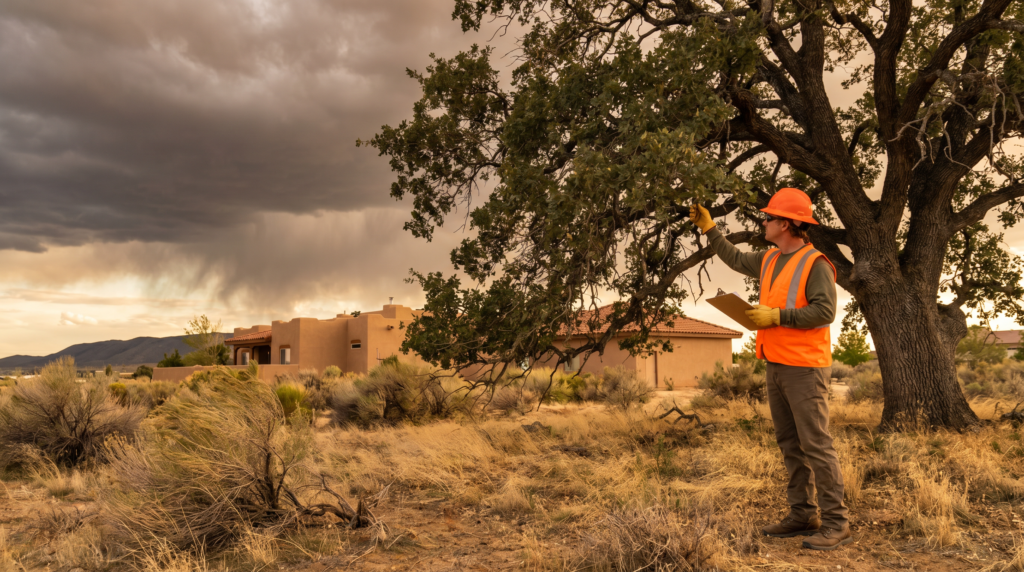
Prepare Trees for Wind and Rain Season Antelope Valley Prepare trees for wind and rain season Antelope Valley to protect your property before storms arrive.Rain and wind are forecast for the Antelope Valley this week, with gusts expected to reach 35 mph by Tuesday. For homeowners in Lancaster, Palmdale, and Acton, that kind of weather is not just an inconvenience. It is a test that every tree on your property will either pass or fail. A well-maintained tree sheds wind and sheds water. A neglected one becomes a liability. Tip Top Arborists has been serving the Antelope Valley for over a decade. Our ISA-certified arborists respond to more emergency tree calls in the 48 hours after a wind event than at any other time of year. Almost all of them could have been prevented with a single pre-season inspection and a targeted pruning visit. This guide walks you through exactly what to do before the next storm arrives. Why Wind Is More Dangerous Than It Looks The Antelope Valley sits at the edge of the Mojave Desert, where seasonal wind events can arrive with very little warning. Santa Ana conditions in the fall and spring low-pressure systems in April and May regularly produce gusts between 30 and 55 mph across Lancaster and Palmdale. At those speeds, a structurally compromised tree does not bend. It breaks. The most common failure points are: Deadwood in the canopy. Dead branches have no flexibility. They snap cleanly and fall with significant force. Co-dominant stems. Two or more main trunks growing from a single base create a structural weakness called an included bark union. Under wind load, these split apart. Overextended lateral branches. Long, heavy branches growing horizontally act as levers. Wind amplifies the load at the attachment point. Root zone saturation. When rain follows wind, already-stressed soil can become waterlogged. A tree that survived the gusts may still uproot 12 to 24 hours later when the ground softens. Understanding these failure points is the first step. Acting on them before the storm is what protects your property. The Pre-Storm Tree Checklist for Antelope Valley Homeowners Use this checklist in the days before a forecast wind or rain event. If you are not comfortable assessing your trees yourself, call Tip Top Arborists at (661) 382-8722 for a professional hazard assessment. Walk the perimeter of each tree and look up. Look for hanging branches, dead limbs, or any branch that appears to be attached at an unusual angle. If a branch is already partially detached, it is a hazard that needs to be removed before the storm, not after. Check for co-dominant stems. If your tree has two or more main trunks growing from the same base, look at the point where they meet. If the bark appears to be growing inward between the stems rather than outward, that is an included bark union and it is a high-risk failure point. Assess the canopy density. A dense, unpruned canopy acts like a sail in high wind. Crown thinning reduces wind resistance by removing select interior branches, allowing air to pass through rather than push against the tree. Check the base of the tree. Cracks in the bark at the base, mushroom growth, or soft or spongy wood at ground level are all signs of internal decay. A tree with root or trunk decay can fail at wind speeds well below what would normally cause damage. Clear the area around the tree. Remove any objects that could become projectiles if a branch falls. Patio furniture, children’s play equipment, and parked vehicles should be moved away from the drip line of any large tree before a wind event. Note any trees near power lines. Trees growing into or near power lines require clearance pruning by a qualified arborist. Do not attempt to prune near power lines yourself. Call Tip Top Arborists or contact Southern California Edison for utility line clearance. Frequently Asked Questions Q: How much wind does it take to knock down a tree? A: Healthy, well-maintained trees can withstand sustained winds of 60 to 80 mph. However, trees with internal decay, deadwood, co-dominant stems, or saturated root zones can fail at wind speeds as low as 30 to 40 mph. The condition of the tree matters far more than the wind speed. Q: Should I water my trees before a windstorm? A: No. Watering before a wind event saturates the soil and reduces root anchorage. If rain is also forecast, avoid watering entirely in the days before the storm. Q: Can a tree be saved after it has been partially uprooted by wind? A: In some cases, yes. If the root ball is still partially intact and the tree is reset within 24 to 48 hours, survival is possible. However, this requires professional assessment. Call Tip Top Arborists immediately if a tree on your property has been uprooted or is leaning after a storm. Q: How often should trees in the Antelope Valley be pruned for wind safety? A: Most mature trees benefit from a structural pruning visit every two to three years. Trees near structures, power lines, or high-traffic areas should be assessed annually. Q: Does homeowner’s insurance cover wind-damaged trees? A: Most homeowner’s policies cover tree removal if a fallen tree damages a covered structure such as your home, fence, or vehicle. Removal of a fallen tree that did not damage a structure is typically not covered. An arborist report from Tip Top Arborists can support your insurance claim. INTERNAL LINKS Homeowners looking for professional tree trimming can visithttps://tiptoparborists.com/tree-trimming-palmdale-ca/ for full service details.If you’re located in the area, explore local services here:https://tiptoparborists.com/palmdale/ Need expert advice? Request a free estimate today:https://tiptoparborists.com/contact-us/ EXTERNAL LINKS International Society of Arboriculturehttps://www.isa-arbor.com/ Tree Care Industry Associationhttps://www.tcia.org/ USDA Forest Servicehttps://www.fs.usda.gov/ What Tip Top Arborists Does Before Storm Season Our pre-storm service includes a full hazard assessment by an ISA-certified arborist, targeted deadwood removal, crown thinning to reduce wind load, and structural pruning to address co-dominant stems and overextended laterals. We serve
How Long Does Tree Trimming Last? What Antelope Valley Homeowners Need to Know
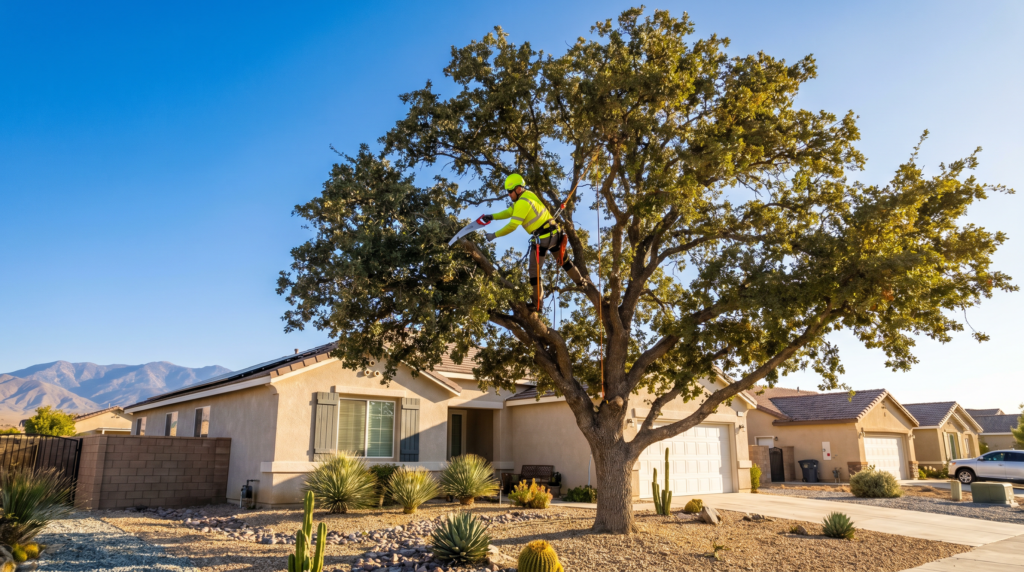
Introduction One of the most common questions Tip Top Arborists receives from homeowners across Lancaster, Palmdale, and Acton is a simple one: how long will this trim last? It is a practical question that matters for budgeting, planning, and understanding what your trees actually need. The honest answer is that it depends – but not in a vague way. There are specific, measurable factors that determine how quickly a tree regrows after trimming, and understanding them allows you to plan your tree care schedule with confidence rather than guesswork. This guide explains those factors and gives you a clear framework for thinking about tree trimming frequency in the Antelope Valley. The Short Answer For most mature residential trees in the Antelope Valley, a professional trimming visit every two to three years is the appropriate maintenance interval. This is the guidance Tip Top Arborists provides to the majority of our clients after completing a job. However, that two-to-three-year window is not a universal rule. It is a starting point that gets adjusted based on the specific tree, its location, and the conditions it is growing in. What Affects How Long a Tree Trim Lasts 1. Tree Species Different species grow at dramatically different rates. Mulberry trees – by far the most common trimming request in the Antelope Valley – are fast-growing and may require attention every one to two years in irrigated residential settings. Ash trees grow at a moderate pace and typically fall into the two-to-three-year range. Mature pine trees, once properly shaped, may only need attention every three to five years. 2. Irrigation and Water Access Trees in irrigated residential landscapes grow significantly faster than trees in dry, unirrigated settings. A mulberry tree on a regular drip system in Palmdale will regrow its canopy much faster than the same species growing on rainfall alone in a rural Acton property. 3. Type of Trimming Performed The type of work done at the last visit directly affects how long it lasts. Crown thinning, which removes interior branches while preserving the overall structure, tends to hold well for two to three years. Crown reduction, which reduces the overall size of the canopy, typically requires a follow-up visit sooner because the tree responds by producing vigorous new growth at the cut points. 4. Proximity to Structures and Power Lines Trees growing near rooflines, gutters, or utility lines need more frequent attention because the acceptable clearance margin is smaller. A branch that would be fine on an open-canopy tree may become a hazard within 12 months when it is growing toward a structure. 5. Storm and Wind Damage The Antelope Valley’s wind events can set back a trimming job significantly. A tree that was well-shaped in the spring may have broken or displaced branches by the following autumn. Annual inspections are advisable for trees in exposed locations or near structures, even if a full trim is not needed every year. The Two-Year Rule at Tip Top Arborists When Tip Top Arborists completes a trimming job, our arborists provide a specific maintenance timeline based on the tree’s species, growth rate, and the work performed. For many of our Palmdale and Lancaster clients, that timeline is two years. Palmdale homeowner Mina Monden, who has been a Tip Top client for nine years, noted in her recent five-star review that after her most recent trimming, she was told the tree would not need attention again for two years. That kind of specific, honest guidance is what allows homeowners to plan and budget rather than react. Signs Your Tree Needs Trimming Sooner Than Expected Even with a clear maintenance timeline, certain conditions should prompt an earlier visit: Branches have grown within 18 inches of your roofline or gutters You can see dead or hanging branches in the canopy The tree has developed a noticeably unbalanced or lopsided shape There has been a significant wind event since the last trim New growth is growing toward a power line or neighboring property If any of these apply, call Tip Top Arborists for an assessment before the next scheduled visit. Frequently Asked Questions Q: How long does tree trimming last for a mulberry tree in Palmdale? A: Mulberry trees are fast-growing and typically require trimming every one to two years in irrigated residential settings in Palmdale and Lancaster. In drier, unirrigated conditions, the interval may extend to two to three years. Q: Does the type of trimming affect how long it lasts? A: Yes. Crown thinning, which removes interior branches while preserving the tree’s overall structure, tends to hold well for two to three years. Crown reduction, which reduces the overall canopy size, typically requires a follow-up sooner because the tree responds with vigorous new growth at the cut points. Q: How do I know when my tree needs trimming again? A: Look for branches growing within 18 inches of your roofline, dead or hanging branches in the canopy, a noticeably unbalanced shape, or any growth toward power lines or structures. Tip Top Arborists also provides a specific maintenance timeline at the end of every job. Q: Is annual tree trimming necessary? A: For most mature trees in the Antelope Valley, annual trimming is not necessary. However, annual inspections are advisable for trees near structures, power lines, or in high-wind exposure areas, even if a full trim is not required every year. Q: Does Tip Top Arborists offer a maintenance schedule or reminder service? A: Yes. Tip Top Arborists tracks maintenance timelines for our clients and can provide reminders when your trees are due for their next visit. Call (661) 382-8722 to discuss a maintenance plan for your property. INTERNAL LINKS Homeowners looking for professional tree trimming can visithttps://tiptoparborists.com/tree-trimming-palmdale-ca/ for full service details.If you’re located in the area, explore local services here:https://tiptoparborists.com/palmdale/ Need expert advice? Request a free estimate today:https://tiptoparborists.com/contact-us/ EXTERNAL LINKS International Society of Arboriculturehttps://www.isa-arbor.com/ Tree Care Industry Associationhttps://www.tcia.org/ USDA Forest Servicehttps://www.fs.usda.gov/ Planning Your Tree Care Budget Understanding trimming frequency allows you to plan your tree care as a